
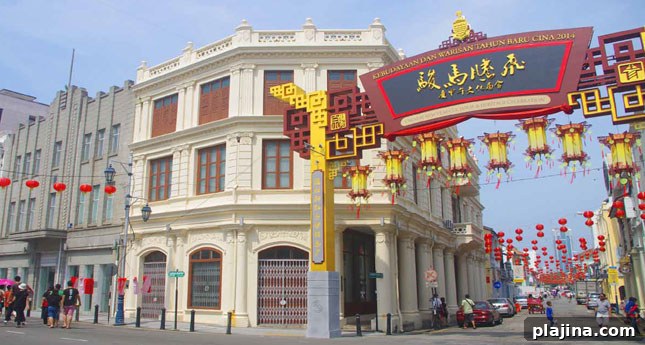
For years known as the Pearl of the Orient, Penang lost some of its shine by the early 1900s as its role as a global trading port diminished. Today, thanks to thriving high-tech industries, distinctive architecture and exceptional cuisine, the island has regained commercial vitality.
Located in the Strait of Malacca about three miles off Malaysia’s northwest coast, oval-shaped Penang Island is roughly 15 miles long and 12 miles wide. A narrow coastal plain surrounds a lush, mountainous interior and is home to most of the island’s 1.6 million residents. About half live and work in the capital, George Town.
Founded in 1786 by Captain Francis Light of the British East India Company, George Town is one of Asia’s best-preserved colonial trading ports. According to local lore, early British settlers encountered dense tropical rainforest and encouraged laborers to clear it by tossing silver coins into the undergrowth. Over the following centuries, traders from many nations—particularly Chinese merchants—arrived, shaping the island’s prosperity and cultural diversity.
Today Penang’s culture reflects a fascinating fusion of East and West, shaped by more than a century of British influence alongside Malay, Chinese and Indian traditions. That distinctive cultural mix and the city’s well-preserved architecture led UNESCO to designate George Town a World Heritage Site in 2008.
After the decline of the British Empire, Penang’s economy faltered, but the island rebounded and evolved into Malaysia’s technology hub. The Bayan Lepas Free Industrial Zone, established in the late 1970s as the country’s first trade zone, now employs more than 140,000 people and hosts numerous international high-tech companies, including AMD, Dell, Intel, Motorola, Osram Sylvania and Seagate.
Although the industrial zone is on the island’s southern side, most corporate headquarters and government offices are in George Town. Many business travelers choose to stay along the attractive northern beaches, an easy 20-minute taxi ride (approximately $10–15) from downtown. The modern Four Points by Sheraton on Tanjung Bungah Beach offers 220 contemporary guestrooms equipped with work desks, multiline phones, free Wi‑Fi, separate showers and bathtubs, and views of the Strait of Malacca. The hotel provides a calm retreat from the bustle of George Town and a convenient place to recharge after meetings.
Hotels are common venues for business in Penang. The Sheraton’s business center, private meeting rooms and spacious lobby provide suitable spaces for both formal and informal meetings. The hotel’s Eatery Restaurant also offers a quiet, comfortable setting for business conversations over a selection of Malaysian and international dishes.
Business visitors often schedule meetings downtown with a local lunch or dinner. Taking a taxi from the hotels to the city center and then exploring by trishaw is popular. These colorful three-wheeled cycles, piloted by cheerful drivers, are an efficient and memorable way to get around the city—an hour typically costs about $6.
A colorful trishaw offers a fun way to explore the city. © Michael DeFreitas
Hameediyah Restaurant on Lebuh Campbell Street is a George Town institution and a favorite among business diners. Operating since 1907, Penang’s oldest restaurant serves a variety of local specialties, including chicken kapitan, assam laksa (a hot and sour fish broth with noodles), mee yoke (spicy prawn soup) and telur bungkus (spicy beef wrapped in an omelet).
For a more formal business meal, the G Café at the G Hotel on Persiaran Gurney is popular with both businesspeople and visitors. G Café offers a daily breakfast buffet, an international lunch buffet and rotating buffet themes for dinner. During Ramadan, the restaurant’s iftar buffet highlights dishes from across Malaysia and regional specialties from neighboring countries.
After meals, many business travelers explore local markets such as Little India near Jalan Masjid Kapitan Keling to pick up souvenirs. Day or night, the winding streets of Little India are filled with shops selling spices, gold jewelry, saris, footwear and more, offering a vivid glimpse into the heritage of Penang’s Indian community.
Residents take pride in Penang and often enjoy showing visitors around. If appropriate, consider inviting your lunch or dinner host to join you for a brief market walk—it’s an easy way to connect and to gain a local perspective.
Patience is essential when doing business in Penang. Despite its lively atmosphere, business relationships tend to develop through a slow, deliberate process that favors getting to know one another before discussing transactions. Business manners are generally informal but influenced by Islamic and local traditions: dress conservatively (especially women), wait for others to initiate handshakes, and accept greetings such as “Salam.” Avoid pointing with a finger; use a closed fist with the thumb extended instead. Also, avoid crossing your legs when sitting directly across from a client.
Penang offers a rare combination of business opportunity, preserved colonial architecture, outstanding food, attractive beaches and rich cultural variety. If your schedule allows, plan an extra day or two to explore this living museum.
Read more about Penang’s Kapitan Keling Mosque.