
IT’S “THE BEST OF TIMES, THE WORST OF TIMES” in Chicago, a modern-day Tale of Two Cities where some outlying neighborhoods struggle with crime even as the urban core prospers. A recent map of 500 widely publicized gunfire incidents over the first two months of the year—100 of them homicides—shows the violence concentrated in districts that wrap around the inner city, while large parts of the central city saw no shootings. Despite state budget challenges and revenue losses stemming from Illinois’ financial troubles, development outside the hardest-hit areas continues to advance. Chicago is home to more than two dozen Fortune 500 companies spanning manufacturing, insurance, food processing, printing and publishing, and the city ranks among the world’s 20 largest economies.
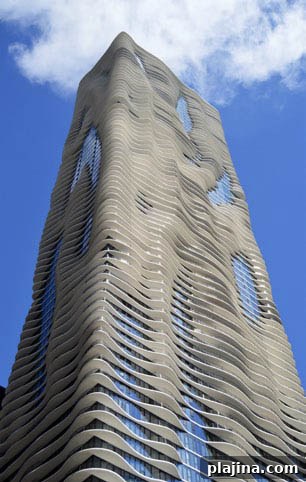
Aqua Building © JIM ROBERTS | DREAMSTIME.COM
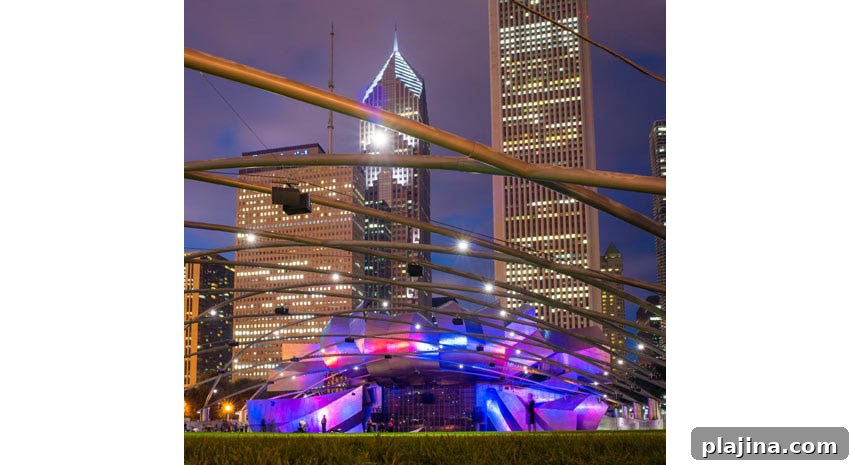
The heart of the city—the Loop—is one of the world’s most important central business districts, home to government and corporate towers, a theater district and major cultural institutions such as the Lyric Opera, the Chicago Symphony and the Joffrey Ballet. Landmark buildings are being reimagined: the former Marshall Field’s store has new uses, and the historic Palmer House Hotel has undergone a full renovation. Former railroad yards along the lakefront have been transformed into a green urban park with an amphitheater designed by Frank Gehry. Contemporary additions such as Jeanne Gang’s award-winning Aqua mixed-use tower and Anish Kapoor’s Cloud Gate sculpture—nicknamed The Bean—add to the city’s architectural appeal and reflect the activity of the skyline.
Property values are soaring in the West Loop, an area once dominated by wholesale markets, meat packers and warehouses that is now rapidly turning into a vibrant neighborhood of hotels, offices and apartments. Major companies are relocating downtown: McDonald’s moved its headquarters from Oak Brook to a large office complex on the former Harpo Studios site in the Fulton Market District, and Caterpillar has announced plans to shift its global operations to Chicago from Peoria. In Garfield Park, Leslie Hindman Auctioneers is converting a 30,000-square-foot warehouse into a consignment business to sell furniture and decorative art online. Nearby, The Hatchery—an 80,000-square-foot food incubator—will provide workspace and support for 75–100 food-service startups, reinforcing the city’s dynamic restaurant scene.
Tech innovation is also taking root downtown. The 1871 incubator has established a presence among the longstanding showrooms of the 4.2-million-square-foot Merchandise Mart, a building named for the year of the Great Chicago Fire and the subsequent rebuilding that reshaped the city. 1871 provides affordable office space for startups to share ideas, learn from mistakes and build companies that aim to make a broader impact.
Transportation improvements have boosted Chicago’s accessibility. O’Hare International Airport now offers flights to more than 150 domestic destinations, Midway Airport has been upgraded, and reconstruction of the Dan Ryan Expressway improved commuter routes. Positioned in the center of the country with both U.S. coasts and Washington, D.C. within easy reach, the city is a convenient base for lawyers, consultants and bankers who travel frequently.

Murals on a building in Pilsen © STEFANIA ROSSITTO | DREAMSTIME.COM
Gentrification is progressing in neighborhoods near the central city while many communities retain their ethnic and historic character. Pilsen remains known for its vibrant murals and Latino heritage, Humboldt Park continues to celebrate Puerto Rican culture, and Logan Square’s landscaped medians create an “emerald necklace” of green space. Looking farther out, the planned Barack Obama Presidential Library is expected to spur additional revitalization in Jackson Park.
Outdoor recreation complements the city’s culinary scene and cultural offerings. Lake Michigan’s shoreline provides wide sandy beaches where visitors and residents can swim, rent canoes, kayaks and paddleboards, or stroll scenic paths. The Lakefront Trail stretches 18 miles past museums, harbors, monuments, beaches and high-rises and is popular with cyclists and joggers. Winter activities include outdoor ice skating at rinks through the city, snowshoeing, cross-country skiing and curling; downtown even features the 220-foot Soldier Field Sledding Hill, lit for nighttime use. For relaxation, downtown day spas such as Charles Joseph Salon and Spa, the Red Door and Mario Tricoci offer full-service treatments.
Chicago is a leader in group tourism, anchored by North America’s largest convention center, McCormick Place, and event space at Navy Pier. A consolidation of tourism and conference agencies under Choose Chicago strengthened the city’s official marketing efforts, helping push visitor numbers toward Mayor Rahm Emanuel’s target of 55 million by 2020; in 2016 the city was already close to that goal. Frequent rankings as a top destination reflect Chicago’s enduring appeal as America’s “Second City.”
SCENIC DRIVES
The surrounding region offers rewarding day trips. About an hour and a half north in southeastern Wisconsin, Lake Geneva was once the summer retreat of Chicago’s Gilded Age elite; their mansions line the Shore Path and the Grand Geneva Resort & Spa recalls the area’s grand past.
Heading about 150 miles southwest to Peoria, the drive passes the Midewin National Tallgrass Prairie in Kankakee, a restored meadow of 1,200 acres where a herd of bison now roams. Roadside restaurants such as Capponi’s and Mona’s in Toluca are popular stops for homemade tortellini and signature fettuccine. In Peoria, visitors can sample spirits at J.K. Williams Distilling or explore the extensive whiskey selection at local restaurants that pair wood-grilled steaks and chops with a wide range of pours.
This year’s Frank Lloyd Wright anniversary makes Oak Park an especially fitting destination. A half hour west of downtown Chicago, Oak Park houses the world’s largest collection of Wright designs and his studio; visitors can tour 21 Wright-designed structures on foot, by car or via a special two-hour pedal tour.