
AS THE SAYING GOES, “Everything is bigger in Texas,” and while the wide-open country and farmland inspire a sense of freedom, one of the world’s largest airports provides a literal gateway to the world. Access to a major airport means access to global destinations, and Dallas/Fort Worth International Airport serves an extensive network across the continental United States. From DFW, travelers can reach every major U.S. city within a four-hour flight.
Since opening in 1974, Dallas/Fort Worth has been a central transportation hub for North Texas. Over more than four decades the airport has grown into one of the nation’s largest, making it an efficient connection point to other major U.S. cities. DFW serves approximately 182 domestic destinations and 62 international destinations with flights operated by 28 passenger airlines. In recent years the airport recorded hundreds of thousands of flight operations annually and handled tens of millions of passengers, ranking it among the busiest airports in the country.
DFW’s scale is apparent not only in passenger numbers but also in physical size: the airport covers roughly 26.9 square miles—larger than the island of Manhattan. Its infrastructure includes five terminals, seven runways, and 165 gates, designed to support a high volume of flights and connections.
Looking ahead, Dallas/Fort Worth continues to pursue strategic growth and operational enhancement. The airport has been pursuing partnerships and initiatives to improve cargo logistics and passenger amenities. For example, recent cooperative agreements aimed at developing transatlantic cargo strategies highlight DFW’s role in global trade flows. At the same time, the airport has invested in passenger services, including the opening of new lounges in Terminal D to enhance traveler comfort.
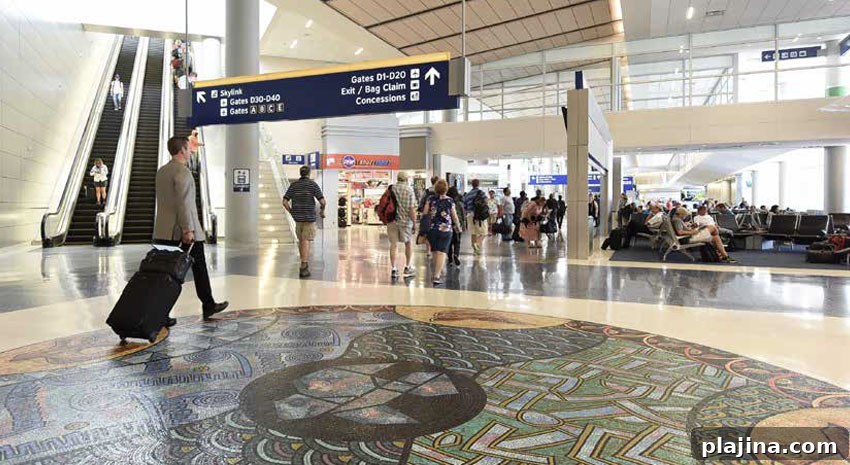
Many visitors’ first impression of the region comes via DFW, and the airport is curated to offer a welcoming introduction. Art is displayed throughout the terminals, including paintings, sculptures, an outdoor sculpture garden, and distinctive medallions embedded in flooring. The airport also offers tours that visitors can arrange in advance—an engaging way to spend a layover or to get a preview of the area before exploring further.
Among the airport’s standout features is Founders’ Plaza, dedicated in 1995. The plaza is a popular spot for travelers and families, offering open space to relax, watch aircraft, and enjoy views of the airfield. It’s one of the airport’s most frequently recommended places for a break between flights.
Today Dallas/Fort Worth remains an evolving transportation hub with unique attributes: it operates like a small city, complete with its own police force and postal identity. While the airport’s vast size can feel imposing, clear signage, a sensible floorplan, and thousands of staff members help travelers navigate efficiently. Whether connecting to another U.S. city or beginning an international journey, DFW’s scale, services, and ongoing improvements make it a major gateway for millions of passengers each year.