
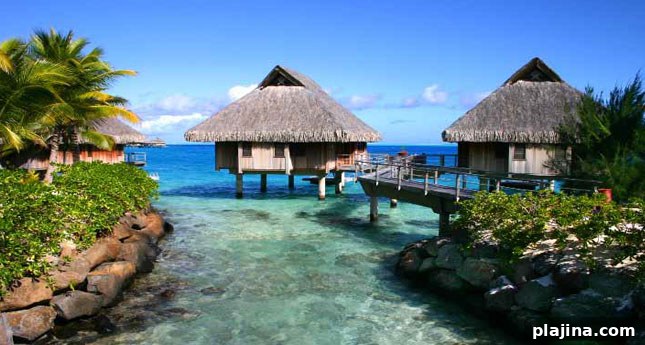
Tahiti is a relaxed paradise that inspired painter Paul Gauguin, writer Herman Melville and actor Marlon Brando to linger in its ever-changing light and rich sensory environment. The name Tahiti applies both to the largest island of French Polynesia and, more broadly, to its 118 sister islands. I visited several of the centrally located Society Islands — Tahiti, Moorea, Bora Bora and Taha’a — and discovered a year-round tropical climate, no poisonous snakes or insects, abundant natural beauty and a strong local emphasis on relaxation and spa culture.
Local spa treatments increasingly feature island ingredients such as juicy pineapple and fragrant grated coconut. You might be exfoliated with black sand in Tahiti, wrapped in delicate tiare flowers in Bora Bora, or covered in fresh coconut alongside a partner on Moorea. These rituals draw on Polynesian ties to nature and on cuisine and ingredients that are integral to daily life.
On my first day in Tahiti, walking along a sparkling shore locals poetically call “Cupid’s dust,” I misplaced my watch and quickly felt the tempo of life slow. During a spa treatment, my therapist described the island mindset: “Polynesians are close to nature and don’t like stress; they are very never-mind.” That attitude becomes contagious. While paddling an outrigger canoe adorned with foliage and flowers, I traded my fast-paced city habits for a gentler pace, savoring turquoise waters and small tastes of breadfruit, mango, poi, papaya, pineapple, watermelon and coconut.
Tahitian cultured pearls are a major regional export and a powerful cultural symbol. At the Robert Wan Pearl Museum I learned about pearls from historical, mythological and philosophical perspectives, saw the largest pearl on display and discovered how pearls have been valued as symbols of immortality and remedies in various traditions. Local lore describes pearls as having a life of their own — flourishing when one is positive and dimming with negativity — a belief that ties objects of beauty to human temperament.
Flowers are everywhere in French Polynesia — red hibiscus, golden trumpet flowers and lavender orchids ornament boats, homes and hotels. Locals often wear the white tiare (Tahitian gardenia) behind the left ear to show they are taken, or behind the right ear to indicate they are single and available. Vanilla is especially revered: it is the only edible fruit of the orchid family and treated like royalty throughout the islands.
French Polynesia produces what many consider the finest vanilla beans in the world. Resorts frequently incorporate aromatic Tahitian vanilla oil into spa treatments and into cuisine, from classic crème brûlée to subtle sauces for fish. On Taha’a, a small island often dedicated to vanilla cultivation, I toured a plantation and learned about the meticulous, hands-on process: hand pollination in a ritual often called “the marriage of vanilla,” followed by careful drying and storage. At La Maison de la Vanille, a family tends hundreds of plants, each taking years to mature and only producing flowers that bloom for a single day. The intense labor and specific crossbreeding techniques contribute to Tahitian vanilla’s distinctive aroma and high value.
Vanilla gazpacho © Jon H. Davis and Iris Brooks of NORTHERN LIGHTS STUDIO
Vanilla’s use extends beyond desserts. At the InterContinental Resort on Moorea, a chilled vanilla gazpacho is served over roasted pineapple, and at the InterContinental Tahiti Resort the Lotus Restaurant offers fish dishes accented with green vanilla sauces. On Taha’a, a luxurious Relais & Châteaux property serves rock lobster carpaccio with turnip slices dressed in a vanilla cream sauce, and even room-service breakfasts can arrive by canoe, accompanied by vocals and ukulele — a memorable start to a serene day.
Room service breakfast serenade © Jon H. Davis and Iris Brooks of NORTHERN LIGHTS STUDIO
Spas here are not just indulgence; they are centers for traditional remedies and education about natural ingredients. The noni fruit, for example, is used externally to aid skin regeneration and its juice is valued for digestive and immune benefits. Local plants are woven into crafts and ceremonies: pigments from roots are used for tapa cloth and coconut fiber appears in woven goods displayed in craft demonstrations.
The Tiki Village Theater on Moorea offers cultural shows that combine sunset views, rum punch and lively performances, including traditional drumming and fire dancing. For more active visitors, Moorea — nicknamed “the Nature Island” — offers snorkeling, surfing and shark feeding. I tried a helmet dive with Aquablue, a unique way to walk on the seabed while breathing normally inside a large helmet. The experience brought me close to coral, colorful reef fish and even gentle manta rays.
Bora Bora, often hailed as one of the world’s most beautiful islands, impressed with its dramatic basalt peaks and jewel-toned lagoon. Many resorts feature overwater villas with glass panels in the floor, providing a continuous view of marine life below — a living aquarium at the foot of the bed. Sometimes the ideal activity is simply to relax on a private deck, descend a ladder into clear water for a swim, and let the island’s fragrances and breezes carry away any remaining tension.
Tahiti Info to Go
French Polynesia (commonly referred to as Tahiti) is roughly an eight-hour flight from Los Angeles. International flights arrive at Faa’ā International Airport (PPT) in Papeete, the capital and main gateway. Inter-island travel is convenient by short plane rides or ferries. Arrange transfers to your resort in advance through your travel agent or resort concierge.
Where to Stay in Tahiti
InterContinental Moorea Resort & Spa — Nestled between mountains and lagoon on Moorea’s northwest coast, with an exceptional spa using local fruits and oils. P.O. Box 1019, Moorea $$$$
The St. Regis Bora Bora Resort — A luxurious resort with overwater bungalows, a saltwater lagoon and five-star amenities. Motu Ome’e BP 506, Bora Bora $$$$
Le Taha’a Island Resort & Spa — A secluded Relais & Châteaux property on a private motu offering refined Polynesian villas. Taha’a Island $$$$
Restaurants in Tahiti
Hiti Mahana — Waterfront dining at the Radisson Plaza Resort Tahiti with themed buffets and views of a black-sand beach. Radisson Plaza Resort Tahiti, Lafayette Beach, Arue, Tahiti $$$
Le Lotus Restaurant — Inventive seafood and island-infused dishes at the InterContinental Tahiti Resort, close to the airport. InterContinental Tahiti Resort & Spa, Faa’a, Tahiti $$$
The Ohiri Restaurant — Island-chic dining at Le Taha’a Island Resort with standout dishes and a memorable vanilla crème brûlée. Le Taha’a Island Resort & Spa, Taha’a Island $$$$
Read more about Hélène Spa.