
Rising 2,717 feet above the desert, a metallic emblem of contemporary Islamic architecture, the Burj Khalifa draws its form from a local three-lobed wildflower. At about 160 stories, it became the tallest building in the world when it opened to the public in January, an emblem of Dubai’s bold ambitions.
Originally intended to be called Burj Dubai, the tower was renamed in honor of Sheikh Khalifa bin Zayed Al Nahyan, the ruler of neighboring Abu Dhabi. That renaming reflects the reality that Abu Dhabi stepped in to support Dubai during a period of financial stress, authorizing loans of $10 billion to assist Dubai World, the emirate’s debt-laden holding company. The bailout was intended to stabilize confidence in Dubai, which in recent years has positioned itself as a financial center, tourist destination, aviation and shipping hub, and a regional playground for wealthy visitors from Saudi Arabia, Russia, Kuwait and beyond.
Although Dubai has retreated from its boom-time peak, Abu Dhabi’s intervention helped soften the downturn. Real estate values remain nearly 50 percent below their 2007 highs and many newly completed office towers, including the Burj Khalifa, contain unoccupied space. Nevertheless, construction and commercial activity continue day and night along Sheikh Zayed Road, the city’s 16-lane main artery, where a ribbon of glass-and-steel skyscrapers climbs skyward. Dubai International Airport (DXB) still bustles with well-heeled travelers in designer shops, lounges and restaurants. Even the local police fleet features BMW 5 Series vehicles.
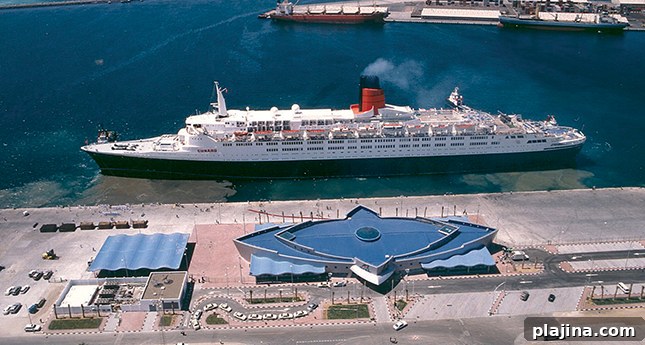
Many major projects have continued despite the economic slowdown. Dubai opened a modern cruise terminal capable of handling multiple ships simultaneously, and it launched the first phase of the $3.9 billion Dubai Metro, an automated, driverless light-rail system planned for completion in 2012. City authorities also expanded the bus network with thousands of air-conditioned buses and enclosed, climate-controlled bus stops to make public transit tolerable during scorching summers. The global recession dampened Dubai’s rapid expansion, but claims of its demise are exaggerated.
Dubai’s transformation from a modest pearling and trading town into a global city accelerated after oil was discovered in 1966. Founded in 1833, the emirate remains governed by the Al Maktoum family and since 1971 has been a member of the United Arab Emirates, a federation of hereditary rulers. While defense and foreign policy are federal matters, many domestic decisions are left to each emirate.
As its oil reserves declined, Dubai diversified into finance, transportation and tourism. The city is highly international: only about 17 percent of its 2.6 million residents are native Emiratis. Large populations of low-wage workers from India, Pakistan and Bangladesh make up much of the workforce. Numerous multinational corporations, including major tech and media firms, maintain a strong presence in Dubai, where personal income is not taxed and free trade is integral to the economy. Prominent local companies—many state-owned—include Dubai Ports World, the Jumeirah hotel group and Emirates airline. Business districts and free zones such as Dubai Media City, Dubai Internet City and Dubai Maritime City cluster companies and investment. Key trading partners include India, Saudi Arabia and Iran, while imports from the United States, China and Japan supply cars, electronics and consumer goods.
Most of the emirate’s 1,588 square miles are filled with white sand dunes and wadis—dry valleys carved by seasonal rains—fringed by mountains and the waters of the Persian Gulf. The city of Dubai occupies roughly a quarter of that territory but is home to nearly all of the population.
Dubai is fond of superlatives. It is home to the world’s tallest tower, the largest shopping mall (Dubai Mall), the largest manmade port (Jebel Ali), vast artificial islands such as Palm Jumeirah and The World, and the sail-shaped Burj Al Arab hotel. The city also hosts high-profile events, including the Dubai World Cup thoroughbred race and an extended shopping festival that celebrates retail and tourism.
Under this glossy surface, Dubai remains a conservative Muslim Arab society that enforces social norms. Visitors should be aware that public displays of affection and overtly provocative behavior can result in legal consequences. Dress modestly outside of hotel pools and resort areas, and respect local customs to avoid misunderstandings.
Arrivals at Dubai International Airport are smooth: DXB handled some 41 million passengers in 2009, ranking among the busiest international hubs. Emirates airline is a dominant carrier, operating from the expansive Terminal 3. Once in the city, visitors typically find Dubai’s residents hospitable, many speaking English, and serious crimes against tourists are uncommon.
The most comfortable months to visit are December through March, when temperatures peak in the high 70s. Outside those months the climate is hot and humid due to Dubai’s coastal location. The city is easily navigable by taxi; many areas are pleasant for short walks, especially promenades along Dubai Creek and the atmospheric lanes of the older Bastakiya district.
Traditional markets, or souks, offer an engaging contrast to modern malls. Bargaining is expected in souks, where visitors can find spices, textiles, Persian carpets, bronze and silver work, and jewelry often priced competitively. The gold souk in Deira is famous for its wide selection of jewelry. For local flavors, street-side eateries and small restaurants in Bastakiya serve rice-based dishes with meat or fish, while the city’s international population supports a wide variety of Indian, Moroccan and Lebanese dining options.
In some respects Dubai reinvented its past to suit modern tourism. Sites such as the Heritage and Diving Village near Dubai Creek recreate elements of older life in the emirate, while the fish souk remains an authentic and aromatic display of the Gulf’s catch, including large hammour. Dubai Creek offers traditional abra boat rides and air-conditioned water taxis that provide scenic views of the skyline. The Dubai Museum, housed in the restored Al Fahidi Fort from 1787, provides additional context on the city’s past. For outdoor adventure, Dubai is a base for desert safaris, barbecues under the stars and seasonal camel racing.
The essence of modern Dubai is firmly rooted in contemporary life: vibrant nightlife, vast shopping malls, the observation deck on the 124th floor of the Burj Khalifa, brisk business in multinational boardrooms, and an eclectic mix of residents—men in traditional kaffiyeh buying beverages in hotel restaurants, women wearing headscarves taking photos on smartphones, and global professionals navigating a rapidly evolving city.
Diversions
Scale is central to Dubai’s identity, and Dubai Mall exemplifies that ethos. Although it sits only a short distance from many downtown hotels, accessing the mall may require a taxi because Sheikh Zayed Road is a major arterial thoroughfare. The mall’s vast spaces—immense atriums, sprawling food courts, long marble corridors—are punctuated by standout attractions such as an enormous indoor aquarium and one of the largest shark tanks visible behind towering glass. On quieter days, the scale of the mall is especially striking amid luxury brands and designer boutiques.
Info to Go
Rental cars are available at Dubai International Airport, located a few miles from downtown. Many hotels provide shuttle services, and taxis from the airport usually take 10–30 minutes depending on traffic. The modern, air-conditioned Dubai Metro helps traverse a city still busy with construction. Taxis—cream-colored, metered and including government-operated vehicles—are plentiful and affordably priced.
Lodging
Armani Hotel
This 160-room luxury property, the first hotel designed by Giorgio Armani, occupies several floors within the Burj Khalifa. 1 Emaar Blvd., $$$$
Fairmont Hotel
A recently opened upscale hotel from the Canadian chain, located in a busy business district. Sheikh Zayed Road, tel 971 4 332 5555, $$$
Shangri-La Hotel Dubai
A well-appointed 43-story business hotel from the Hong Kong-based group. Sheikh Zayed Road, tel 971 4 343 8888, $$$
Dining
Almaz by Momo
A lavish Moroccan restaurant founded by a London-based entrepreneur, serving spicy, flavorful North African dishes. Located in Mall of the Emirates, Level 3, tel 971 4 409 8877, $$
Hoi An
Contemporary Vietnamese cuisine praised for its authenticity, located on Level 1 of the Shangri-La Hotel. Sheikh Zayed Road, tel 971 4 405 2703, $$$
Mezza House
An atmospheric restaurant in the Old Town Yansoon building offering savory Levantine dishes such as Lebanese tabbouleh. Yansoon 9, Old Town, tel 971 4 420 5444, $$$
Checking in With Jerad Bachar
Director of the Dubai Convention Bureau
What Are The Hot Business Topics In Dubai Right Now?
Long-term diversification remains central to Dubai’s economic strategy. Aviation and shipping are core growth sectors, supported by Dubai International Airport and Port Jebel Ali, which have reduced cargo transfer times significantly. Tourism is a major contributor to GDP, and related sectors continue to draw investment.
How Is The Restructuring Of Dubai World Proceeding?
Dubai World’s restructuring is ongoing and has made progress in negotiations with creditors. The issue has receded from headline prominence locally as restructuring efforts continue.
What Were The Effects Of The International Recession In Dubai?
The recession prompted a more measured, sustainable approach to growth. Some developments were delayed or canceled, while many projects continued. Recent openings include the Armani Hotel in the Burj Khalifa and a new cruise terminal. Tourism and hospitality remain areas of active investment, with several new hotels and convention spaces moving forward.
What Advice Do You Give International Travelers?
Use common sense and remember you are in a different cultural setting. Respect local values and customs, dress modestly in public areas away from hotel pools, and be mindful that some residents are conservative.
What Is Ahead For Conventions And Meetings In Dubai?
The meetings, incentives, conferences and exhibitions (MICE) market is important to Dubai’s future. Expansion of convention space and a growing range of mid-market hotels are making Dubai more accessible and convention-friendly, increasing affordability and capacity for global events.