
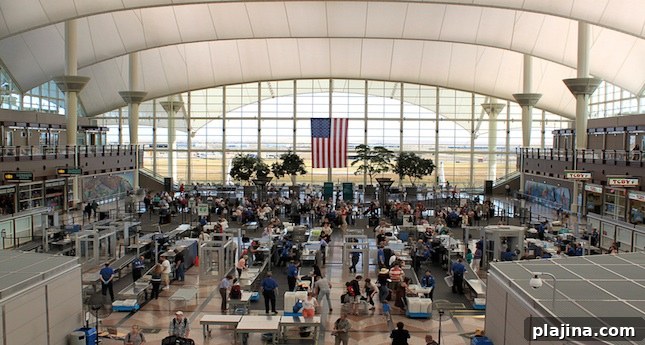
Waiting in line at airport security is one of the most frustrating parts of air travel. The stress comes not only from the delay itself, but from unpacking everything you had carefully organized, then hurriedly placing items into bins while impatient travelers wait behind you. Recently, long security lines at U.S. airports have intensified the problem, causing thousands of passengers to miss flights because screening processes are slow and checkpoints become overwhelmed.
To address these delays, Congress moved forward with legislative action. In June, the U.S. House of Representatives passed the Checkpoint Optimization and Efficiency Act. The bill directs the Transportation Security Administration (TSA) to reassign personnel and expand resources so more officers can serve as behavior detection specialists during peak travel periods when scanners and lanes experience heavy demand.
Under the plan, TSA intends to add over 760 additional screening agents and expand overtime options for existing staff to improve coverage during busy times. The agency also plans to deploy more explosive-detection canines to assist in the screening process. These measures aim to preserve the high standards of security screening while increasing throughput so travelers move through checkpoints more quickly and with less stress.
The goal of the Checkpoint Optimization and Efficiency Act is twofold: maintain or enhance detection accuracy and reduce wait times that disrupt travel plans. By making staffing more flexible and bringing in additional resources during surges, TSA hopes to reduce bottlenecks without compromising safety. Travelers can expect a smoother experience at security lines as these changes are implemented.