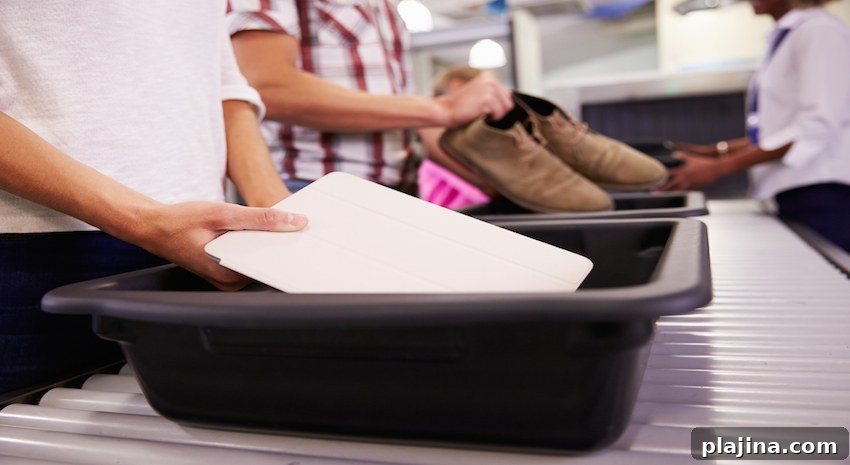
For one day last month, passengers departing Seattle-Tacoma International Airport encountered a robot offering guidance to speed up the security screening process.
The machine, fitted with a friendly digital face, provided spoken instructions in English and displayed animated on-screen directions in six additional languages. It reminded travelers to remove items such as scarves, jackets, belts and loose objects from their pockets before entering the scanner.
The demonstration was part of a pilot program run by the Port of Seattle to evaluate whether the robot reduces the number of times passengers trigger body-scanner alarms. Officials measured alarm rates during the robot’s presence and compared them with rates from before the test.
By comparing these figures, the airport will assess whether the technology helped cut down on re-scans that can slow security lines. If the results show a meaningful improvement in throughput and fewer alarms, the airport may adopt the robot more widely as a tool to improve passenger flow and enhance the security screening experience.
The brief trial focused on whether prompting passengers with clear, multilingual instructions at the point of entry reduces common errors that lead to additional screening. Early observations suggested passengers were more likely to remove outerwear and empty pockets after interacting with the device, but Port officials will rely on the measured alarm counts and operational data to make a final decision.
Integrating automated assistants like this robot aims to streamline processes without replacing security personnel. Instead, the device supplements staff by delivering consistent reminders and reducing the time agents spend explaining routine steps. If adopted, the technology could help create more predictable security lanes, shorten wait times, and improve overall traveler satisfaction.
Any future deployment would likely include further refinement: optimizing placement where passengers first approach the screening area, refining the multilingual prompts, and adjusting the presentation to be clear and unobtrusive during busy periods. Officials will also consider privacy and accessibility factors to ensure the system meets regulatory and passenger needs.
For now, the single-day trial provided the airport with initial data and operational insights to determine whether a broader rollout would meaningfully improve efficiency at one of the region’s busiest gateways.