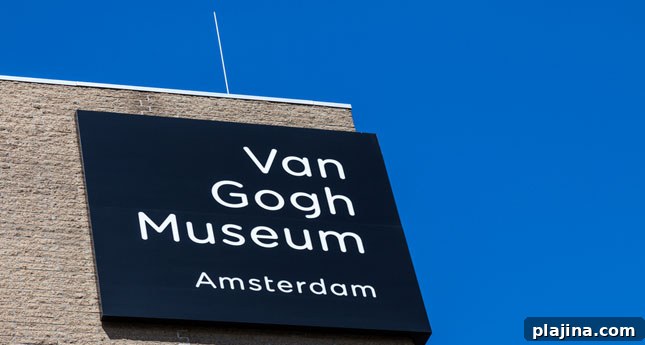
The first challenge is the surname. If you don’t sound like you’re clearing your throat, you’re likely pronouncing it incorrectly. Saying “Van Go” might be accepted in the United States, but it isn’t authentic in his Dutch homeland. Another common English pronunciation, “Van Goff,” is closer yet still not accurate.
English speakers find the name difficult because Dutch uses a guttural sound for the letter “g” and for the “gh” combination, produced at the back of the throat. The result approximates “Vun Hokh.” Listen to a native example and practice until the sound feels natural.
The second challenge is appreciating the work itself. Vincent van Gogh was a major figure in Post-Impressionism. As his mental health declined, he entered an intense period of creativity and produced many of his greatest paintings in a short, prolific span. At the end of the 19th century, audiences were often unsettled by his striking color choices and unconventional compositions. More than a century later, his paintings continue to surprise and move viewers. To learn more about his life and art, visit the Van Gogh Museum in Amsterdam, where an extensive collection and contextual information offer a comprehensive view of his career.