The Bamana and Dogon peoples traditionally used intricately carved locks adorned with symbolic figures, animals, or human forms to guard granaries and homes. These locks often resembled ancestors, transforming the door into a sacred threshold and reinforcing its protective power. This particular Bamana door lock, mounted on a metal base, measures 21 inches by 17.25 inches and is priced at $1,000. Bamana Doorlock 4 (21 inches by 17.25 inches), $1,000.
Beginning in the 19th century, Czech-made glass beads became an important trade item in West Africa. In Mali, brides are traditionally gifted vibrant glass strands—sometimes known as don don sole beads—to wear on their wedding day. The antique tear-shaped wedding beads shown here are strung on a 28-inch raffia strand and contain roughly 100 beads. These old transparent Mali wedding beads are priced at $60. Old Transparent Mali Wedding Beads, $60.
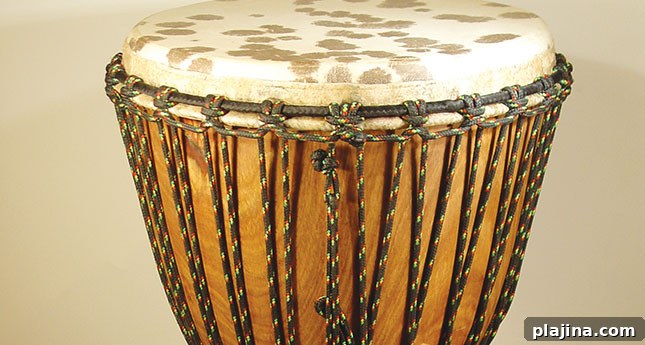
Djembe drum makers select dense logs, carve and dry them to form a deep, rounded bowl with a straight, flaring body, then stretch durable Mali goat skin over the shell. The combination of carved hardwood and well-tensioned skin produces the djembe’s characteristic clear, resonant tones. The drum pictured is carved with motifs representing four rocky rivers at its base. This professional djembe, crafted from Khadi Guenou wood, is listed at $375. Professional Djembe Khadi Guenou Wood, $375.
For centuries, Bamana artisans in Mali have produced bogolan, commonly called mudcloth, using fermented plant juices, tea, and clay to hand-dye woven cotton. According to tradition, the striking earth-toned patterns began when a hunter’s wife could not remove a mud stain from her husband’s tunic and turned the mark into a decorative motif. Contemporary fair-trade adaptations of this cloth are now created as home textiles. The mudcloth table runner featured here is handmade in Mali and priced at $72. Mudcloth African Table Runner, $72.