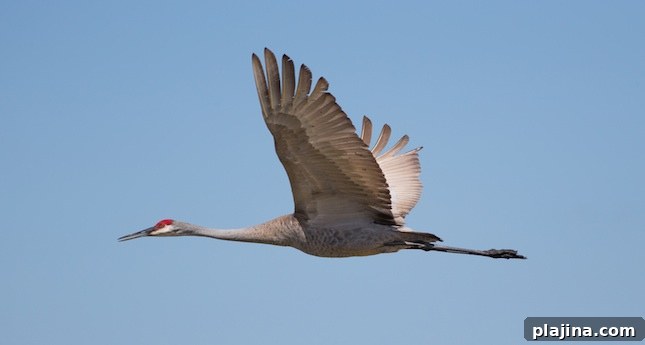
Each March, Nebraska’s Central Platte River Valley becomes alive with the dramatic return of Sandhill Cranes and a host of other migratory birds. More than 80 percent of the world’s Sandhill Crane population funnels through this region as the birds travel north to their breeding grounds in Canada. This annual migration is widely regarded as one of the most spectacular wildlife events on the planet and draws visitors, naturalists, and photographers from across the globe.
The Central Platte River is not just home to cranes during the migration. Thousands of Canada geese, trumpeter swans, tundra swans, and whooping cranes share the skies and riverbanks, while bald eagles and herons patrol the waterways. American white pelicans and a variety of ducks—including the striking canvasback—also gather in large numbers. Peak viewing windows are early morning, just after sunrise, and late afternoon as dusk approaches, when bird activity is at its height and the light is most favorable for observation and photography.
Alongside the airborne spectacle, the prairie comes alive with terrestrial displays: greater prairie-chickens and other grassland species perform elaborate mating dances on lek sites, offering visitors a rare glimpse into their courtship behavior. These ground performances complement the dramatic aerial gatherings, making the Central Platte region a year-after-year destination for wildlife enthusiasts.
Visitors typically access the migration viewing areas via the historic Lincoln Highway, one of America’s first transcontinental routes. Roads and designated viewing sites along the Platte provide convenient access for guided tours, private vehicles, and photography outings. For the best experience, plan visits around the peak migration period in March, allow time for early morning or late-afternoon viewing, and follow local guidelines to protect sensitive habitat and nesting areas.
When planning a trip, consider joining guided tours or visiting established wildlife viewing platforms and refuges, which help minimize disturbance while maximizing opportunities to see large concentrations of birds. Binoculars, a spotting scope, layered clothing for variable weather, and a telephoto lens for photographers will enhance your visit. Respect posted signs, stay on trails and designated observation areas, and keep a respectful distance from wildlife to ensure the continued health of these important migratory populations.
The Central Platte River migration is more than a seasonal event; it’s a vital ecological phenomenon that supports numerous species and provides a powerful reminder of the interconnectedness of habitats across continents. Observing this congregation of cranes and other waterfowl offers an unforgettable wildlife experience and an opportunity to witness a natural cycle that has occurred for generations.