
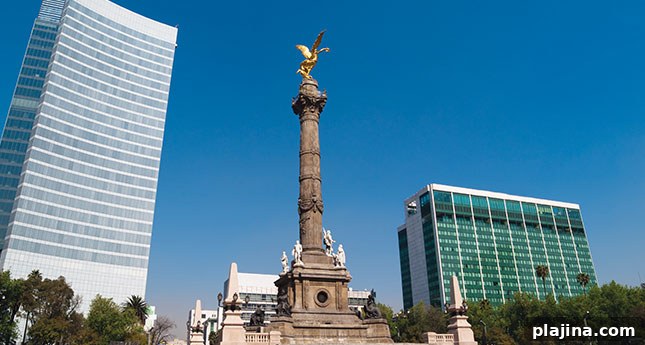
Mexico City’s existence feels improbable and almost illogical, yet that contradiction is part of its charm. It began as a cluster of fishing and farming settlements amid inland lakes and channels. Over time the largest island became the heart of the Aztec Empire. When the Spanish arrived in 1519, appearing godlike on horseback, they set out to dominate the area. They drained marshes and erected cathedrals and palaces — structures that started to sink almost immediately.
Despite frequent earthquakes, nearby volcanoes and a basin location that traps pollution, Mexico City has grown into one of the world’s largest metropolises, second only to Tokyo. Its scale and resilience make it an extraordinary place.
In recent decades the city has continued to evolve and improve. It now enjoys a reputation as one of the world’s most exciting centers for culture and cuisine. With roughly 160 museums and an endless array of restaurants, Mexico City offers far more than a venue for business; it’s a destination for curious travelers and dedicated food lovers alike.
Some changes are visible on the street. Air quality, once dire, improves gradually each year. The main boulevard, Paseo de la Reforma, closes to motor traffic on Sundays, and free bicycle rental stations appear across neighborhoods throughout the week. While ambitious plans to transform the capital into a fully “green city” face practical limits, efforts to expand public transit and reduce car use have made a measurable difference. The historic center is undergoing a noticeable cleanup and restoration: crews remove long-accumulated grime and repair neglected heritage buildings. There’s a tangible sense of renewal across the city.
Where much of Mexico outside the capital moves at an unhurried pace, Mexico City hums with intensity. Office workers often grab a tamale between meetings, millions ride the metro daily, and business leaders emerge from black limousines to finalize deals over traditional breakfasts. The city pulses with activity from dawn until late at night.
In affluent neighborhoods like Polanco, near Chapultepec Park, wealth is highly visible: luxury cars pass designer boutiques, and an upscale dinner for two can exceed $200. This is the glamorous side of the city — home to moguls, fashion figures and celebrities. The historic center retains a more traditional atmosphere centered on government and tourism. Between these extremes lie the pedestrian-friendly, artistic districts of Condesa and Roma, alongside Zona Rosa’s nightlife and the business hotels lining Paseo de la Reforma.
Mexico City juxtaposes striking contrasts: Mexican wrestling, street tacos and colonial churches sit side by side with minimalist clubs, chic boutiques and bold contemporary architecture. This lively blend surprises many visitors and draws them back. Old perceptions fade as travelers discover a metropolitan energy that ranks among the world’s great cities.
LODGING
CONDESA DF
Artistic yet practical, hip without pretension, this boutique hotel in leafy Condesa consistently delights. $$$
CONDESA DF
Av. Veracruz No. 102, Colonia Condesa
tel 52 55 5241 2600
GRAN HOTEL CIUDAD DE MÉXICO
A lovingly restored Art Nouveau landmark featuring a Tiffany glass ceiling, birdcage elevators and wrought-iron balconies. $$
GRAN HOTEL CIUDAD DE MÉXICO
16 de Septiembre 82, Centro Histórico
tel. 52 55 1083 7700
SHERATON CENTRO HISTÓRICO
A five-star hotel just steps from Paseo de la Reforma and the main entrance to the historic district. $$$$
SHERATON CENTRO HISTÓRICO
70 Av. Juárez
tel 52 55 5130 5300
DINING
EL CARDENAL
A beloved institution where locals and visitors enjoy classic Mexican dishes — try eggs with black beans or pork-stuffed chiles. $$
EL CARDENAL
Calle de Palma 23, Centro Histórico
tel 52 55 5521 8815
NEMI
Opened in 2008, this Michael Mina restaurant rose quickly to prominence within the high-end culinary scene. $$$$
NEMI
Las Alcobas Hotel, Presidente Masaryk 390, Col. Polanco
tel. 52 55 3300 3950
EL TIZONCITA
A friendly spot for sit-down tacos, known for its wide selection of salsas. $
EL TIZONCITA
Corner of Tamaulipas 22 and Nuevo León, Condesa
tel 52 55 5286 8671
JUST THE FACTS
Time Zone: GMT-6
Phone Code: 52 Mexico, 55 Mexico City
Currency: Peso
Entry/Exit Requirements: U.S. citizens need a valid passport with at least six months remaining; no visa is required. Most visitors must obtain a tourist card, typically included in the cost of an airline ticket.
Official Language: Spanish
Key Industries: Tourism, oil, agriculture, cement, automobiles, packaged food and beverages
DIVERSIONS
The National Museum of Anthropology in Chapultepec Park is Mexico’s most spectacular museum, housing one of the world’s finest collections of pre-Columbian art. Its expansive exhibitions span millennia and are displayed in a dramatic building.
Near Alameda Park, two adjacent buildings exemplify the elegance of early 20th-century architecture, blending Belle Époque and Art Deco styles. The gilded Palacio Postal still functions as a post office, while the Palacio de Bellas Artes serves as an opera house and museum.
The vast Plaza de la Constitución, commonly called the Zócalo, anchors the historic center. Facing the square are the Palacio Nacional, home to Diego Rivera’s sweeping mural, and the Metropolitan Cathedral, a monumental structure that took centuries to complete.
A day trip to the northeast leads to the awe-inspiring ruins of Teotihuacán, a major pre-Columbian city that flourished between A.D. 100 and 750 and later became significant to the Aztecs.
INFO TO GO
Benito Juárez International Airport (MEX) lies less than 10 miles from most central hotels. It’s advisable to purchase an official taxi voucher before leaving the terminal. The metro reaches the airport, though luggage restrictions can apply. In the city, the metro is efficient outside peak hours. For street taxis, using a sitio taxi (a registered stand) is generally safer than hailing on the curb.
CHECKING IN WITH JIM JOHNSTON
Artist and author of Mexico City: An Opinionated Guide for the Curious Traveler
WHAT LED TO THE ADOPTION OF MEXICO CITY AS YOUR HOME?
I lived in New York City for many years before moving to San Miguel de Allende in 1997 with my partner. After a year there we realized we missed urban energy. Frequent stops in Mexico City led us to spend more time here, and in 2005 we moved to the capital. Mexican culture here remains rich and relatively undiluted, and living in the city offers a deeply rewarding experience.
HOW DO FOREIGNERS’ PERCEPTIONS OF SAFETY AND QUALITY OF LIFE IN MEXICO CITY CONTRAST WITH REALITY?
News coverage often paints a harsher picture than everyday life reflects. I take normal precautions, as I would anywhere, but I do not feel afraid or restricted. People are warm and comfortable in crowds, and tourist-targeted crimes are relatively uncommon. Though stories about drug violence and corruption distort perceptions, many visitors are pleasantly surprised by how safe and vibrant their experience turns out to be.
WHAT DOES THE CAPITAL OFFER THAT YOU CAN’T FIND ELSEWHERE IN MEXICO?
Beyond museums, restaurants and shopping, the city’s defining asset is its urban energy — a distinct pulse you feel walking its streets, riding the metro or browsing markets. You can move through layers of history in a single day: Aztec ruins, colonial mansions, Art Deco buildings and modern skyscrapers coexist here.
WHAT’S ON THE HORIZON FOR TOURISM?
Milestone anniversaries and restoration efforts continue to boost the city’s appeal. The historic center has seen improved paving, lighting and building restorations, and pedestrian areas now bustle with bars and restaurants. Increased policing and surveillance aim to enhance visitor confidence. The growing number of positive visitor experiences is slowly reshaping Mexico City’s global reputation as a must-visit destination.