
While autumn’s vivid foliage and cooler temperatures add charm across the Northern Hemisphere, Seoul, South Korea, feels especially magical this season. The city features many expansive green spaces filled with tree and plant species native to northeastern Asia, which enhance the visual appeal of both historic sites and modern architecture. Combined with South Koreans’ enthusiasm for outdoor life and the city’s carefully designed networks of trails, paths and seating areas, Seoul offers numerous inviting spots for fall exploration.
© Elyse Glickman
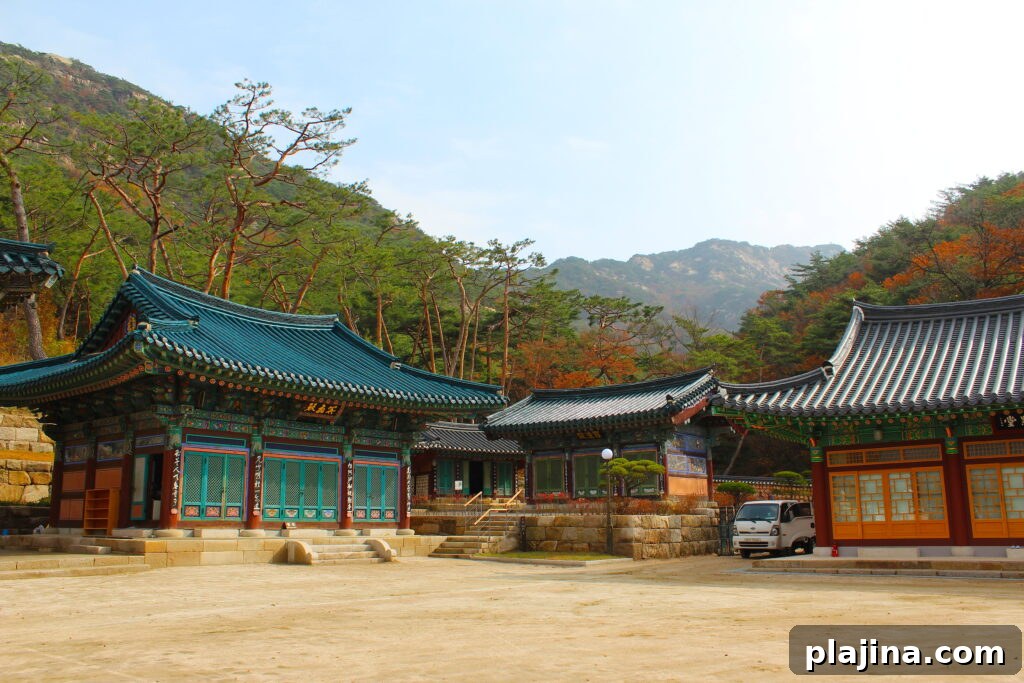
Jinkwansa
Perched on a mountainside within Bukhansan National Park, the restored 12th-century Buddhist temple of Jinkwansa provides a serene and contemplative escape. Visitors can learn about the life led by resident nuns and sample the temple’s renowned cuisine, which showcases thoughtful vegan cooking. Without using garlic, onion or leeks, the kitchen relies on spices and preserved ingredients—dried, marinated and pickled—to bring out deep, complex flavors in vegetables often grown on site. In autumn, lush trees and carefully maintained landscaping frame the temple buildings, bridges and fermentation tanks, creating a tranquil, almost guardian-like presence across the grounds.
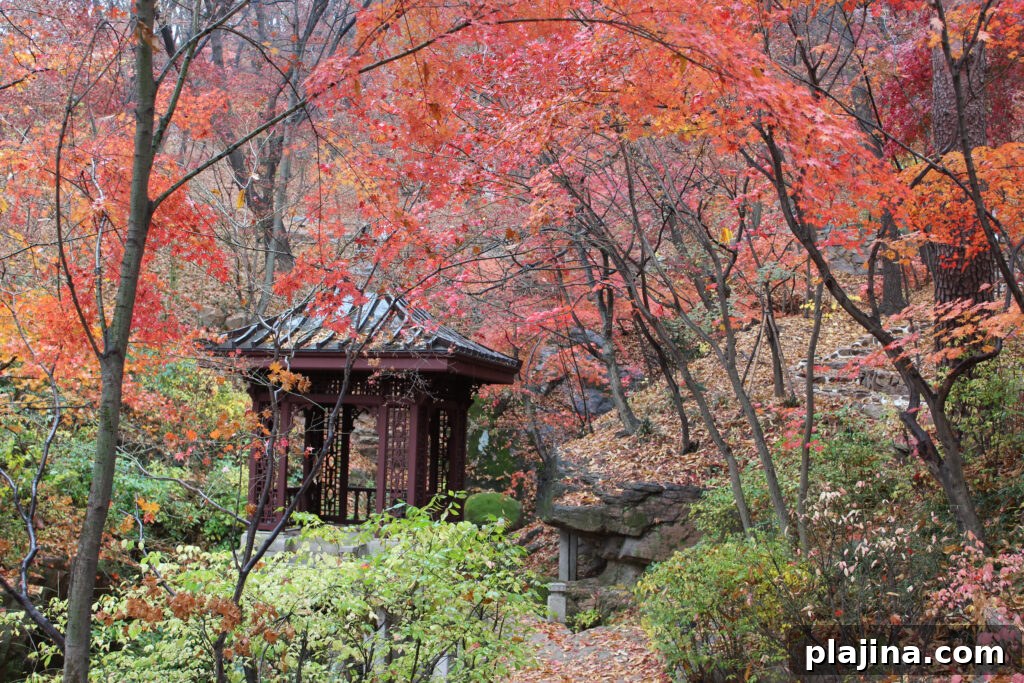
Bongeunsa
Founded in A.D. 794, Bongeunsa offers a peaceful contrast to the urban bustle of Gangnam and the nearby COEX convention center. The temple complex is arranged across a forested hillside, with multiple buildings connected by winding paths and steps. Visitors will often encounter a twice-daily percussion ceremony performed by the monks, an auditory and visual complement to the rich art, sculpture and natural beauty found both indoors and outdoors.
© Elyse Glickman
Changdeokgung Palace
Changdeokgung Palace, a UNESCO World Heritage site constructed in the 15th century during the Joseon Dynasty, sits at the foot of Ungbong Peak on Mount Baegaksan, near Seoul’s northern downtown. The palace’s famous Biwon, or “secret garden,” is partly hidden among dense foliage and served for centuries as a private retreat where royalty could rest and reflect. Though altered by historical events and the passage of time, the garden retains its native tree cover and remains an outstanding example of East Asian palace architecture and landscape design.
Seoul Forest Park
Once a royal hunting ground, Seoul Forest is now the city’s third-largest park and contains roughly 400,000 trees, including various maple species and stands of golden ginkgo. Spanning about 3,000 acres, the park is home to more than 100 animal species and features distinct zones such as a Cultural Art Park, Ecological Forest, Nature Experience Study Field, Wetlands Ecological Field and a Han River waterside area. The main sections of the park are freely accessible, and its location in the Seongsu-dong neighborhood makes it easy to reach via Seoul Subway Line 2.
Autumn is an ideal time to visit these sites—whether you seek quiet reflection among historic temples and palace gardens or outdoor recreation in expansive urban parks, Seoul’s green spaces offer varied and memorable experiences enhanced by seasonal color and thoughtfully designed landscapes.