
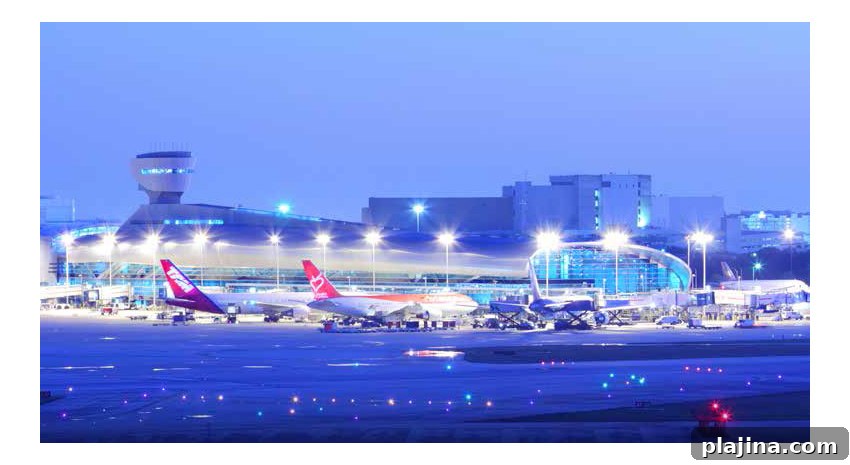
With its proximity to some of the most attractive beaches and destinations in the United States and Latin America, Miami International Airport is one of the country’s largest aviation hubs. It ranks among the top ten busiest airports in the United States and is the busiest airport in Florida by annual passenger numbers.
Located just eight miles from downtown Miami, MIA serves as South Florida’s primary gateway for long-haul international flights and is one of only eight U.S. airports equipped to handle the Airbus A380.
The airport supports service from more than 100 carriers. American Airlines is the dominant carrier, accounting for roughly half of the airport’s traffic growth, while MIA also serves as a focus or gateway airport for Avianca, Frontier Airlines and LATAM for travel to and from Latin America.
MIA recorded a milestone year in 2016, handling nearly 44.6 million passengers—an increase from the previous year. That growth occurred despite reduced demand on some South American routes caused by regional economic downturns and public-health concerns in South Florida. Overall annual passenger traffic still posted a modest rise.
Recognition followed: in 2016 J.D. Power ranked Miami International Airport fifth among large North American airports in its Airport Satisfaction Study, the airport’s highest placement to date and a notable jump from 18th place the previous year.
Despite some early-year operational challenges and isolated high-profile incidents, the airport continued to expand its network. In 2016 MIA added six new passenger carriers and four all-cargo operators, and additional airlines planned new service in 2017. Recent additions included Volaris launching flights to Guadalajara and Mexico City; Qatar Airways Cargo starting freighter service; First Air beginning charter flights from Ontario, Canada; and low-cost transatlantic service from WOW air to Reykjavík. Aer Lingus also planned seasonal flights to Dublin.
Miami International has invested in sustainability and infrastructure. In March the Airports Council International–North America honored the airport with its 2017 Environmental Achievement Award in the Environmental Management category for a comprehensive sustainability program launched in partnership with Florida Power & Light Services. The initiative includes $32 million in upgrades such as modernized air-conditioning and ventilation systems, water-conservation retrofits and energy-efficient lighting. Those measures are projected to save the airport more than 35 million kilowatt-hours of energy annually and about $40 million in utility costs over the contract term, while reducing carbon emissions and conserving millions of gallons of water.
The Miami-Dade Aviation Department is also advancing a multiphase Cargo Optimization, Redevelopment and Expansion program to better utilize MIA’s cargo facilities. The initial phase focuses on expanding taxiways, ramp areas and aircraft parking in the cargo zone to support growing airfreight demand.
To address aging infrastructure, airport officials disclosed plans to refurbish the Central Terminal and launched a multi-year renovation program totaling hundreds of millions of dollars. That project aims to modernize facilities and accommodate higher-than-expected passenger growth. At the same time, long-range plans call for the Central Terminal to be demolished and replaced beginning in the mid-2020s, ensuring MIA can continue to meet future capacity needs and maintain its role as a major international gateway.