Once part of a single area within the larger Bordeaux region of France, Graves split when its northern section—starting just south of the city of Bordeaux—received its own appellation in 1987: Pessac-Léognan. Whether considered together or separately, both areas are defined by their soil. The name Graves refers to gravel, and these sub-regions are characterized by deep layers of gravel and stone that favor the production of high-quality grapes and, consequently, excellent wines. Graves and Pessac-Léognan share another notable distinction: they are the only Bordeaux sub-regions that consistently produce top-tier wines in both red and white styles. Graves produces about 20 million bottles annually, roughly two-thirds of which are red, while Pessac-Léognan makes about half that volume, with roughly 80 percent red.
As in much of Bordeaux, Cabernet Sauvignon is a key grape here, but Merlot often plays a leading role, contributing softer tannins and forward fruit character, with Cabernet Franc providing additional complexity. For white wines, Sauvignon Blanc and Sémillon dominate and define the region’s expressive whites.
The 2010 vintage followed the excellent 2009 and is widely regarded as even better. That assessment is reflected in the Graves and Pessac-Léognan 2010 reds I sampled, which show notable depth, balance, and varietal expression.
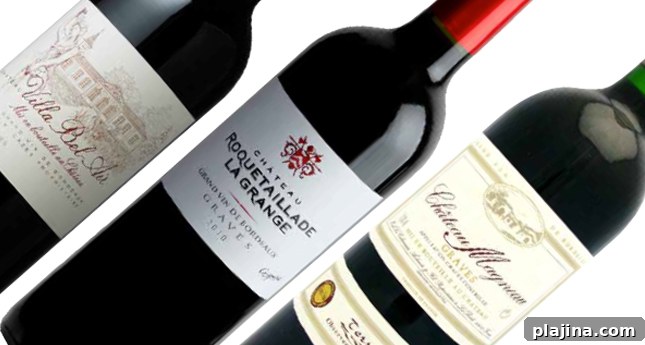
From Graves, the Merlot-led Château Villa Bel-Air 2010 gives off rich berry aromas and delivers a generous, silky palate—an approachable and enjoyable wine. Château Magneau 2010 shows lifted red-fruit scents, a well-balanced, robust structure, and a medium-long finish. Château Roquetaillade La Grange 2010, which is about 60 percent Cabernet Sauvignon, presents a fragrant nose of cassis and cherry and a full, rounded body with a satin-like texture.
In Pessac-Léognan, Château La Garde 2010 stands out as an especially appealing Cabernet Sauvignon-dominant red. Its nose is filled with deep, dark fruit aromas, and the palate is smooth, well-structured, spicy, juicy, and firm—an excellent example of the appellation’s style.
At the top end of the tastings, Château Haut-Lagrange 2010 from Pessac-Léognan makes a strong impression. This Cabernet Sauvignon–Merlot blend offers an aromatic profile of plummy dark fruits and shows more noticeable tannins than several other 2010 examples I tried, suggesting it may age well. Full-bodied and nearly dense, it delivers pronounced dark-fruit flavors—especially plums—along with rich, striking spiciness.
Beyond their quality, these wines represent good value within the realm of fine Bordeaux: prices generally range from about $20 to $50, making them accessible choices for readers seeking classic Graves and Pessac-Léognan characteristics without an extreme price tag.