
Transit passengers arriving at Montréal–Trudeau International Airport will be pleasantly surprised to find a modernized transit experience designed to streamline connections and highlight the character of Montréal.
Designed by Montreal-based Jodoin Lamarre Pratte architects, the new transit center significantly improves the journey for passengers connecting to other flights. The dedicated facility separates connecting travelers from those who have reached their final destination, reducing congestion and speeding border processing by providing distinct arrivals halls. The YUL transit center was completed this year and is now fully operational.
© Adrien Williams
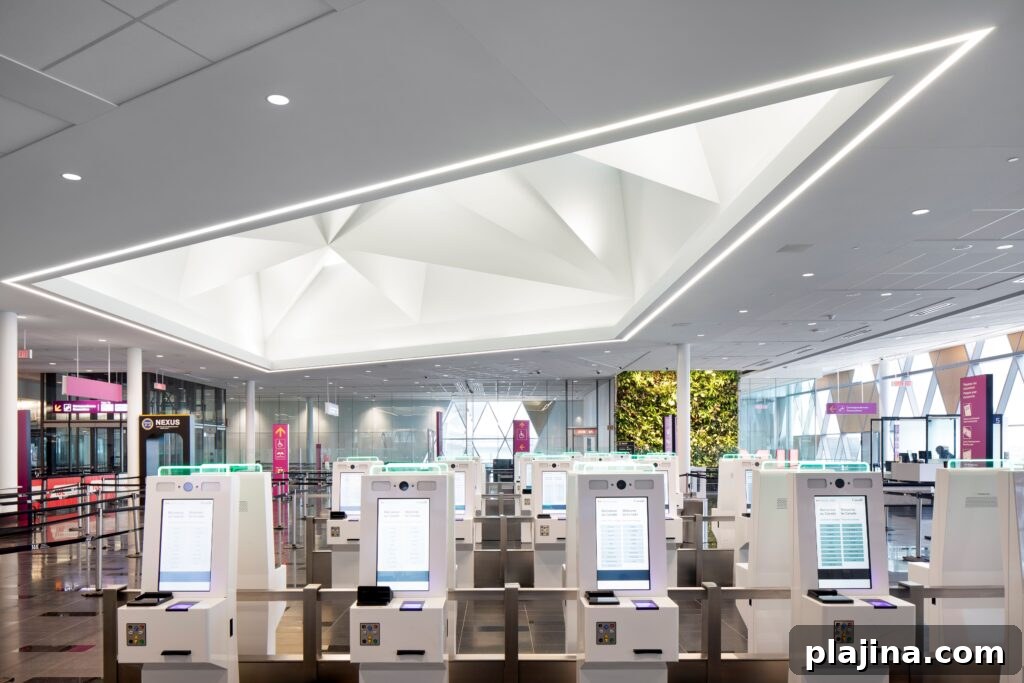
Situated at the junction of the airport’s three concourses—international, cross-border and domestic—the center is flooded with natural light from a 77-by-44-foot skylight positioned above the automated inspection kiosk area. ADM Aéroports de Montréal intended the space to leave connecting passengers with a memorable impression of Montréal as they pass through.
The transit center focuses on travelers who will not be staying in Montréal long, offering an opportunity to create a positive, high-quality experience even during brief stops. The architects emphasized a bright, welcoming environment that evokes the culture and northern character of Montréal, Québec and Canada.
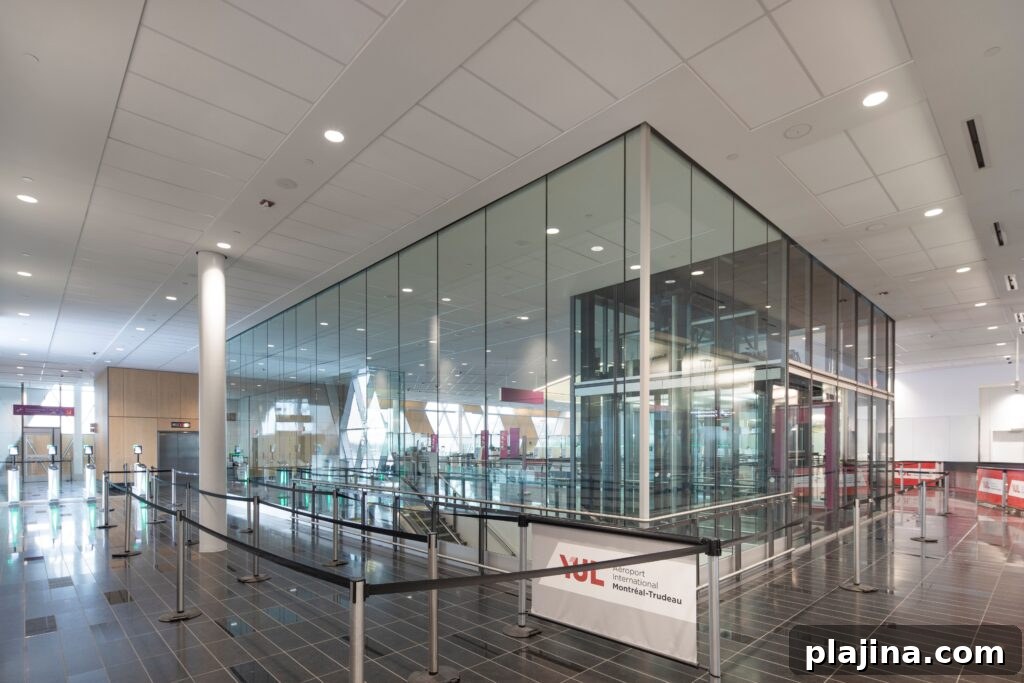
The design integrates smoothly with the existing terminal while asserting its identity through a distinctive treatment of facades. Its scale accommodates a growing number of passengers without competing with the grand proportions of the main arrivals hall, which continues to serve as the gateway to the city.
© Adrien Williams
The two-story building connects both arrivals and departures. All connecting passengers enter the center at the intersection of the three concourses in an open, light-filled space created by expansive skylights and a generous curtain wall overlooking the apron. After completing customs formalities, passengers proceed to their next gate, whether domestic, transborder or international.
© Adrien Williams
The transfer center’s role as a hub for many routes inspired a triangular grid concept, where lines intersect, converge and diverge. This dynamic geometry runs throughout the project—evident in the façade composition, column layout and the skylight geometry above the central Primary Inspection Kiosk area.
The triangular grid on the façade references Canada’s landscapes, reinterpreting the textures of the Canadian Shield—forests, rocky outcrops and expansive waterways. Interior finishes emphasize local and national materials, including Atlantic black granite floors and birch wood wall coverings that reinforce a regional identity.
To enhance thermal comfort and passenger well-being, the center features a living green wall integrated with the ventilation system to help maintain comfortable humidity levels. Air is preheated by a solar wall on the building’s south façade, using renewable energy to reduce heating demand and improve overall environmental performance.