
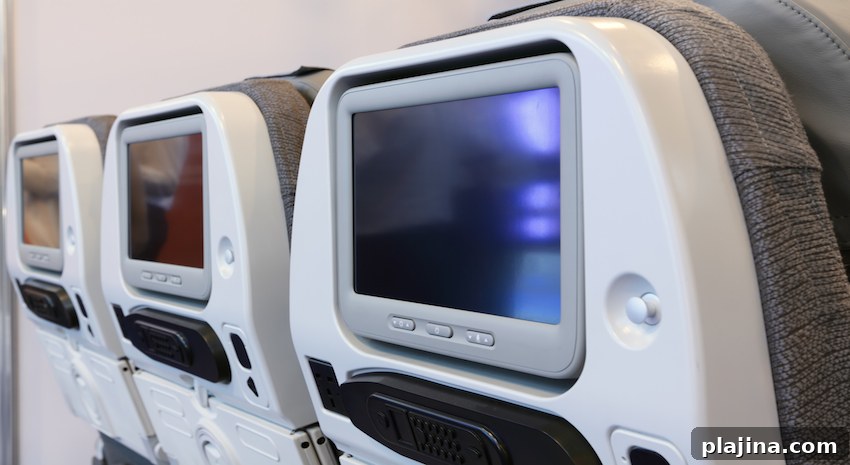
American Airlines has announced it will remove seat-back entertainment screens from its upcoming single-aisle Boeing 737 MAX aircraft set to enter service later this year. Instead of built-in displays, the carrier plans to invest in faster satellite-based Wi-Fi through partnerships with Gogo and Viasat so passengers can stream content on their own devices.
The airline cites passenger behavior as a key reason for the change: about 90 percent of travelers bring personal devices to watch movies and shows, reducing demand for seat-back systems. Upgrading onboard Wi‑Fi will enable smoother streaming from popular services and allow the airline to deliver live TV channels, stored episodes and movie libraries via an onboard streaming server that passengers can access on smartphones, tablets or laptops.
American is not offering complimentary Wi‑Fi across these aircraft; access will continue to be a paid service. However, moving entertainment to passengers’ devices preserves the same content options previously available on seat-back screens while modernizing how that content is delivered.
Removing the displays and the associated wiring harnesses and power modules beneath seats leads to several operational advantages: lighter aircraft weight, improved fuel efficiency and the opportunity to free up a bit more legroom for passengers. Those changes contribute to lower operating costs and a slightly more comfortable cabin environment.
Other carriers, including United Airlines and Alaska Airlines, have already taken similar steps by eliminating seat-back screens on many new narrow-body aircraft. American will retain seat-back entertainment on its current-generation Boeing 737s and Airbus A321s, as well as on its wide-body fleet including Boeing 777s, 787s and Airbus A330s and A350s.
Overall, the shift reflects a broader industry trend toward personal-device streaming and enhanced onboard connectivity, balancing passenger preferences with efficiency improvements for airlines.