
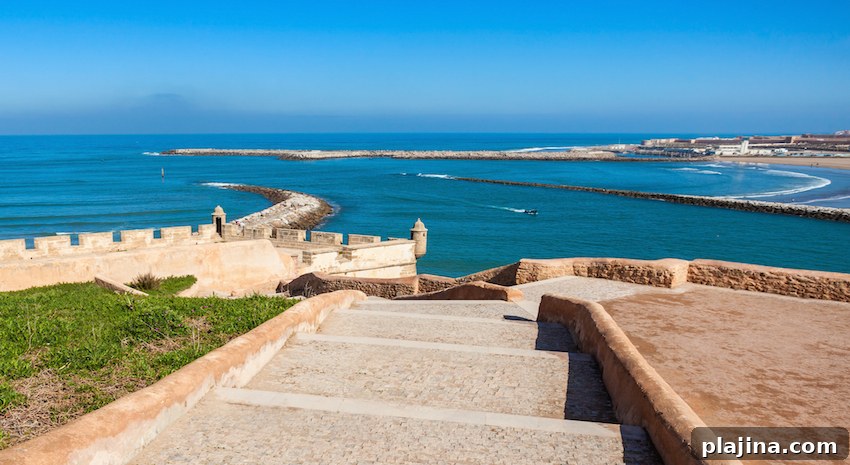
Rabat may not be the first place you think of for a winter beach escape, but Morocco’s capital sits where the Bou Regreg River meets the Atlantic Ocean, giving it both seacoast and riverfront. Historically a busy port — even frequented by Barbary pirates in the 16th to 18th centuries — Rabat today is known for its broad sandy beaches and reliable surf. Popular local breaks include Kbeir, Cascade, Plongeoir and Bergama, which attract surfers year-round.
As one of Morocco’s Imperial Cities, Rabat earned UNESCO World Heritage status in 2012. The city blends modern urban planning with a well-preserved historic core that dates back to the 12th century. Key heritage sites include the Hassan Mosque, the Almohad ramparts and Moorish-Andalusian ruins from the 17th century. Traditional hammams remain an integral part of daily life: these steam baths are both restorative and social, and visitors can find excellent public hammams as well as offerings at many hotels.
Rabat also pulses with cultural life and festivals throughout the year. The Feast of the Throne on July 30 is a national celebration observed across Morocco, while the Wax Lantern Festival in nearby Sale recalls a corsair-era practice of carrying lights to seek the protection of a town patron before sea voyages. Each May the city hosts Mawazine Rhythms of the World, a nine-day music festival staged across multiple venues that features prominent African and international performers. In September, the Chellah Jazz Festival brings together Moroccan and European jazz artists in an intimate program of concerts.
Visitors can combine beach time with sightseeing, enjoying the city’s waterfront promenades, historic monuments and vibrant cultural calendar. Whether you’re there to surf, explore centuries-old architecture or relax in a traditional hammam, Rabat offers a quieter, less-touristed Moroccan experience with plenty of coastal charm and cultural richness.