
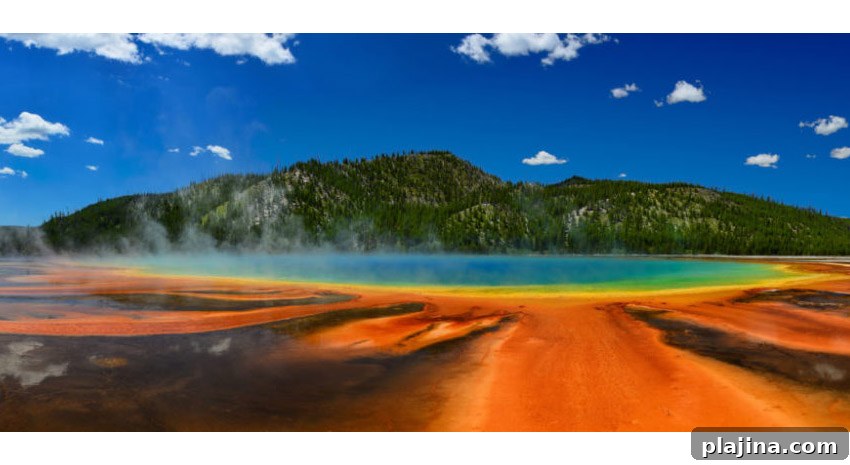
The United Nations Educational, Scientific and Cultural Organization (UNESCO) designates sites around the world as World Heritage Sites because of their outstanding cultural, natural, or historical value. While many of these landmarks are abroad, the United States is home to a significant number of World Heritage Sites that highlight the nation’s diverse landscapes, history, and cultural achievements. With 22 sites spread across the country, travelers can plan visits that range from dramatic natural parks to historic buildings and ancient archaeological sites.
Below is a list of UNESCO World Heritage Sites located in the United States:
- Mesa Verde National Park
- Yellowstone National Park
- Everglades National Park
- Grand Canyon National Park
- Independence Hall
- Kluane / Wrangell-St. Elias / Glacier Bay / Tatshenshini-Alsek
- Redwood National and State Parks
- Mammoth Cave National Park
- Olympic National Park
- Cahokia Mounds State Historic Site
- Great Smoky Mountains National Park
- Statue of Liberty
- Yosemite National Park
- Chaco Culture
- Hawai‘i Volcanoes National Park
- Monticello and the University of Virginia in Charlottesville
- Taos Pueblo
- Carlsbad Caverns National Park
- Waterton-Glacier International Peace Park
- Papahānaumokuākea
- Monumental Earthworks of Poverty Point
- San Antonio Missions
These sites represent a wide variety of values recognized by UNESCO. National parks such as Yellowstone, Yosemite, and the Grand Canyon showcase exceptional natural beauty and geological significance. Coastal and marine areas like Papahānaumokuākea protect unique ecosystems and cultural connections to indigenous peoples. Ancient and pre-contact cultural sites—Mesa Verde, Cahokia Mounds, Chaco Culture, and the Monumental Earthworks of Poverty Point—offer insight into complex societies that existed long before European arrival. Historic sites including Independence Hall, the Statue of Liberty, Monticello, and the San Antonio Missions reflect pivotal moments and architectural achievements in U.S. history.
Visiting these World Heritage Sites can be an enriching way to experience both natural wonder and historical depth. Each site has its own visitor services, interpretive programs, and conservation efforts, so planning ahead is recommended—especially for popular national parks and seasonal attractions. Many sites also support educational resources and guided tours that deepen understanding of their significance.
In addition to the individual sites, Philadelphia holds a unique recognition: it is the only city in the United States designated by UNESCO as a World Heritage City, reflecting its central role in the nation’s founding and rich architectural heritage.
For more articles like this, visit trazeetravel.com.