
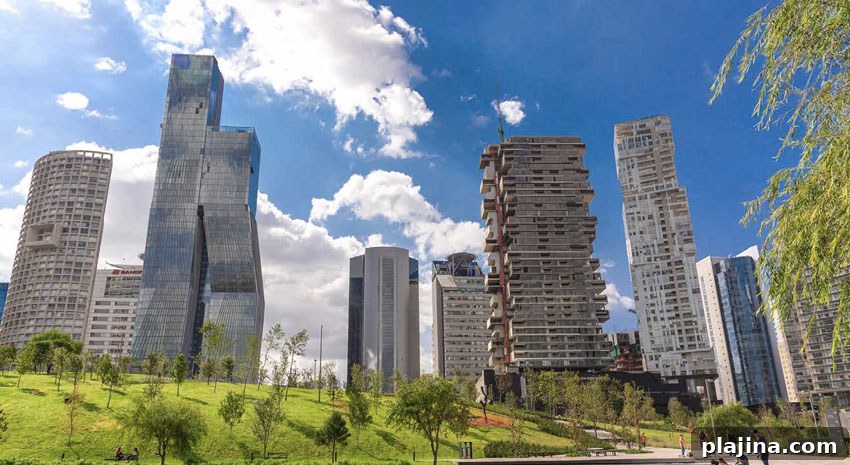
MEXICO CITY has long been underrated compared with North American peers like Toronto and Washington, D.C., but lately the rest of the continent is catching up to what the capital offers. Home to one of the largest concentrations of museums in the world and many important cultural institutions, Mexico City has had to overcome numerous challenges — including a major earthquake in 2017 — before earning wider recognition.
Each setback seems to spur renewal. Year after year the city becomes cleaner, more polished, and more confident, while preserving the energy that makes it unique.
Jim Johnston, author of Mexico City: An Opinionated Guide for the Curious Traveler, points to 2015 as an inflection point when travel coverage began celebrating the city’s vibrancy. “Restaurants, bakeries, and shops of all kinds have been opening up, many run by foreigners. This has added an edge of adventure to the city, introducing Mexicans to a wider range of products and services,” he says. “There is a big change in the perception of the city — fear has been replaced by fabulousness. In addition, the infrastructure has improved, the air is cleaner, and public transportation has improved.”
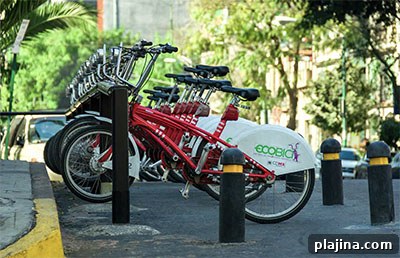
Bikes available to rent in the city © AGCUESTA | DREAMSTIME.COM
Practical changes have helped. Uber and bike-share programs make getting around simpler, and they spare visitors the need to call a radio taxi in Spanish. “Uber and Airbnb have made it easier for visitors to move around the city and get to know a wider swath of neighborhoods,” says Lydia Carey, Mexico City writer and author of Mexico City Streets: La Roma. Today there are many English-language culinary and cultural tours, allowing overseas visitors to access local experiences that were harder to find a decade ago.
“Mexico City has become the hub for innovation across Latin America,” says José Pablo Toscano, CEO and founder of a local travel startup, Jubel. “Hundreds of millions of dollars are pouring in, and this has made the city much more dynamic and tech-forward.”
The city still faces structural challenges rooted in its origins as an Aztec island settlement amid lakes and marshes. After the Spanish conquest in 1519 the marshes were drained and temples dismantled to build cathedrals and government palaces — structures that began sinking soon after completion. Ongoing projects such as airport expansion continue to face engineering hurdles and cost overruns due to the swampy soil beneath the metropolis.
Yet people continue to arrive, and the city now supports five convention centers, more than 600 hotels and over 53,000 rooms, from budget options to boutique and luxury properties. Visitors can easily spend a week exploring the historic center and nearby neighborhoods, while some businesses and conferences are based in the distant office park of Santa Fe.
Air quality has improved as older buses and the iconic Volkswagen Beetle taxis are phased out. The city’s long-standing liberal culture has helped create a thriving arts scene. “Mexico City has always been a liberal oasis,” Toscano notes. “This momentum has kept pushing the city towards social reforms.” Leadership on gay rights and environmental issues has attracted a young, creative workforce and energized the local business community.
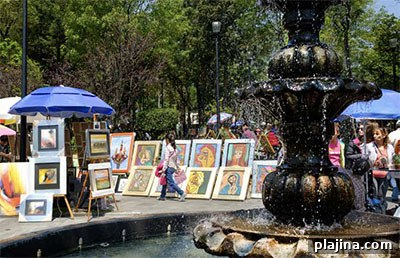
Saturday Bazaar in the San Ángel neighborhood © KMIRAGAYA | DREAMSTIME.COM
Gentrification has transformed neighborhoods such as Coyoacán, Condesa, Roma and San Ángel. Higher rents can pressure longtime residents, but these walkable areas are now lively places to stay, eat and stroll. Where visitors once concentrated between the historic center and affluent Polanco, exciting restaurants, bars and shops keep appearing across a broader range of neighborhoods.
“There are more great gourmet food and drink options all the time, with Mexican craft beer and designer cocktails really taking center stage,” says Carey. “There are several microbreweries now within the city limits you can visit.”
Foreign investment and a friendlier business climate are changing the city’s economic landscape. “The city is better positioned now to cater to all levels of tourism,” Carey says. High-end hotels, international art venues and luxury retail coexist with excellent street food, busy markets and centuries of history. Investment is also reaching lesser-known central neighborhoods like Santa María la Ribera, San Rafael and Juárez.
“Recent policies have been very pro-foreign investment, so it’s much easier to come in and take advantage of the many opportunities here,” Toscano adds. After decades of relative anonymity among international travelers and business visitors, Mexico City appears to be finding its groove.
Things to Do in Mexico City
Whether you prefer museums, neighborhoods, ruins or food tours, Mexico City offers something for every interest. The National Museum of Anthropology is one of the country’s must-see attractions, housing the finest collection of pre-Columbian art in a dramatic building with nearly 20 acres of displays covering multiple historical periods.
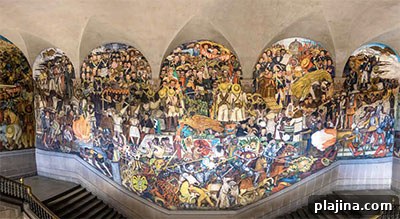
The stairs of the Palacio Nacional with the famous mural The History of Mexico by Diego Rivera © DIEGO GRANDI | DREAMSTIME.COM
Near Alameda Park, the gilded Palacio Postal and the Palacio de Bellas Artes showcase early 20th-century elegance through Belle Époque and Art Deco design. The Plaza de la Constitución, better known as the Zócalo, anchors the historic center: the Palacio Nacional displays Diego Rivera’s expansive murals, while the Metropolitan Cathedral — built over 277 years — dominates another side of the square.
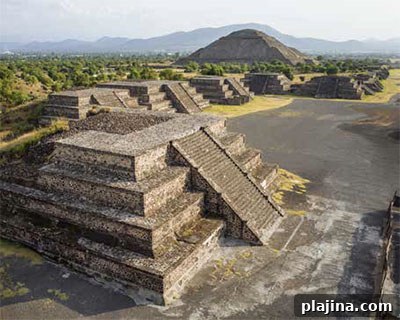
Teotihuacán © BRIANCWEED | DREAMSTIME.COM
A day trip about 31 miles northeast brings you to the ruins of Teotihuacán, a spectacular complex that thrived between roughly 100 and 750 CE and was later reoccupied by the Aztecs.
CHECKING IN WITH JOAQUIN CARDOSO
Executive Chef, Hotel Carlota
How has Mexico City changed in the past five years?
I returned from Paris five years ago after working there for 13 years. Since then, more authentic communities have settled here — Korean, Japanese, Colombian and Venezuelan, to name a few — adding flavor and distinct neighborhood identities.
What is happening with the food scene, and where is it headed?
The culinary scene increasingly features original projects driven by clear personalities. Examples include Masala y Maiz, Sartoria, Rokai group, Amaya and La Docena. This diversity makes the city’s food scene richer.
Is Mexico City a good place to do business?
I believe so, which is why I returned. I’m working to integrate social and sustainable responsibility into my business. While bureaucratic hurdles remain, I’d like to see simpler processes and greater transparency.
When you want to show off Mexico City, where do you take visitors?
We’d start with tacos at Los Cocuyos, El Vilsito or El Hidalguense, or Paramo for chamorro tacos. For seafood, try La Docena, Contramar or Mi Gusto Es in Narvarte. For drinks, mezcal at Bósforo, organic Mexican wine at Loup Bar, then dancing at Foro Normandie or MN Roy. For breakfast, Fonda Margarita’s beans and egg omelet is a favorite.
Mexico City Info to Go
Benito Juárez International Airport is less than 10 miles from most hotels and operates from two terminal buildings connected by a shuttle train. Official taxi tickets can be purchased before exiting for approximately $9–18, depending on hotel zone. The metro connects to the airport, though luggage is not permitted on that service. Within the city, Uber or a hotel-arranged Sitio radio taxi are the most convenient options instead of hailing cabs on the street.
Mexico City: Just the Facts
Time zone: GMT -6
Phone code: Country code 52, city code 55
Currency: Mexican peso
Key industries: Finance, food and beverage, tourism, textiles, chemicals, furniture, plastics, metals, telecom and pharmaceuticals
COMING AND GOING
U.S. citizens need a passport valid at least three months beyond their planned departure date with two blank pages. No visa is required for visits under 180 days, and no special vaccinations are mandatory.
OFFICIAL LANGUAGE
Spanish
Where to Stay in Mexico City
LAS ALCOBAS, A LUXURY COLLECTION HOTEL, MEXICO CITY offers chic, high-tech rooms, private-elevator suites and two acclaimed restaurants, appealing to travelers seeking exclusivity. Ave. Presidente Masaryk 390, Polanco $$$$$
FOUR SEASONS MEXICO CITY combines robust security, attentive service and a beautiful courtyard, remaining a top choice for visitors. Paseo de la Reforma 500, Colonia Juárez $$$$$
THE ST. REGIS MEXICO CITY is a modern, high-design luxury hotel with popular dining and meeting spaces. Paseo de la Reforma 439, Colonia Cuauhtémoc $$$$
Restaurants in Mexico City
NICOS A modest, lunch-only spot that regularly appears on Latin America’s best-restaurant lists, Nicos focuses on traditional dishes made with seasonal, local ingredients. Ave. Cuitláhuac 3102, Clavería $$
PASILLO DE HUMO A relaxed Condesa venue featuring superb Oaxacan cuisine by chef Alam Méndez. Ave. Nuevo León 107, Hipódromo Condesa $$$
PUJOL Mexico’s most renowned restaurant, recently renovated, now also offers an exceptional design experience alongside its celebrated cuisine. Tennyson 133, Polanco $$$$