
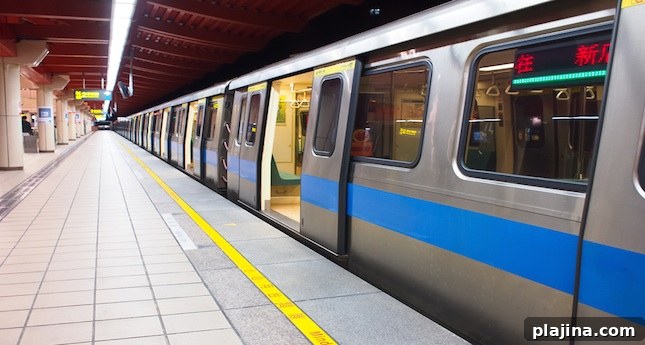
Taipei Metro will simplify line and station names to make the system easier for tourists to use. Instead of numeric line names, each line will be identified by a color and every station will receive an alphanumeric code. Currently lines are numbered and station names appear in Chinese and English, but many visitors still find the names confusing because they are romanisations of Chinese names, Taipei Mayor Ko Wen-je told Taiwan’s Central News Agency.
Under the new scheme, for example, Line 3 will be renamed the Green Line and its stops will be labeled G01, G02 and so on. Interchange stations will carry multiple codes, one for each line that serves them, so transfers will be clearer. The goal is to help passengers—especially foreigners—find their way more quickly and reduce mispronunciation or confusion when asking for directions.
The change follows similar updates in other major cities. Tokyo recently introduced color-coded lines and assigned two-letter, two-digit alphanumeric codes to many stations to improve navigation for international visitors. Station names there are already displayed in English and will also appear in Chinese and Korean in some areas. Osaka likewise uses an alphanumeric system to streamline wayfinding across its network.
By adopting color coding and station codes, Taipei Metro aims to create a more intuitive system for both residents and tourists. Signs, maps and announcements will be updated to include the new codes alongside existing names, making it easier to plan routes, follow maps, and make transfers. The move is expected to benefit travelers who struggle with unfamiliar place names and to bring Taipei’s metro more in line with international wayfinding standards.
The introduction of colors and codes can also aid digital navigation tools and printed materials: route planners, mobile apps, and maps can display concise, easy-to-remember identifiers that work across languages. For daily commuters, the system retains familiar station names while adding a practical layer for clearer orientation.
Overall, the redesign emphasizes user-friendly signage and clear, consistent labeling to enhance the travel experience for visitors and locals alike. Taipei Metro’s adoption of color-coded lines and alphanumeric station IDs represents a straightforward improvement intended to reduce confusion and make the network more accessible to an international audience.