
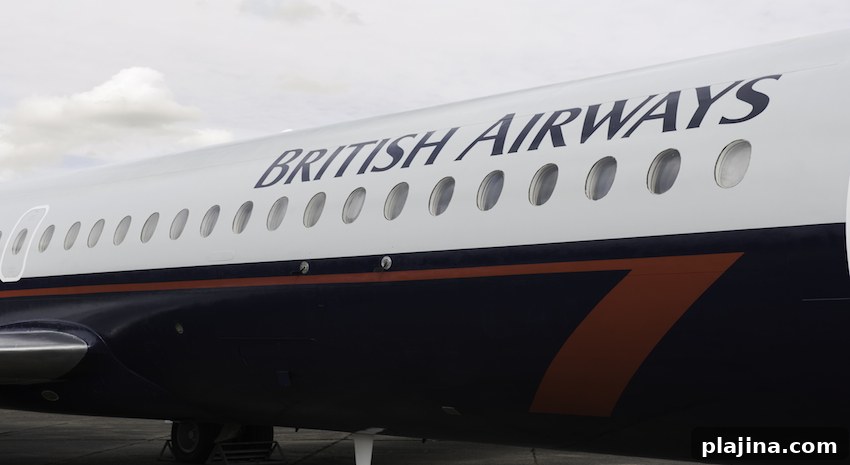
British Airways has announced a controversial change to the cabin layout of some of its long-haul aircraft that will reduce personal space for economy passengers. The carrier plans to add an extra seat at each row on selected Boeing 777s, increasing the number of economy seats across the cabin and, in turn, changing the onboard experience for many travellers.
Currently configured with nine seats abreast in economy on the affected 777s, British Airways intends to convert these cabins to a 10-abreast arrangement on a number of aircraft. The initial roll-out focuses on aircraft based at London Gatwick, where each modified plane will gain 52 seats. Once the Gatwick conversions are complete, the airline plans to apply the same seat-density change to part of its fleet at London Heathrow.
The modifications are targeted primarily at long-haul routes, including high-profile services such as New York and Hong Kong. These routes have traditionally emphasized passenger comfort during multi-hour flights, so the change is likely to draw attention from frequent flyers and consumer advocates who prioritize legroom and seat width as key aspects of comfort on long journeys.
British Airways frames the decision as a commercial and customer-value adjustment. By increasing the number of seats per aircraft, the airline says it can offer more competitive ticket prices and greater choice for travelers. The carrier also highlights a simultaneous investment in cabin amenities: passengers in the newly densified cabins will still receive a personal in-flight entertainment system at their seat, an element BA cites as an important part of the onboard experience despite the reduced seating dimensions.
Critics of higher-density cabin layouts argue that squeezing more seats into the same physical cabin footprint can significantly affect passenger comfort. Reduced seat width and potentially shallower recline can make long-haul travel less comfortable, particularly for larger passengers or those on overnight flights. In addition, higher seat counts can place more demand on cabin services, lavatory availability and aisle congestion during boarding, disembarkation and meal service. These operational effects are often raised in public debate whenever airlines pursue denser seating arrangements.
Supporters of the move point out that a larger number of seats enables airlines to open lower fare brackets, making long-haul travel accessible to a broader group of travellers. For price-sensitive customers and those willing to trade extra personal space for a lower fare, a denser economy cabin can be an acceptable compromise. Airlines also note that modern cabin refurbishments commonly include updates such as improved lighting, redesigned overhead bins, and upgraded entertainment systems, which can help offset some negative perceptions of reduced seat dimensions.
It is worth noting that a 10-across economy configuration is not unprecedented. Several international carriers already operate similar layouts on some of their widebody aircraft. Airlines such as Emirates and Air New Zealand have used higher-density seating on selected models and routes, balancing cabin density with service offerings and ancillary revenue strategies. That precedent does not eliminate concerns, but it does mean there are operational models and customer-response data that British Airways can observe as it implements the changes.
For frequent flyers, corporate travel managers and concerned customers, the primary questions will likely focus on the specifics: exact seat width and pitch after conversion, how seat comfort compares to the current configuration, whether any changes will affect cabin service levels, and how ticket pricing will actually change once the modifications are in service. Passengers will also want clarity on which aircraft and routes will be converted and the expected timetable for these adjustments.
Ultimately, the decision reflects a broader industry trend in which airlines balance passenger comfort against commercial pressures to lower fares and increase capacity. As British Airways moves forward with the seat reconfiguration program at Gatwick and later at Heathrow, passengers, regulators and airline observers will be watching how well the carrier manages comfort, safety, and service while pursuing greater seat density.