The idea is not new—African safari camps have long offered room-sized tents with carpeted floors, real beds and private bathrooms. Until recently, however, that style of camping hadn’t spread widely beyond the savannahs. Europe embraced “glamping” first, and from France the Huttopia brand expanded into the United States, opening its first glamping resort near Conway in New Hampshire’s White Mountains.
We visited two weeks after it opened and enjoyed the stay for different reasons. I appreciated not having to spend days gathering and packing camping gear. My husband Tim was relieved not to check whether he had the right tent poles or stakes, and he liked avoiding the usual final struggle with wet canvas at the end of a trip. We both welcomed electric lights and the comfort of a real bed after full days outdoors.
Our teenagers, Mary (16) and Jordan (13), were happy to be free of chores and thrilled by the pool and the hammocks strung beneath the pines. Our tent faced the lake and sat just a few yards from the beach, so they spent plenty of time on the water in the resort’s kayaks, canoes and paddle boards.
Mornings began with a short walk to the poolside terrace for fresh-made French crêpes served from a shiny Airstream stand, and afternoons often included handmade ice cream. Evenings offered a selection of custom-made pizzas, or we could cook on the tent porch using a reliable Coleman stove that never ran out of propane mid-meal.
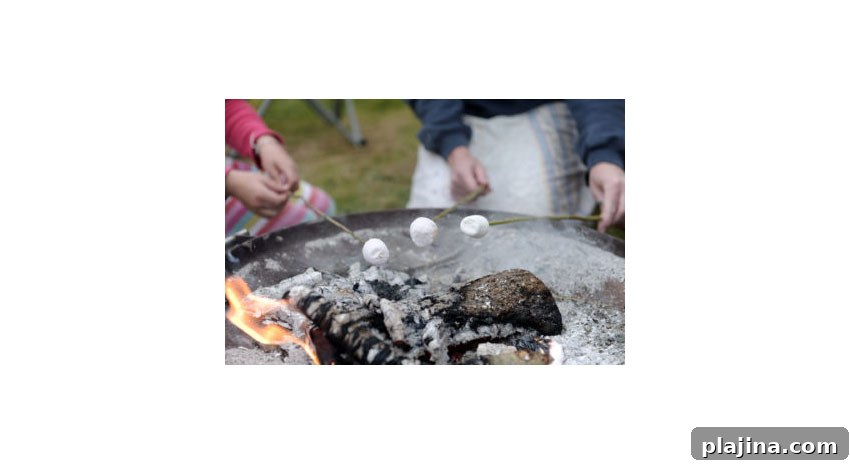
Each campsite includes a picnic table and a fire ring; our site also had an indoor dining table and chairs for rainy weather. We enjoyed marshmallow-toasting by our campfire—exactly the familiar, cozy parts of camping, without the heavy labor that usually comes with it.
Our Trappeur tent was the largest option. It featured a king-size bed, a double bed and a single bunk. Small curtained “bedrooms” flank a compact bathroom with a shower. The kitchen area provided counter space, a sink, a small refrigerator, cooking utensils, real dishes and glassware. Little touches—like a French press coffeemaker, a salad spinner and wine glasses—hinted at Huttopia’s French roots. A pétanque court near the terrace invites guests to gather in the evenings for games, music or family-friendly shows.
Other accommodations include the Canadienne tents, similar to the Trappeur but without indoor bathrooms (shared bathhouses offer fully equipped private bathrooms), and the smaller Bonaventure tents, which include a king-size bed, electricity, a refrigerator and a Coleman stove. For traditional campers, Huttopia also offers classic tent sites with tables and fire rings. Manager Justine Pancin explained that the resort is designed to welcome many styles of camping—though RVs are not permitted.
Huttopia is New Hampshire’s first glamping resort, but glamping appears in many forms across the country and beyond. Options range from pre-pitched tents with air mattresses ready for sleeping bags to luxury safari-style tents like the one we stayed in. In Maine, Sandy Pines Campground near Kennebunkport offers several luxury tents, and near Acadia National Park there are luxury tent stays on organic farms listed on short-term rental platforms.
Across the western United States, glamping sites are often located near parks and coastal areas. Treebones Resort in California features Mongolian-style yurts perched on a Big Sur bluff. El Capitan Canyon, opposite El Capitan State Beach near Santa Barbara, provides both tent sites and rustic cabins. Huttopia also operates a campground in Sutton, Quebec.
Not every property labeled “glamping” uses tents—many are cabins, cottages or specially outfitted RVs. Unique accommodations such as tree houses, tiny houses and other unconventional lodging are frequently marketed under the glamping banner as well. Amenities and inclusions vary widely, so it’s important to confirm what is provided before booking to ensure the experience matches expectations.
For more articles like this, visit whereverfamily.com.