I had waited my whole life to stand where I was: before the Taj Mahal, a long-standing item on my travel bucket list. I expected awe or chills the moment I first saw it, but as I gazed up at its majestic white façade and felt the sun-warmed pavement beneath my bare feet, I was surprised to feel a quiet empathy instead.
My guide from Intrepid Travel’s Urban Adventures described the Taj Mahal as a mausoleum built by Mughal emperor Shah Jahan for his third and favorite wife, its white marble inlaid with precious and semi-precious stones. From the outside it projected permanence, beauty and power, but inside it was largely empty—a poignant reminder of the contrasts between exterior grandeur and inner stillness.
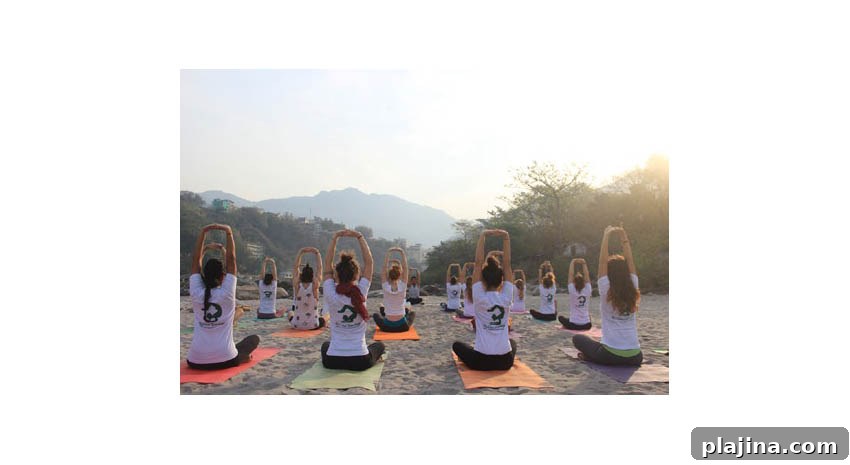
This wasn’t my first trip to India—previous visits for work had taken me to Mumbai and the beaches of Goa—but it was my first trip purely for myself. I had come to attend a weeklong yoga retreat at Rishikul Yogshala in Rishikesh, a place many call the yoga capital of the world.
A wise yoga teacher once told me you cannot pour from an empty cup, using the airplane mask analogy: put the mask on yourself before helping others. “Take care of yourself first so you can pour into other people’s lives,” he said. Those words inspired this journey, where I planned to combine a deep personal practice at a Rishikesh retreat with a pilgrimage to the Taj Mahal.
Unlike trips when I return home loaded with souvenirs, I arrived in India carrying little more than a yoga mat and an open intention—an empty cup ready to be filled by new experiences both on and off the mat. Standing before the Taj, I realized my priorities had shifted: this trip was about nourishment and inner replenishment rather than acquisition.
Yoga retreats have grown in popularity in recent years as more Americans — now millions — embrace yoga. Retreat offerings vary widely, from wine-and-yoga weekends in Tuscany to silent off-the-grid escapes in Mexico. Still, nothing matches the authenticity and depth of a retreat in India, where yoga originated.
Yoga’s history in India stretches back nearly 5,000 years, with roots in the Indus Valley Civilization. The traditions were transmitted orally until Sage Patanjali compiled the Yoga Sutras around 2,000 years ago, laying the philosophical groundwork for the practice as it spread worldwide. The classical system of yoga is often described as eight limbs: yama (ethical restraints), niyama (observances), asana (postures), pranayama (breath control), pratyahara (withdrawal of senses), dharana (concentration), dhyana (meditation) and samadhi (absorption or enlightenment).
Retreats in India typically address these eight limbs, but the best centers go further by immersing guests in yoga’s lifestyle and culture: nourishing Ayurvedic meals, traditional therapies, philosophical study and guided excursions that connect practice with place. I chose Rishikul Yogshala because it blends the technical and physical aspects of yoga with experiential and cultural learning.
The Rishikul Yogshala program I attended lasts seven days and is tailored to participants or groups. Each day includes multiple yoga sessions in different styles, three Ayurvedic meals, Ayurvedic classes, private philosophy sessions, massages and excursions to nearby sites such as the Ganges, the Himalayas and local caves. The ashram sits within walking distance of the famed ashram where The Beatles once studied with Maharishi Mahesh Yogi.
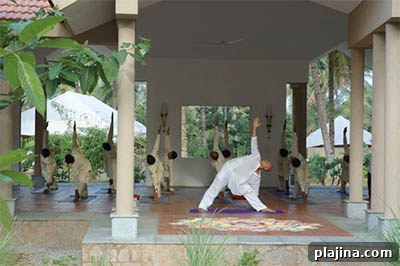
Yoga instructors at Shreya Yoga Retreat © SHREYAS YOGA RETREAT
Although Rishikesh hosts one of the largest concentrations of ashrams in the world, India offers a wide variety of retreat centers to suit different tastes. For those seeking luxury, Shreyas Yoga Retreat near Bangalore provides an intimate experience on 25 acres, accepting only a small number of guests to ensure personalized attention from teachers, therapists and gurus. For modern practitioners who want amenities, Purple Valley Ashtanga Retreat in Goa offers strong WiFi, detox juices and beautiful surroundings. Purists often praise The Yoga Institute in Mumbai, founded in 1918 by Shri Yogendraji, as one of the oldest organized centers dedicated to traditional yoga study.
The appeal of a yoga retreat in India lies in the combination of authentic practice, holistic wellness and the opportunity to visit some of the world’s most remarkable cultural and historic sites. After a week at Rishikul Yogshala, I returned to the pictures I had taken at the Taj Mahal with a renewed sense of gratitude. My cup felt full, and I was eager to bring what I’d learned and experienced back into my daily life and relationships.
India Info to Go
India’s main international gateways include Bengaluru (BLR), Chennai (MAA), Delhi (DEL), Hyderabad (HYD), Kolkata (CCU), Mumbai (BOM) and Kochi (COK). Domestic travel is well served by Air India and an extensive rail network, making it relatively easy to connect to destinations such as Goa, Kochi, Lucknow, Trivandrum and Kunnar. Many retreat centers, including Rishikul Yogshala, offer airport transfers for a fee, and India’s train system is a good alternative for experiencing the country while traveling between regions.