
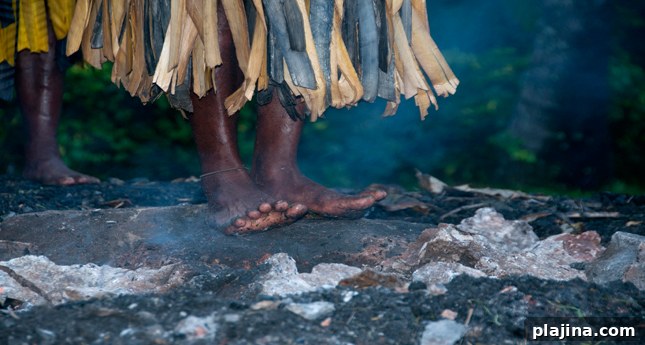
Fiji practices two distinct fire-walking traditions that reflect the country’s cultural diversity and spiritual history. On the island of Beqa, south of Viti Levu, members of the Sawau tribe perform a dramatic fire-walking rite that has been passed down through generations. The ritual begins with traditional chanting and strict preparations: participants observe a two-week period of abstinence from sexual activity and avoid eating coconuts. After the preparation, male fire-walkers stride across white-hot, wood-fired stones. Observers report no visible signs of pain or injury during or after the feat. According to local legend, the practice began when a Sawau warrior saved the life of a spirit god while fishing for eels centuries ago. In gratitude, the spirit granted the warrior and his descendants the supernatural ability to walk on fire without harm. Today, that privilege is preserved for descendants living in specific villages on Beqa, and performances are staged for visitors at cultural venues and resorts, including those on Beqa and selected locations along Viti Levu’s Coral Coast.
The other major fire-walking tradition in Fiji is rooted in Hindu religious practice and originates from South India. In many of Fiji’s Hindu temples, annual fire-walking ceremonies are held between May and September, commonly timed with the full moon. These events are devotional acts of purification and thanksgiving, historically associated with petitions to the goddess Kali for rain. Participants typically wear yellow garments, sometimes puncture body parts with spikes as an act of sacrifice or devotion, and smear their faces with red and yellow paint. Amid rhythmic drumming and collective chanting, devotees walk over burning embers as part of the ceremony. Prior to the event, participants often undergo a period of seclusion lasting around 10 days, during which they consume only simple vegetarian meals and avoid spicy foods to maintain ritual purity.
Both traditions—Sawau fire-walking on Beqa and Hindu temple fire-walking—are deeply embedded in Fiji’s cultural and spiritual landscape, yet they differ in origin, meaning, and practice. The Sawau rite is a hereditary tribal practice tied to local myth and communal identity, performed by specific families and presented often as a cultural demonstration for visitors. The Hindu ceremonies, by contrast, are religious observances performed as acts of devotion and communal purification, held at temples on particular dates set by religious calendars.
Visitors to Fiji who wish to witness fire-walking can find opportunities at cultural centers and some resorts that host Sawau performances, where trained practitioners demonstrate the Beqa tradition within a carefully managed context. Hindu fire-walking is generally observed at temple ceremonies, which are scheduled on certain festival dates and may involve deeper religious participation from devotees. Observing either tradition offers insight into Fiji’s complex cultural tapestry—a blend of indigenous belief systems and immigrant religious practices that together shape communal rituals, storytelling, and identity.
Both forms of fire-walking emphasize preparation, discipline, and communal support. Whether framed as ancestral gift and tribal identity or as religious purification and supplication, the rituals showcase the powerful role of ceremony in maintaining continuity, strengthening social bonds, and expressing spiritual conviction in Fiji’s diverse communities.