
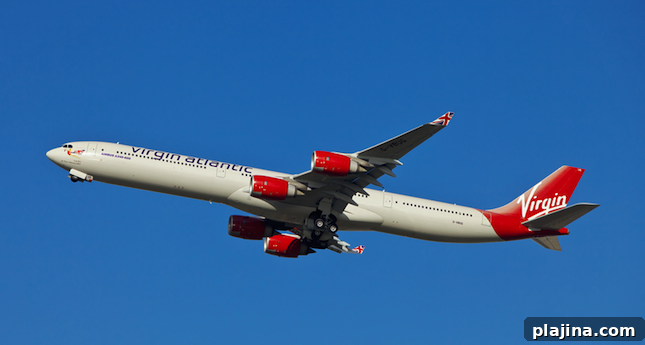
Virgin Atlantic Airways announced a major $4.4 billion order for Airbus aircraft last week. The deal covers 23 A350-1000 jets powered by Rolls-Royce Trent XWB engines, which are expected to cut CO2 emissions by about 30 percent compared with the models they replace. This order is a central part of a wider fleet modernization program that will replace roughly half of the airline’s fleet within six years.
Under the financing arrangements, Virgin Atlantic will own eight of the 12 initially delivered aircraft and lease four. The carrier also expects the A350-1000 to reduce its airport noise footprint by more than half, supporting its sustainability and community goals.
“The size of this order demonstrates our absolute focus on investing in the future for our customers and our people, and confirms the strength of our business. The A350-1000 plays a pivotal role in our fleet program, helping to create one of the youngest, cleanest, greenest fleets in the sky,” said Craig Kreeger, CEO of Virgin Atlantic. He highlighted the aircraft’s strong economics, fuel efficiency and quiet operation, noting that these qualities make long-haul travel both more enjoyable for customers and better for the environment.
The new A350-1000s will begin replacing older Boeing 747-400s and Airbus A340-600s as soon as 2019. Initially they will operate on key transatlantic routes between London Heathrow (LHR) and principal U.S. destinations, with service later expanding to a wider range of business and leisure routes worldwide from both London Heathrow and London Gatwick.
“We’re thrilled to welcome the A350 to Virgin Atlantic,” said Sir Richard Branson, president of Virgin Atlantic. He emphasized the aircraft’s strong customer appeal and environmental performance, and said its sustainability credentials were an important factor in the airline’s decision. Branson added that Virgin Atlantic will combine the A350’s advanced features with the carrier’s signature service to deliver an improved passenger experience.