
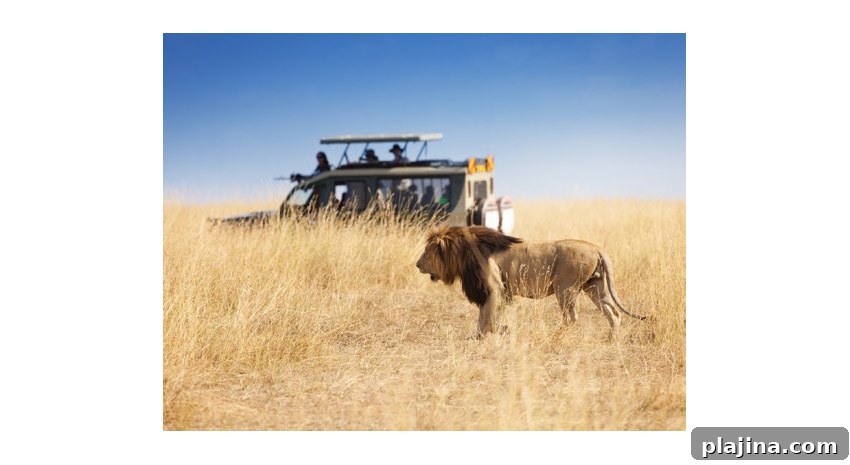
IN MASAI MARA, Kenya’s most celebrated game reserve, animals often play hide-and-seek through the morning light. Soon enough their silhouettes appear across a vast expanse of tall grass that stretches in every direction like amber-colored fabric. The Mara’s landscape — wide golden plains dotted with graceful acacia trees and granite outcrops under an immense sky — is home to a remarkable variety of wildlife. Beyond the famed Big Five (lion, Cape buffalo, elephant, leopard and rhino), the reserve shelters numerous bird species, reptiles and small mammals. The Mara shares this land with the Maasai people, an ancient and proud community of nomadic cattle herders and warriors. The Maasai named the area “Mara,” meaning “mottled,” a fitting description for the patchwork of life and color across the plains.
Watching through binoculars from our safari vehicle, I soon understand that meaning. At first the horizon looks almost uniform, a continuous sweep of gold. Then movement breaks the surface: shapes become clear, the plain “mottled” with life. From the cover of thick brush a male lion steps out and crosses the ridge. Another follows, mane fuller and darker, and they walk along the skyline about 30 feet apart in steady, purposeful strides. Our guide tracks them, guessing their destination. He suspects water, so we race to a nearby cliff that overlooks a dry riverbed. Minutes later the lions appear on the opposite bank and descend to drink — an intimate and unforgettable sight. The moment grows richer when four lionesses and several playful cubs join them, transforming a private encounter into a vibrant family scene.
At Sand River Masai Mara, a secluded, luxury tented camp with 16 suites near the Tanzanian border, we meet Mamba, a Maasai warrior who serves as an askari at the camp. The askari — responsible for camp security and guest safety — often wear traditional Maasai clothing: the bright red shuka, leather sandals, and brass and beaded jewelry, and carry a rungu (a wooden club). Their deep knowledge of the land, passed down through generations, makes them ideal guides after dark and early before game drives. One morning Mamba proves indispensable when a cantankerous Cape buffalo wanders into camp and blocks a guest from leaving her tent.
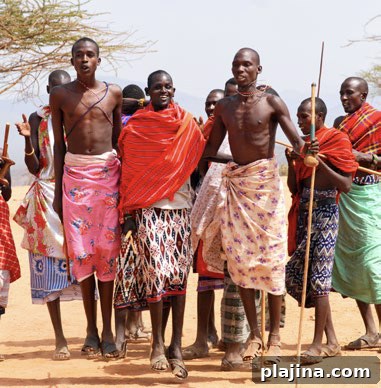
Maasai men jumping © DIBROVA | DREAMSTIME.COM
To learn more about daily Maasai life, we visit a village across the reserve. From the air, villages appear as irregular circles scattered across the plains; up close they reveal practical compounds built to protect cattle. Thorn and tree fences enclose a central open area that serves as a corral and communal space. Around this ring sit low, hand-built houses made of twigs and dung, with low ceilings and tiny, dim rooms. Beds are woven from branches and layered with animal skins and grass. A hole in the roof of the cooking area vents smoke when fires are lit.
Our hour-long visit begins with a greeting from the village chief and continues with a performance by the women. Their hair is plaited and smeared with ochre, their necks and arms heavy with beadwork; their songs are haunting and melodic. The men then demonstrate their famous jumping dance: each warrior launches himself skyward, taking turns in a display that can continue for extended periods in a trance-like rhythm. They also show how to make fire by rubbing sticks together until sparks take hold and ignite a blaze. The Maasai speak candidly about the past, explaining that hunting once played a central role in their culture, and they discuss polygamy and the importance of cattle as a measure of a man’s status. When the visit concludes, villagers invite guests to examine tables filled with beaded jewelry, carved figurines and woven shukas available for purchase.
Leaving the village wearing several beaded bracelets, I’m struck by the Maasai’s dedication to their traditions. Descendants of groups from the Nile Valley, the Maasai are referenced in historical texts as fierce warriors and guardians. While some now carry modern tools like cellphones tucked into their shukas, their enduring customs offer a vivid window into East Africa’s past.
INFO TO GO
Most Maasai visits are arranged through safari operators as part of a broader itinerary. Consider arranging such visits through established providers like Elewana Collection’s Sky-Safari or similar safari organizers when planning a trip to the Masai Mara.