
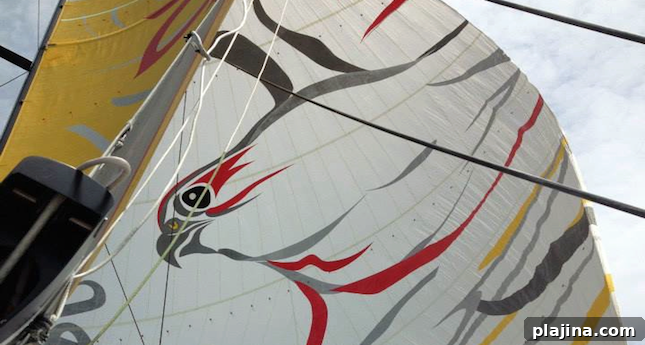
The Volvo Ocean Race is currently under way, with teams competing fiercely for leading positions in the first leg. Seven professional crews departed Alicante, Spain on October 4, each aiming for Cape Town. This edition of the race showcases top-level ocean racing teams, experienced crews, and the high-tech Volvo Open 70 yachts designed specifically for endurance and speed in long-distance offshore competition.
Global Traveler editor in chief Lisa Matte recently joined Team Abu Dhabi Ocean Racing for a training sail in Newport, Rhode Island. That opportunity offered an insider’s view of life aboard a race boat during the intense preparation period. As with all teams, Abu Dhabi Ocean Racing combines rigorous physical conditioning, precise sail handling and coordinated teamwork to extract maximum performance from their yacht while safely managing the many challenges of offshore racing—variable weather, heavy seas and rapid tactical decisions.
Sponsored by Etihad Airways, Team Abu Dhabi Ocean Racing prepared for the demanding multi-leg event by refining maneuvers, practicing sail changes, tuning keel and rigging settings and rehearsing emergency procedures. Training stops such as the Newport session are crucial: they allow teams to test boat systems, evaluate crew rotations and shore-based logistics, and synchronize the split-second teamwork needed during night sails and high-wind passages.
The Volvo Ocean Race itself is a round-the-world event with coastal and oceanic legs that test seamanship, navigation and endurance. Each leg offers a mix of short tactical stretches and long offshore transits where weather systems and strategic routing decisions can swing the standings dramatically. Support teams on shore monitor weather models, tactics and repair needs while skippers and navigators make real-time calls that shape the race outcome.
Fans and media can follow the race through official live updates, onboard video clips, and coverage that highlights race leaders, dramatic weather encounters and the human stories behind the competition. Broadcast and online schedules provide race trackers, summaries and video segments for those following from home or on the go. Regular updates keep followers informed about position changes, elapsed times and any technical or medical issues that affect crew performance.
For readers interested in the experience of being aboard a race boat, firsthand accounts like Lisa Matte’s offer valuable perspective on teamwork, risk management and life at sea during training and competition. Observations from onboard visits typically touch on the noise and motion of the vessel, the physical demands on the crew, the constant maintenance of sails and rigging, and the way routine tasks are compressed into short, efficient cycles while en route.
In addition to the sporting competition, teams often work closely with their sponsors and shore crews to manage logistics, fundraising and public relations throughout the race. Sponsors provide critical support for equipment, travel and onshore infrastructure, while shore teams coordinate repairs, rest periods and media activities during port calls. Those coordinated efforts help ensure boats leave each stopover in racing condition and crews remain prepared for the next leg.
As the fleet progresses toward Cape Town, attention will turn to strategic passages, weather systems that can separate the fleet, and the tactical decisions made by skippers and navigators. Each leg reshapes the leaderboard, and small technical gains or losses can have substantial effects on overall standings. For followers of ocean racing, the Volvo Ocean Race remains one of the premier arenas for observing seamanship, engineering and endurance at the highest level.
Keep track of the race through official race communications and broadcast schedules to follow live positions, onboard reports and post-leg summaries. Whether you’re interested in the competitive tactics, the engineering behind the yachts, or the human endurance aspect, the Volvo Ocean Race offers a compelling view of modern offshore sailing.