
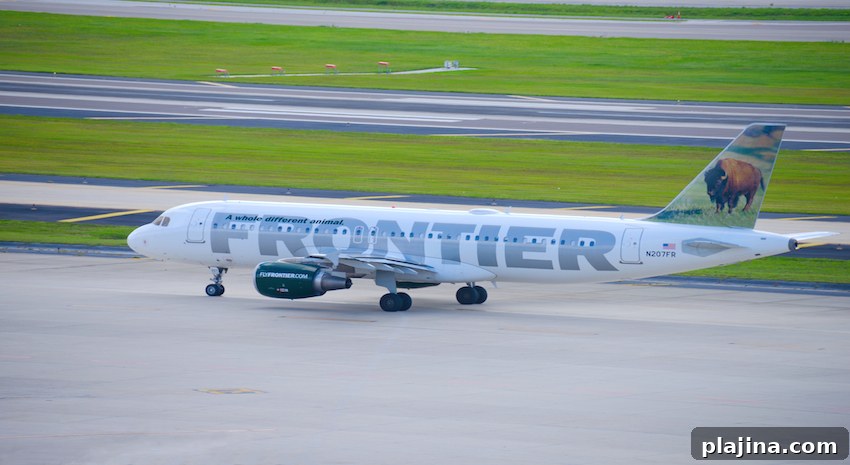
Frontier Airlines has been fined by the U.S. Department of Transportation for the third time in three months.
The most recent enforcement action addresses extended tarmac delays that followed a December snowstorm at Denver International Airport. In a ruling announced last month, the DOT assessed a $1.5 million penalty for violations of the department’s prohibition on long tarmac delays and issued a cease-and-desist order to prevent similar incidents going forward.
According to the DOT investigation, Frontier permitted 12 flights at Denver to remain on the tarmac for more than three hours without giving passengers an opportunity to deplane. Federal rules prohibit aircraft with 30 or more seats on domestic flights from keeping passengers onboard for more than three hours without a chance to get off the plane.
In its statement, the DOT said Frontier did not adequately manage gate availability during the storm, and continued to suffer gate shortages and ground staff shortfalls after the weather event had passed. The agency found that Frontier lacked sufficient resources in Denver to handle the increased number of aircraft on the ground. Regulators also determined the carrier did not delay, divert, or cancel enough flights that were scheduled to arrive at Denver, despite being aware of the adverse conditions, which would have reduced the likelihood of extended tarmac delays. The DOT added that some of the lengthy delays could have been avoided if Frontier had accepted services offered by the airport.
This penalty ranks as the second-largest fine ever imposed on an airline for violating the tarmac delay rule. Of the $1.5 million assessment, Frontier will pay $600,000 in civil penalties; the DOT credited $900,000 for compensation the airline provided to affected passengers.
The ruling underscores the DOT’s expectation that carriers maintain effective contingency planning for extreme weather, ensure adequate staffing and gate accommodations, and proactively manage arrivals and departures to protect passengers from prolonged confinement aboard aircraft.