
Warsaw surprises visitors who remember it only from black-and-white images of wartime destruction. Today’s capital of Poland, home to about 1.7 million people, blends contemporary office buildings, broad boulevards and well-tended parks with vibrant neighborhoods for shopping, dining and nightlife.
Since the fall of communist rule in 1989, Poland’s economy has steadily converged with Western Europe. The country joined the European Union six years ago and has benefited from E.U. investments that modernized infrastructure across the nation. Remarkably, Poland’s economy grew last year despite the global financial crisis, making it the only E.U. member to post growth in that period.
Although Poland is an E.U. member, it has retained its own currency, the zloty (abbreviated zl), which has kept prices in Warsaw lower than in many Western European capitals. Many Poles worry that adopting the euro would reduce national control over economic policy and could lead to higher prices.
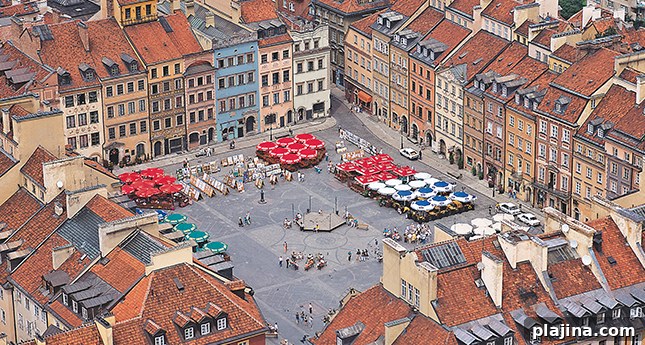
Old Town is the city’s most enchanting area and a testament to Polish resilience. Much of Warsaw was destroyed after the 1944 uprising, but residents reconstructed the historic center using paintings and photographs as a guide. Today the rebuilt Old Town invites pedestrians to wander brick and cobbled streets, watch buskers, browse stalls selling snacks, souvenirs and crafts, visit galleries and relax in outdoor cafés. The stretch that includes the presidential palace and several churches is often enlivened by street exhibitions and public sculpture.
Warsaw’s skyline has few skyscrapers for now, dominated instead by the imposing Ministry of Culture and Science, a Soviet-era monument that remains one of the country’s largest buildings. But the scene is changing: construction cranes are common, and new development is reshaping the city as the economy expands.
The government has actively sought foreign investment, and companies from China and other countries have set up operations producing LCD monitors, bicycles and other goods. Chemical, electronics and equipment manufacturers have also shown strong interest in the Polish market.
Major infrastructure projects have attracted both investors and visitors. In recent years Warsaw has launched about $2 billion in upgrades, including new subway lines (the north-south line opened in 2008 and an east-west line is underway), a new National Stadium planned as a Euro 2012 venue, and an additional bridge over the Vistula River. The Copernicus Science Centre is scheduled to open along the riverbank as part of riverfront renewal, and a museum exploring the history of Polish Jews is planned for a historically Jewish neighborhood. To meet the demands of up to 150,000 daily visitors expected during Euro 2012, an express beltway and enhanced tram service are also in development.
Under Soviet influence Warsaw evolved into an industrial hub; while some steel and automobile plants remain, private investment has helped build a growing electronics sector. Major multinational firms such as Daewoo, Coca-Cola and Metro AG operate in and around the city.
Contemporary Warsaw strikes a balance between historic charm and modern ambition. How the city manages the influx of visitors during large events like Euro 2012 will be a key indicator of its role in a changing Europe.
Diversions
Warsaw is an excellent city for walking, with broad boulevards and a generally logical street grid. Hotels commonly arrange English-language tours, and free printed city guides are handy for independent exploration. Polish is a challenging language for visitors, and while not everyone speaks English, many younger residents do. Pointing at items in delis or bakeries usually works when staff speak only Polish, and restaurants often provide English menus on request. Note that some service personnel—especially in the main train station during visits—may not speak English. Small change is useful: shopkeepers and taxi drivers sometimes hesitate to break larger banknotes, so carry coins and smaller bills.
Fans of Frédéric Chopin should visit the Chopin Museum in the Ostrogski Palace, which displays artifacts related to the composer’s life. In Łazienki Park, a memorial to Chopin hosts free piano recitals on Sundays from May through September, and concerts take place at various venues year-round.
Those interested in World War II history will find Warsaw rich with memorials, statues and museums. Sites include the former Gestapo headquarters and the Warsaw Rising Museum, which uses multimedia exhibits to tell the story of the 1944 uprising and the city’s resistance. Remnants of the Warsaw Ghetto and portions of its wall can still be found, and guidebooks indicate their locations.
For shopping and people-watching, Old Town and the fashionable Nowy Świat Street are excellent choices. Nowy Świat offers a wide range of dining options, and on pleasant weekends parts of the street close to vehicles for outdoor stalls selling traditional Polish breads, pastries, smoked meats and handcrafted items.
For a more offbeat scene, cross the river to Praga, a neighborhood in transition with bohemian cafés and independent shops—best visited during daylight hours. Near the city center, the Secret Garden (also known as The Pavilions) is a courtyard of popular casual bars just off Nowy Świat.
Vodka and beer are local favorites. Warsaw hosts well-regarded microbreweries such as Browarmia and Bierhalle. During cold months a local specialty—hot beer flavored with cloves, cinnamon, honey, ginger and fruit juices—or grzane wino (mulled wine) is popular.
For guided evening outings, Night Guides offers walks and tours that cover different parts of the city each night.
Lodging
Le Méridien Bristol, Warsaw
A luxurious, century-old hotel in Old Town that has hosted notable guests over the years. The Viennese-style Café Bristol includes an outdoor terrace. Krakowskie Przedmieście 42/44.
Polonia Palace
A historic hotel near shopping, outdoor cafés and Nowy Świat Street, offering comfortable rooms, a modern gym and a generous breakfast buffet. Aleje Jerozolimskie 43.
Warsaw Marriott Hotel
An upscale business hotel across from the main train station, with wireless Internet, concierge-level rooms, meeting facilities and a casino. Aleje Jerozolimskie 65/79.
Dining
99 Restaurant & Bar
A popular, recently renovated spot focusing on international fusion cuisine. Aleja Jana Pawła II 23.
Fukier
Located on the Old Town market square, this restaurant serves hearty Central European dishes in an atmospheric setting. Rynek Starego Miasta 27.
Nowa La Bohème
An elegant restaurant offering steaks, chops and seafood in a pre-war–inspired interior. Plac Teatralny 1.