I am, let’s face it, a man. Joanne, traveling with me, is a woman. We both call Vienna romantic, though our reasons differ. For Joanne, romance lives in rococo palaces, Strauss waltzes, Lipizzaner horses, Mozart, elegant coffeehouses and a decadent slice of Sacher-Torte. For me, romance hides in the city sewers. As I said, I’m a man.
“This is not exactly what I had in mind for this weekend,” Joanne sighs as our guide peels back the triangular metal petals of a sidewalk manhole. My mind drifts back six decades. I picture rain-slicked streets in black and white and Orson Welles racing down spiral steps into the labyrinth beneath Vienna.
The Third Man has been my favorite film since my teens. Directed by Carol Reed and shot on location in postwar Vienna in 1948, the movie feels flawless: Graham Greene’s script, Anton Karas’s zither score, the moody cinematography, the cast — and above all, Vienna itself.
For many fans the film and city are inseparable. I couldn’t visit Vienna for the first time without plunging into that world. A small industry now caters to devotees. The driving force behind it is Dr. Brigitte Timmerman, author of the definitive book on the film, and founder of Vienna Walks & Talks. Today our guide is Brigitte’s daughter, Barbara.
Saturday morning is a fine time to explore the sewers. Many locals are doing their weekly wash and the scent of detergent hides the usual odors. Joanne relaxes a little: “I can cope with the smell of fabric conditioner.”
Traffic rumbles above as we thread narrow tunnels to the famous chamber used in the movie’s finale. Opaque water rushes beneath our feet. In a nearby smaller chamber Barbara snaps off the lights and turns on a projector, showing film clips in situ. Once more, Orson Welles’s footsteps echo beneath Vienna.
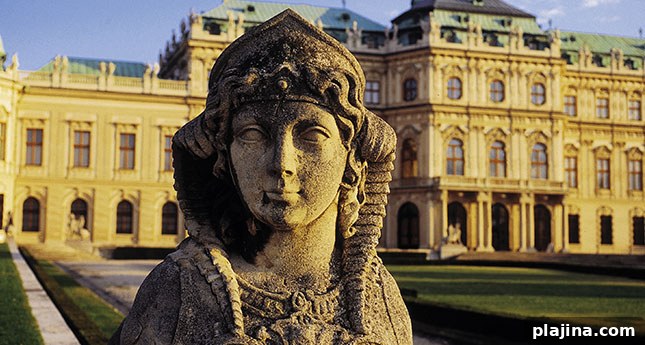
A weekend away for two is a study in compromise. The subterranean detour is balanced by a visit to the Belvedere, the baroque palace complex overlooking the old city. Joanne is in her element among immaculate gardens and ornate salons. The highlight for both of us is Gustav Klimt’s The Kiss, an image of intimacy and gilded elegance.
Klimt’s paintings recall the heady decadence of fin-de-siècle Vienna. Traces of that era survive in the city’s traditional coffeehouses. We stop at Café Griensteidl on Michaelerplatz, a modern revival of a beloved 19th-century café that once stood on the site.
Being a non-coffee drinker makes my choice simple: I order a Coke. Joanne faces a tougher decision. “There’s every possible mix of coffee, milk, cream, froth and steam,” she says, then settles on a mélange — coffee blended with hot milk and served with whipped cream.
Many visitors soon pick a favorite café. Ours is Café Landtmann, which was reportedly a regular haunt of Sigmund Freud. Seated outside with blankets tucking around our knees, we savor generous slices of cake and wonder how Freud managed to stay slim.
Perhaps his walks helped. Freud’s house is now the Sigmund Freud Museum, located at the foot of Berggasse — Mountain Street. Most personal items, including the famous couch, left with him when he fled to London, but the museum still offers an intriguing look at the life and work of psychoanalysis’s founder.
Vienna has more than 120 museums. Several innovative institutions are clustered in the Museum Quarter, which can be explored on a single admission. The complex brings together art and architecture museums, a dance center and the Zoom Children’s Museum, offering interactive exhibits for families.
The Albertina, in the heart of old Vienna, ranks among the world’s great galleries. Its strong permanent collection is frequently complemented by high-profile temporary shows. Our visit coincided with a Van Gogh exhibition, which we toured after dark. Later we stood on the Albertina’s modern terrace overlooking the Vienna State Opera and enjoyed the evening air.
Behind us, floodlit and grand, rose the buildings of Imperial Vienna: the core of Habsburg power that once dominated much of Europe. The Hofburg Palace contains the former imperial apartments and the Spanish Riding School, where Lipizzaner stallions train to the strains of Strauss.
One late afternoon we strolled along the Danube Canal, a vestigial branch of the river now hemmed in by protective banks. Our destination was the Prater, Vienna’s long-loved fairground.
Here the high culture of palaces and opera softened into a common, joyful scene. We mingled with locals and tourists to ride the Giant Ferris Wheel, another memorable set piece from The Third Man. As the gondola rose, Joanne felt a wave of vertigo and had to sit. Lost in the view and the film’s romantic echoes, I didn’t notice at once. After all — I’m a man.
LODGING
HOTEL AM STEPHANSPLATZ
Conveniently located beside St. Stephen’s Cathedral, this hotel is less opulent than the Sacher but offers a striking advantage: superb views of the cathedral from upper-floor rooms. Request a room facing Stephansplatz for the best perspective; it’s pricier but worth it. Most major attractions are within easy walking distance and the Stephansplatz metro connects to the wider city.$$-$$$
HOTEL AM STEPHANSPLATZ
Stephansplatz
tel 43 1534050
www.hotelamstephansplatz.at
HOTEL SACHER
Made famous in The Third Man, the Sacher has long been associated with Vienna’s cultural life. Graham Greene stayed here while researching the film, and one suite bears his name. Our suite in the modern extension combined tradition with contemporary comforts; renovations on the older floors preserve the hotel’s historic character.$$$$
HOTEL SACHER
Philharmonikerstrasse 4
tel 43 1514560
www.sacher.com
K+K HOTEL MARIA THERESIA
A sleek boutique option in the Spittelberg district, this modern hotel offers rooms overlooking a central courtyard or, for a higher rate, city-view rooms. Free internet is available in all 123 guestrooms. $$
K+K HOTEL MARIA THERESIA
Kirchberggasse 6
tel 43 1 52123
www.kkhotels.com
DINING
FIGLMÜLLER
If you want authentic Wiener Schnitzel, Figlmüller is the place. The original restaurant often has a long queue, but a nearby branch on Bäckerstrasse usually moves faster. The veal schnitzel is enormous and reliably excellent.$$$
FIGLMÜLLER
Wollzeile 5 or Bäckerstrasse 6
www.figlmuller.at
PALMENHAUS
Housed in a restored 1901 greenhouse in the Burggarten, the Palmenhaus became a stylish restaurant in 1998. In summer you can dine outdoors among the gardens; in winter the vaulted glasshouse becomes a warm, tropical-feeling dining room. The menu features modern international dishes that change regularly. $$
PALMENHAUS
Burggarten 1
tel 43 15331033
www.palmenhaus.at
WITWE BOLTE
Set in the historic Spittelberg neighborhood, this cozy restaurant offers classic Viennese fare. In warm months there is outdoor seating; in colder weather the snug interior is welcoming. Service can be leisurely, but the atmosphere and traditional dishes, like Tafelspitz (boiled beef with horseradish and apple sauce), make it worthwhile.$$$
WITWE BOLTE
Gutenberggasse 13
www.witwebolte.at
INFO TO GO
Flights arrive at Vienna International Airport (VIE), about 11 miles southeast of the city. The fastest and most cost-effective transfer to downtown is the City Airport Train (CAT) to Wien-Mitte station.