
On most nights, Nashville’s music clubs are filled with a lively crowd of locals and visitors who come out into the mild Tennessee evening to hear the latest country, blues, folk and jazz. The atmosphere is energetic yet inviting, with people swaying, dancing and sharing in the city’s music-driven culture.
Stroll down lower Broadway from Seventh Avenue toward the Cumberland River and you’ll hear music pouring from open doorways. Rather than overwhelming, the sound feels like an invitation to step inside, enjoy the hospitality and catch live performances. Both veteran and emerging bands play for tips, entertaining some of the most enthusiastic audiences east of the Mississippi.
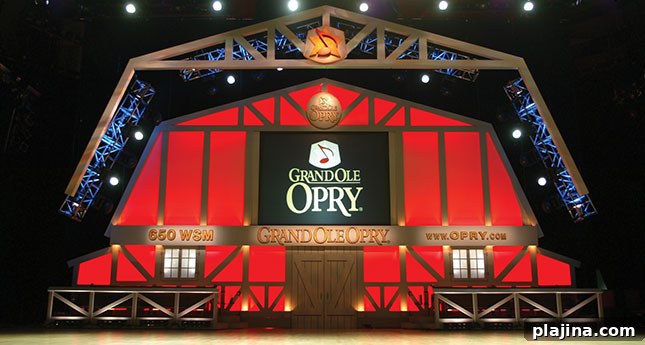
Nashville’s nickname, Music City USA, is well earned. The Grand Ole Opry radio show began here in the 1920s, and Record Row still houses numerous recording studios where well-known singers and musicians produce new material. That legacy continues to shape the city’s identity and economy.
“There are probably more people working at Vanderbilt Medical Center than in the music industry in Nashville, and private healthcare likely employs more people than music,” says Craig Havighurst, Nashville resident and author of Air Castle of the South: WSM and the Making of Music City. “But if the music industry declined and recording studios closed or young musicians left town, it would change the character of the city and represent a major economic loss.”
Nashville’s history stretches back nearly 230 years. Settled on Christmas Eve 1799 by American colonists, the riverfront community was first named Nashborough for Revolutionary War hero General Francis Nash and soon became Nashville. In 1824 the city published Western Harmony, a book of hymns and singing instructions that helped earn Nashville its early nickname, “The Buckle of the Bible Belt.”
After the Civil War, several colleges were established, including Vanderbilt University and the prominent African-American institutions Meharry Medical College and Fisk University. The Fisk Jubilee Singers’ groundbreaking around-the-world tour helped place Nashville on the global musical map.
While the city expanded through the early 20th century, it found its cultural center in the mid-1940s and early 1950s when the Grand Ole Opry moved into the Ryman Auditorium. Opened as a church in 1892, the Ryman hosted many renowned entertainers over the decades before becoming the Opry’s home in 1943. Radio broadcasts on WSM brought what was once called “hillbilly” music into homes across Middle America.
From the 1950s onward, Nashville’s music and recording industry helped the city flourish. Artists such as Roy Acuff, Patsy Cline and Chet Atkins lived and recorded here. Iconic tracks were produced on Record Row—Elvis Presley recorded “Heartbreak Hotel” in 1956, the Everly Brothers recorded “Bye Bye Love” in 1957, and Bob Dylan completed Blonde on Blonde in Nashville in 1965–66.
Today Nashville, with a population around 607,000, remains a magnet for country music fans and a major tourism destination built around its music attractions. Yet the city’s evolution in the 21st century has broadened its appeal. The opening of the Frist Center for the Visual Arts in 2001, housed in a restored 1930s Art Deco post office, and the 2006 debut of the $123 million Schermerhorn Symphony Center signaled a new cultural and architectural chapter.
Those landmarks encouraged downtown residential growth: nearly 900 condominium units sold in 2008—more than in the previous five years combined. Although the national economic downturn led some developers to lower prices in 2009, others maintained values and additional units were expected to close despite broader construction and banking challenges.
New cafés, galleries and small businesses have revitalized the city center, drawing suburban families back to urban life and attracting retirees seeking milder winters and more affordable housing. A 2008 Forbes survey ranked Nashville among the most affordable cities for homeownership and a top city for young professionals.
Planned retail development targets the downtown core, The Gulch and SoBro (South Broadway). Major additions such as SunTrust Plaza, Terrazzo and the Pinnacle at Symphony Place have expanded office, residential and retail space, and more projects are slated to open in the coming years.
The city hosts numerous corporate headquarters—BellSouth, Caremark, Gaylord Entertainment, Genesco, Nissan Motors USA, Louisiana Pacific and Hospital Corporation of America (HCA), the city’s largest private employer. A transformative development is the Music City Center, a $635 million, 1.2 million square-foot convention center scheduled to open in 2013, which is expected to spur further hotel, office and retail investment.
LODGING
GAYLORD OPRYLAND RESORT & CONVENTION CENTER
This vast hotel and entertainment complex adjacent to the Grand Ole Opry offers 2,881 rooms and extensive meeting space. $$$$
GAYLORD OPRYLAND RESORT & CONVENTION CENTER
2800 Opryland Drive
tel 615 889 1000
RENAISSANCE NASHVILLE HOTEL
A renovated luxury high-rise connected to the convention center, featuring a club-level lounge and substantial meeting facilities. $$$
RENAISSANCE NASHVILLE HOTEL
611 Commerce St.
tel 615 255 8400
UNION STATION – A WYNDHAM HISTORIC HOTEL
A converted 19th-century station that combines historic charm with refined hotel comforts. $$$
UNION STATION – A WYNDHAM HISTORIC HOTEL
1001 Broadway
tel 615 726 1001
DINING
THE ACORN
Popular for its crispy crab cake and a second-floor outdoor deck. $$$
THE ACORN
114 28th Ave. N.
tel 615 320 4399
THE CAPITOL GRILLE
A cozy spot ideal for business meals or an evening at the adjacent Oak Bar. $$$$
THE CAPITOL GRILLE
Hermitage Hotel, 231 Sixth Ave. N.
tel 615 345 7116
LOVELESS CAFÉ
A family-style landmark known for fried chicken and classic Southern pies.
LOVELESS CAFÉ
8400 Highway 100
tel 615 646 9700
DIVERSIONS
First-time visitors should begin at the Country Music Hall of Fame and Museum for an overview of Nashville’s musical history and cultural impact. Nearby, the Musicians Hall of Fame and Museum offers a complementary perspective. Historic music sites include the Ryman Auditorium and RCA Studio B, and the Grand Ole Opry—located a short drive from downtown—remains a must-see for live country music.
The Frist Center for the Visual Arts, housed in a restored Art Deco post office, showcases rotating exhibitions and celebrated architectural restoration. The Schermerhorn Symphony Center hosts world-class performances, and Centennial Park’s Parthenon houses a striking replica of a 42-foot Athena statue and serves as Nashville’s permanent art museum.
Nashville’s dining scene continues to diversify. In addition to established favorites, several restaurants that opened in 2008 have become local highlights, including Andrew Chadwick’s on Rutledge Hill, Lime, Miel, Wild Ginger in nearby Franklin and Crema Coffeehouse—each offering unique menus and atmospheres that reflect the city’s growing culinary reputation.
AT HOME WITH LADY ANTEBELLUM
Winner of the 2008 Country Music Awards Best New Artist
AS SUCCESSFUL PERFORMERS YOU COULD LIVE ANYWHERE. WHY DID YOU DECIDE TO STAY IN NASHVILLE?
Dave Haywood: Nashville offers the right balance—manageable size, professional opportunity, active nightlife and quick access to scenic countryside. With the country music industry centered here, it’s where I want to be.
NASHVILLE HAS MANY RESTAURANTS, MUSIC CLUBS AND SPORTS VENUES. WHAT ARE SOME FAVORITE LOCAL PLACES?
Hillary Scott: Growing up in Nashville gave me many great local memories. Charles, Dave and I first met at 12th and Porter and started playing at 3rd & Lindsley. We also enjoy dining at Virago and other spots that serve quality sushi.
IF YOU COULD WISH FOR THREE NEW BUSINESSES IN NASHVILLE, WHAT WOULD THEY BE?
Charles Kelley: I’d like to see more designer clothing stores to meet local demand—brands like James Perse or Ikea’s home furnishings appeal to many residents. I’m also excited about Trader Joe’s opening in Green Hills.
IS THERE A DISTINCTIVE NASHVILLE “SOUND”? WHO ARE YOUR FAVORITE LOCAL PERFORMERS?
Dave Haywood: Nashville’s sound has evolved over decades and reflects its country roots. My favorite local artist is Keith Urban, who lives nearby and performs here regularly—an incredible talent from our hometown.
WHAT WOULD YOU LIKE TO SEE WITH DOWNTOWN DEVELOPMENT IN THE NEXT DECADE?
Hillary Scott: Nashville’s recent growth has been impressive. The new convention center and additional hotels will enliven downtown further, and new restaurants for both visitors and residents are always welcome.
INFO TO GO
Nashville International Airport (BNA) is about eight miles from downtown, roughly a 15–20 minute drive. Major car rental companies operate at the airport, and taxis offer a flat rate to downtown for up to four passengers. For visitor information, contact local tourism resources.