
PANAMA IS A MOUSE that roars on the international business scene. The isthmus connecting North and South America, though roughly the size of Ireland or South Carolina, punches well above its weight economically because of the Panama Canal’s global role in shipping.
Visitors are often surprised by the view before their plane even lands. Panama City resembles a modern coastal metropolis more than a sleepy Central American capital: a dense skyline of glass towers, new condo developments and cranes dot the horizon. Each visit reveals fresh construction, and the historic district sees an increasing number of boutique hotels and stylish bars.
This site hosted one of the earliest European settlements in the Americas when the Spanish established a base in 1519. After pirate Henry Morgan’s raid destroyed the original town in the 17th century, the Spanish relocated five miles down the coast and founded what is now Casco Viejo. The city’s fortunes rose with the flow of gold and silver from South America to Spain, and later during the 19th-century California gold rush, when a cross-isthmus railroad made passage easier. Panama City’s transformation accelerated most dramatically after the canal opened, linking the Atlantic and Pacific oceans.
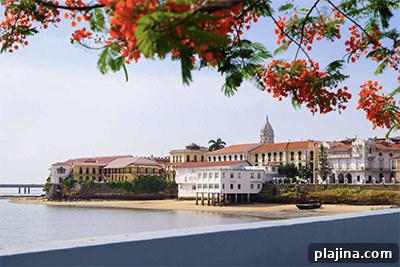
Panama City views of Casco Viejo © DIEGO VITO CERVO – DREAMSTIME.COM
Many doubted the feasibility of a transoceanic canal, and the first attempt failed. The successful project was completed in 1914, when the first ship traversed the roughly 50-mile route. Thousands lost their lives during construction, primarily to tropical disease. A modern expansion finished in 2016 cost more than $5 billion and allows the largest container ships to transit between oceans, reshaping global trade routes.
The Canal has been fully Panamanian since 1999 and remains central to the national economy. Nearly a century of U.S. administration left lasting influences on law, finance and infrastructure, and Panama uses the U.S. dollar as legal tender. That currency stability helps keep inflation low, and widespread bilingual education means many Panamanians enter the workforce with functional English.
Despite a skyline and a metropolitan population of about 1.5 million, Panama City preserves significant green space and uniquely contains a rainforest within its municipal boundaries. That protected watershed borders the Canal Zone, limiting urban sprawl. With the Pacific coastline nearby and the Atlantic roughly 30 miles away, the city is an ideal base for snorkeling, diving, fishing and island hopping.
Twelve years ago tourism infrastructure in Panama City was limited; luxury hotel rooms were scarce. Since then the hotel market has expanded dramatically, with international brands establishing properties and new luxury developments underway. The city has invested in public spaces and connectivity, including a 2.5-mile paved path linking the Central Business District and Casco Viejo that passes marinas and waterfront promenades.
The culinary scene has matured as well, drawing on abundant seafood, rich agricultural land and a diverse population. Panama’s position as a crossroads of the Americas enriches its food culture with influences and ingredients from across the region and around the world.
Copa Airlines, a Star Alliance member based in Panama, connects the city to dozens of destinations and helps make Panama City a convenient hub for business and leisure travel. The combination of strong connectivity, favorable currency conditions and minimal tariffs makes it an appealing place to do business and enjoy vibrant nightlife.
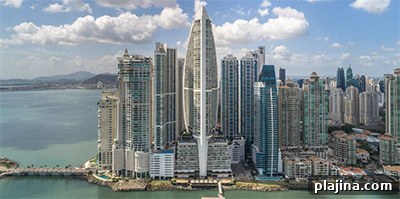
JW Marriott Panama © JW MARRIOTT PANAMA
CHECKING IN WITH DEMETRIO MADURO
General Manager, JW Marriott Panama
Demetrio Maduro trained in hotel management in Barcelona and began his career at a Marriott in Panama City 35 years ago. He advanced through management roles across Latin America before returning as general manager of one of the city’s foremost luxury hotels and business centers.
What should people know about your city?
Panama City is defined by the Panama Canal, the unique geographic connector between the Atlantic and Pacific. The city offers quick access to world-class fishing, beautiful islands, indigenous communities, mountains and rainforests—letting visitors experience diverse environments within short travel times.
Which infrastructure change has had the biggest impact?
The metro system, which began carrying passengers in 2014, has significantly improved mobility across the city. Line 2, part of an eventual four-line network, expanded connectivity further. The Panama Canal expansion has also become a major draw for visitors interested in engineering and maritime operations.
What industries thrive in Panama besides shipping, and what business advantages exist?
Banking and logistics are major growth sectors. Two key advantages for international business are the use of the U.S. dollar and the prevalence of English as a second language.
For first-time visitors with work done, where should they go for nightlife and leisure?
Panama City has a diverse restaurant scene showcasing global flavors. Casco Viejo—the Old Town—is ideal for walking historic streets, enjoying bars and cafes, and discovering boutique hotels. The Biomuseo explores the country’s biodiversity, and the Miraflores Locks visitors’ center offers an up-close view of the Canal in action. Boat trips that cross part of the Canal provide a memorable perspective from the water.
Things to Do in Panama City
Watch commercial vessels and pleasure craft pass through the Miraflores Locks and visit the museum and observation platform for context and expert commentary. Day cruises let you experience the locks and the surrounding waterways from aboard a tourist vessel.
Two of the city’s oldest sections hold UNESCO World Heritage status. The original Spanish settlement survives as archaeological ruins, while Casco Viejo hosts government offices, a restored national theater and a lively mix of shops, cafes, boutique hotels and restaurants.
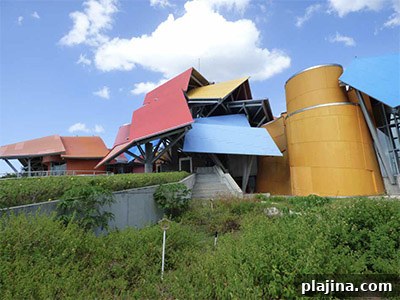
Biomuseo © TIM LEFFEL
The Biomuseo, opened in 2014 and designed by Frank Gehry, explains how the formation of the isthmus reshaped global ecosystems. Its interactive exhibits make it a compelling stop for families and anyone interested in natural history.
Panama City Info to Go
Tocumen International Airport is about 13 miles from the Central Business District and serves as Copa Airlines’ hub, handling millions of passengers each year. Official taxis from the airport typically charge around $30 to central hotels; licensed car services run $40–60. Rideshare options like Uber or Cabify usually cost $14–25 depending on time and demand.
Panama City: Just the Facts
Time zone: GMT -5
Phone code: Country code: 507
Currency: U.S. dollar (Balboa coins are used interchangeably with U.S. coins)
Key industries: Shipping, finance, tourism, health care and transportation
COMING AND GOING
U.S. citizens need a passport valid at least three months beyond their departure date. No visa is required for stays under 180 days. No routine vaccinations are required for entry.
OFFICIAL LANGUAGE
Spanish
Where to Stay in Panama City
AMERICAN TRADE HOTEL Located in a restored historic building facing a plaza, this four-story hotel evokes the 1920s and offers nearby dining, bars and a brewpub within walking distance. Av. Central, Plaza Herrera, Casco Viejo $$$$
THE BRISTOL PANAMA A long-standing luxury address that remains popular with executives and VIPs, offering classic service and amenities. Calle 49 Este $$$$
JW MARRIOTT PANAMA Housed in one of the city’s tallest buildings, this hotel provides expansive suites and full-service facilities ideal for business and leisure travelers. Calle Punta Colón, Punta Pacifica, Corregimiento de San Francisco $$$$
Restaurants in Panama City
DONDE JOSÉ A 16-seat restaurant known for an inventive tasting menu that reinterprets Panamanian flavors. Reservations are essential; for a more casual option, try Lo Que Hay in Casco Viejo. Av. Central 1100, Casco Viejo $$$$
LABORATORIO MADRIGAL Led by acclaimed chef Andrés Madrigal, this restaurant changes menus frequently to highlight fresh, seasonal ingredients and is celebrated for ceviche and creative seafood preparations. Avenida A, Casco Viejo $$$
MAITO RESTAURANTE Consistently ranked among Latin America’s top restaurants, Maito blends traditional Panamanian techniques with modern approaches and sources many ingredients directly from local farmers. Calle 50 $$$$