
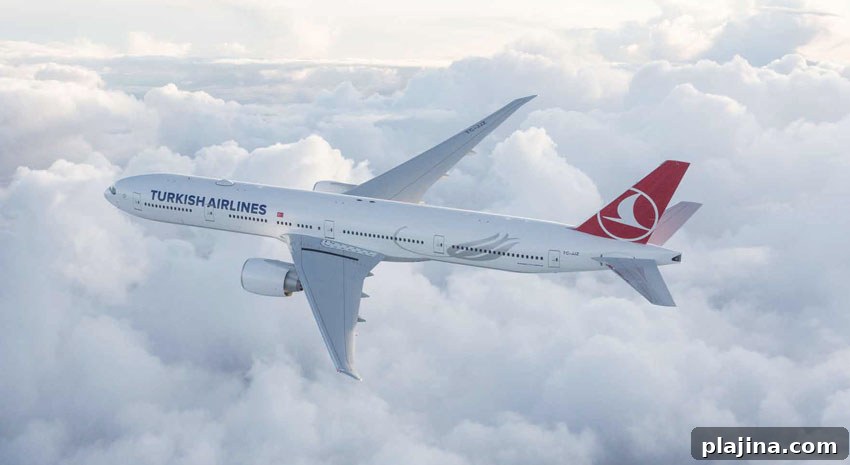
TALK ABOUT LONGEVITY! For an impressive 85 years, Turkish Airlines has kept passenger airliners in the sky in one form or another. Founded on May 20, 1933, as the State Airlines Administration, its initial fleet consisted of five small propeller planes seating no more than seven passengers each. One of those early aircraft, a Curtiss Kingbird, had a top speed of 143 mph and a range of 415 miles, with both engines producing roughly 300 horsepower combined—tiny compared to the single 110,000-horsepower output of a modern Boeing 777 engine.
In 1938 the carrier was renamed the State Airlines General Directorate, a title it held until 1955 when it adopted the name Turkish Airlines. Over the decades the airline grew from a handful of aircraft into a modern fleet of more than 300 passenger and cargo planes serving over 300 destinations around the world. In 2017 Turkish Airlines carried more than 68 million passengers.
The airline enjoyed steady growth until 2016, when a failed military coup, subsequent purges, and a series of terrorist attacks by Islamic State groups undermined traveler confidence in İstanbul as a hub. The June 2016 bombings at İstanbul’s Atatürk Airport were particularly damaging, prompting thousands of passengers to choose other carriers and resulting in the airline reporting its first annual loss in recent memory.
Despite those setbacks, Turkish Airlines invested in restoring its reputation and improving operations. The first half of 2017 showed little recovery, but by the second half confidence began to rebound as threats from Islamic State waned. End-of-year results approached break-even, and performance has continued to improve as the airline introduced new initiatives.
M. İlker Aycı, chairman of the board and the executive committee at Turkish Airlines, said the airline’s balanced growth continued in 2018 with a new hub airport, an expanding fleet and a booming cargo business. “We are targeting to reach 74 million passengers this year, increase our capacity 5–6 percent to reach 183 billion Available Seat Kilometers, and our load factor is expected to be close to 80 percent. Our cargo target is 1.3 million tonnes. So we are already experiencing the excitement of taking a major step forward in 2018,” he explained.
To accelerate a return to pre-2016 passenger levels, Turkish Airlines changed advertising agencies and launched a celebrity ad campaign. The first commercial, featuring actor Morgan Freeman, premiered during the 2017 Super Bowl and highlighted that Turkish Airlines flies to more countries than any other carrier. It also positioned İstanbul as a convenient connecting point for travelers concerned about visiting Turkey directly. The airline returned to the Super Bowl in 2018 with a second celebrity spot featuring TV personality and cardiothoracic surgeon Dr. Mehmet Oz, again underscoring its global network. Ahmet Olmuştur, chief marketing officer, summarized the airline’s approach: “As the airline that flies to more countries than any other, we strongly believe that our mission is so much more than bringing our passengers to their destination. We actively encourage them to discover the world and, through it, discover themselves.”
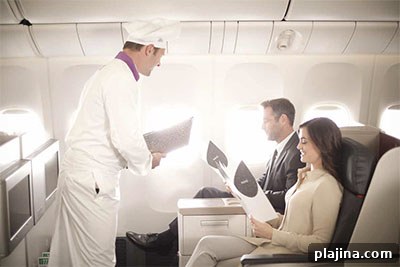
Turkish Airlines business-class travelers and chef © TURKISH AIRLINES
In August 2017 Turkish Airlines introduced a Stopover Project to encourage passengers to explore İstanbul. Economy passengers with stopovers of 20 hours or longer became eligible for one night’s complimentary accommodation at a 4-star hotel with breakfast, while business-class travelers qualified for two nights at a 5-star hotel with breakfast. More than 14,000 passengers have taken advantage of this program to experience İstanbul during their journeys.
In June of the same year the airline rolled out a domestically produced Wireless In-Flight Entertainment System, the first of its kind developed entirely by Turkish engineers in collaboration with Turkish Technic Inc. and Havelsan. Initially installed on 44 narrow-body aircraft, the system allows passengers to stream content to their personal devices, removing the need for seatback screens. Travelers can access the service by installing the “Wi-Fi Entertainment” app on smartphones or by using the Chrome browser on laptops. The platform offers a large library of media, including more than 250 films, 700 TV shows, roughly 2,000 music albums, and about 19,000 songs.
In July Turkish Airlines signed a global partnership with American Express Global Business Travel, enhancing a prior regional collaboration and earning top-level status with Amex GBT for corporate travel services. This agreement expanded the airline’s reach in the corporate travel market and strengthened its global business relationships.
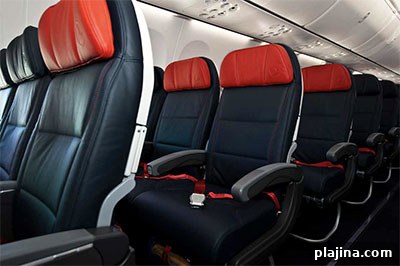
Economy class © TURKISH AIRLINES
Recognition followed: TripAdvisor travelers voted Turkish Airlines among the world’s best carriers in multiple categories, naming it Major Airline in Europe, Best Economy Class in Europe, and Best Business Class in Europe. Bryan Saltzburg, senior vice president and general manager of TripAdvisor Flights, noted that as the industry expands fare options and onboard services, travelers increasingly reward carriers that deliver both value and a high-quality experience. The Travelers’ Choice awards celebrate airlines that exceed passenger expectations.
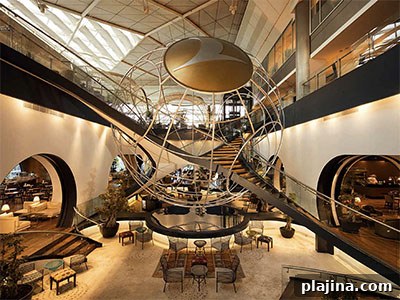
İstanbul lounge © TURKISH AIRLINES
Looking ahead, Turkish Airlines prepared for the opening of the new Istanbul Airport, a move expected to improve service quality and support further growth. Bilal Ekşi, general manager, outlined the transition: flights at both airports would pause for an 18-hour window while 120 empty aircraft relocated, with operations beginning at reduced capacity and ramping up to full service over three days.
Fleet expansion is also on the agenda. Turkish Airlines planned to acquire at least 25 Boeing 787-9 Dreamliners and at least 25 Airbus A350-900 aircraft, enabling the airline to serve markets it previously could not and to increase frequencies and connection quality on existing routes.
Long-term, Turkish Airlines aims to carry 120 million passengers annually with a fleet exceeding 500 aircraft by 2023. Given the carrier’s enduring history and recent investments in product, partnerships and infrastructure, that ambitious goal appears attainable.