
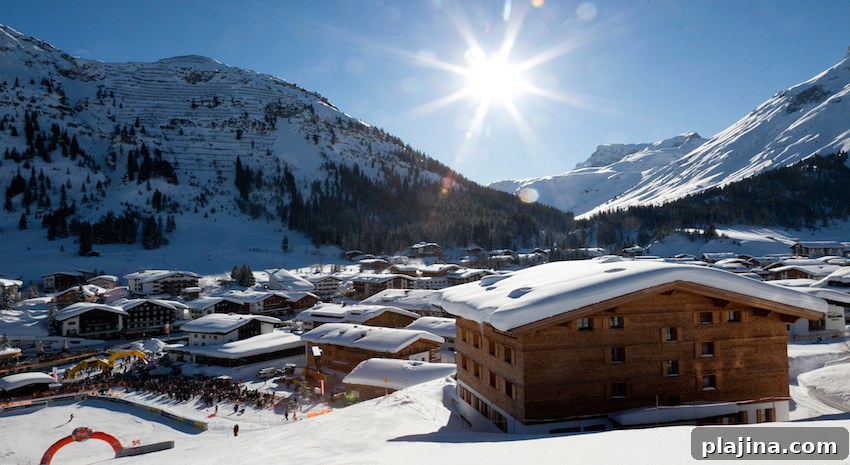
It’s no coincidence that Austria’s striking Arlberg region is often called the Cradle of Alpine Skiing. Linked by the Flexenbahn cableway along with the Trittkopfbahnen I and II and the Albonabahn II, the resorts across the Arlberg are seamlessly connected and fully skiable from one to another. With 88 modern lifts and cableways, the area is the largest interconnected ski region in Austria and ranks among the top five in the world. Major resorts in the network include Warth, Schröcken, Lech, St. Anton, St. Christoph, Stuben, Zürs and Oberlech.
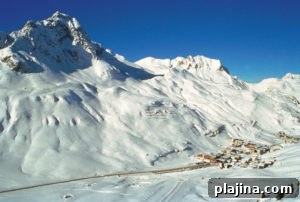
Zuers © Austrian Tourist Office
The Arlberg’s ski legacy grew from modest beginnings into an internationally influential winter-sport hub. Johann Schneider, born in 1890, evolved from ski instructor to founder of a ski school in St. Anton and helped establish the Arlberg-Kandahar race—an event that shaped competitive alpine skiing. Even earlier, in 1894, a pastor from Warth brought the first pair of skis to western Arlberg to make travel between Lech and Warth easier, signaling the arrival of skiing as practical transport and pastime in the region.
Organized skiing took root quickly: Ski Club Arlberg, founded in 1901, became the world’s first official ski club, and shortly afterward the Arlberg hosted one of the earliest alpine races. Innovation followed alongside competition. In 1907 Michael Manhart introduced an early form of artificial snowmaking in Lech, using compressed-air snow cannons. His method—later dubbed the “Arlberg Jet”—proved influential and was adapted in later decades for major winter events, including the Calgary Winter Olympics.
Today the Arlberg combines this deep historical heritage with contemporary infrastructure and services. Skiers and snowboarders find diverse terrain for all skill levels, from gentle beginner slopes to challenging off-piste runs. Modern lift systems and efficient interconnections make it easy to explore multiple villages and mountains within a single day, while mountain restaurants, ski schools and guided off-piste services support visitors seeking either relaxed family outings or expert-level adventures.
Beyond skiing, the Arlberg’s alpine environment offers year-round appeal: summer hiking, mountain biking and alpine lakes draw visitors when the snow melts, while villages retain their traditional charm and hospitality. Conservation and sustainable tourism efforts aim to protect the region’s landscapes and ensure that future generations can enjoy the same scenic peaks and reliable snow conditions that made Arlberg a cradle of Alpine skiing over a century ago.