
Thirty years ago, Belgian demographer Michel Poulain and Sardinian physician Gianni Pes identified pockets of extraordinary longevity on the Italian island of Sardinia, prompting researchers to investigate why so many islanders reach 100 years and beyond.
American author and researcher Dan Buettner highlighted that men in certain Sardinian villages enjoy some of the longest and healthiest lives recorded anywhere, with notably low rates of cardiovascular disease. Unlike global trends where women typically outlive men, in some Sardinian communities both sexes age similarly, contributing to unusually long marriages and strong family bonds.
My partner and I did not expect a short visit to affect our life expectancy, but after exploring Sardinia’s rugged interior we began to understand why the island ranks among the world’s “blue zones.” The term comes from the blue circles Poulain and Pes drew around villages with high centenarian counts. Not every Sardinian lives to 100, but the island has about ten times as many centenarians per capita as the United States.
Warm, relaxed and scenic, Sardinia is an ideal destination for solo travelers, couples and families. It offers a variety of lodging options: upscale seaside resorts, rustic farm stays in the interior and peaceful hilltop yoga retreats overlooking the Mediterranean. The capital, Cagliari, also provides comfortable business hotels and urban amenities.
Although mass tourism began in the 1970s—when Prince Aga Khan developed part of the Emerald Coast—artists and writers had long been drawn to the island for its climate, cuisine and landscapes. During summer (June–September) coastal beaches become crowded, but the interior remains quieter and often feels more authentic.
Compact enough to explore by car in a week yet diverse enough to offer snow-capped mountains in winter and tropical-looking fishing villages year-round, Sardinia preserves a timeless quality. D.H. Lawrence’s 1921 observation in Sea and Sardinia that the island “does not belong to our present-day world” still resonates.
Near the northern village of Calangianus, travelers encounter expansive cork oak groves where trunks are covered in soft, brown cork. Sardinia hosts more than a hundred companies using this resource.
At the island’s largest cork plant, Peppino Molinas & Sons, stacks of cork wait outdoors to season. Workers strip cork from trees with special tools and leave it outside for at least 12 months before it is brought into the factory. There each piece is inspected, boiled and processed; machines punch discs used for wine stoppers. Production at major factories can reach millions of stoppers per day.
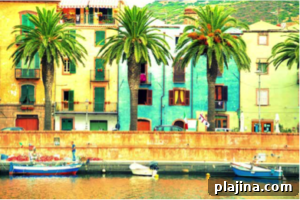
PHOTO: © KEMALTANER – DREAMSTIME.COM
Driving from Calangianus to the west coast city of Oristano can take two hours on the modern highway or an entire day if you choose scenic backroads that wind through hilltop villages and coastal cliffs. Stop in fishing towns such as Bosa, where markets overflow with mullet, tuna, swordfish, clams, mussels, eels and lobster.
Near Cabras, shallow lagoons attract thousands of pink flamingos, and nearby vineyards produce notable wines. At the family-run Contini Winery, founded in 1898, Paolo Contini explained how generations have tended the vineyards. The unique soil and the mistral winds influence the grapes, giving the wines a distinctive aroma and flavor. Visitors can taste wines in the small Cabras tasting room and buy bottles to take home.
Cannonau, a red wine made from the Grenache grape, is a regional staple—roughly one in five bottles of Sardinian wine is Cannonau di Sardegna. These wines are often rich in anthocyanins and polyphenols, antioxidants linked to heart health and theorized to contribute to the islanders’ longevity.
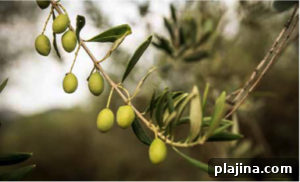
Heading from the Contini vineyards toward Gergei, the landscape shifts from coastal lowlands to the foothills of the 6,000-foot Monti del Gennargentu. Hilly pastures, stone churches and olive groves define this area. At Argei Le Fattorie Renolia, you can sample unfiltered, organic extra-virgin olive oil made from the Mallocria olive, a variety native to Sardinia.
Olive oil production on the island dates back to the Phoenicians and remains central to local life. According to Argei staff, Sardinian producers typically avoid mass production: most oil is sold locally in village markets and to neighborhood restaurants, with only limited exports.
© JANINA LANDISA – DREAMSTIME.COM
At Argei, freshly harvested olives are washed and processed the same day. After grinding into a paste, a centrifuge extracts the oil, which is stored in stainless steel and allowed to settle for about a month before bottling. The harvest typically runs from September to October, and many producers welcome visitors to observe and taste the results.
Dan Buettner describes Sardinian cuisine in The Blue Zones Kitchen as largely peasant food: beans, greens, whole grains, bread, cheese—especially Pecorino made from grass-fed sheep—and vegetables from home gardens. Meat is typically reserved for Sundays and special occasions. Pecorino, rich in omega-3 fatty acids, is a dietary staple that complements the island’s vegetable-heavy meals.
In northeastern Sardinia, near Luogosanto, Balaiana Eco Retreat offers yoga, meditation, coaching and massage training. Founded by certified Anusara teacher Elke Bayer, the retreat features private rooms, a pool, organic meals and guided excursions. The nearby village enchants with ochre-painted houses, geraniums, bougainvillea and citrus trees.
Another option for wellness travelers, Yoga in Sardinia is a nonprofit that organizes short or weeklong programs of gentle hatha yoga, pranayama and yoga nidra along with hiking and mountain biking. The retreats often operate from the Galanias Hotel, a tranquil seaside property near Bari Sardo, and include personalized guidance for participants.
INFO TO GO
Sardinia has three main airports served by major and low-cost carriers from Italy and select European destinations, especially in summer. Fly to Alghero (AHO) or Olbia (OLB) for northern Sardinia, and to Cagliari (CAG) for the south. Taxis are available at airports, but renting a car is recommended for flexibility; roads are generally well maintained and well signed.
LODGING
Palazzo Doglio
In Cagliari, this 72-room hotel caters to business travelers with modern rooms and suites, dining options, a wellness center and meeting spaces.
Vico del Logudoro, Cagliari
$$$
Pullman Timi Ama Sardegna
A 5-star resort on the southeast coast offering a Thalassa Sea & Spa Center and multi-day wellness programs.
Via dei Ginepri 3, Villasimius
$$$$$
Valle dell’Erica Resort Thalasso & Spa
This 5-star property features Le Thermae Centre, fitness facilities, multiple pools and seawater therapy.
Str. Liscia di Scopa, Santa Teresa Gallura
$$$$$
DINING
I Frati Rossi Ristorante
Perched above Porto Cervo on Costa Smeralda, the terrace offers sea views and a menu focused on fresh fish, seafood and pasta.
Via Paolino Azara, Arzachena
$$$$$
Ristorante Osteria Gourmet Li Finistreddi
Part of a country retreat, this seaside restaurant serves dishes like tuna tartare and regional specialties.
Li Finistreddi Country Retreat, Via Micalosu, Cannigione-Arzachena
$$$
Trattoria Portixedda
A small Oristano favorite known for grilled swordfish, prawns, cuttlefish and excellent seasonal vegetables; reservations are recommended.
Vico Solferino 6, Oristano
$$$