
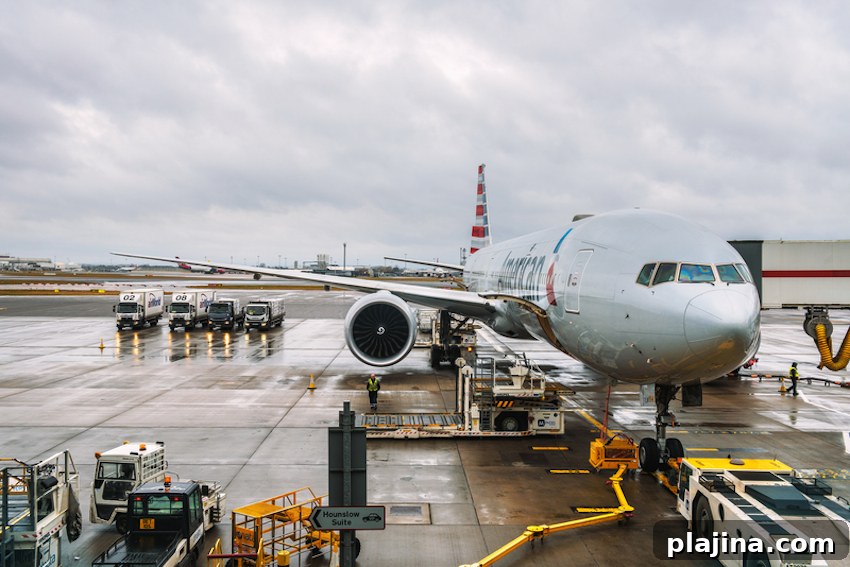
This spring, American Airlines and Delta Air Lines introduced international basic-economy fares on routes between the United States and Europe. Each carrier has clarified what passengers can expect from this lower-cost fare class so travelers can plan accordingly.
On American Airlines’ transatlantic flights, basic-economy passengers are allowed one personal item and one carry-on bag; checked baggage is not included and must be paid for separately. Travelers receive an automatic seat assignment at check-in, though they may pay an additional fee to select a specific seat before departure. Basic-economy tickets to Europe can be changed, which differs from many domestic basic-economy rules, but complimentary upgrades are not available. These same provisions apply on partner carrier transatlantic services operated by British Airways and Iberia.
Delta’s rollout covers roughly half of its U.S.–Europe flights with a basic-economy option. Passengers choosing this fare should expect checked baggage fees—about $60 for the first checked bag and $100 for a second—along with seat assignments that are issued at check-in rather than at booking. Basic-economy tickets on Delta’s transatlantic services do not allow changes or paid seat upgrades.
Overall, the new international basic-economy fares aim to offer lower upfront prices while limiting flexibility and amenities compared with standard economy tickets. Travelers who prioritize cost savings should weigh the restrictions on seating, baggage, and changes against the benefits of a cheaper ticket. Those who value advance seat selection, included checked baggage, or the ability to upgrade will likely find standard economy or higher fare classes a better fit.