
In France, the United States and Australia the grape is called Grenache; in Spain it is Garnacha. Across the globe it appears under many names—from Italy to Mexico, Morocco to Croatia—reflecting its widespread plantings. Despite being one of the world’s most widely grown grapes, Garnacha often remains unfamiliar to many wine drinkers because it is frequently used in blends and its name does not appear on the bottle.
Spain, however, treats this variety with particular reverence. Spanish wineries often produce 100 percent Garnacha wines and label them accordingly. While Garnacha is cultivated in several regions of the country, its finest expressions typically come from five northeast Spanish appellations: Calatayud, Cariñena, Terra Alta, Campo de Borja and Somontano. Although Garnacha can be made into white, rosé and red wines, the majority is produced as red. The grape tends to yield moderately, producing wines with medium tannins and medium acidity.
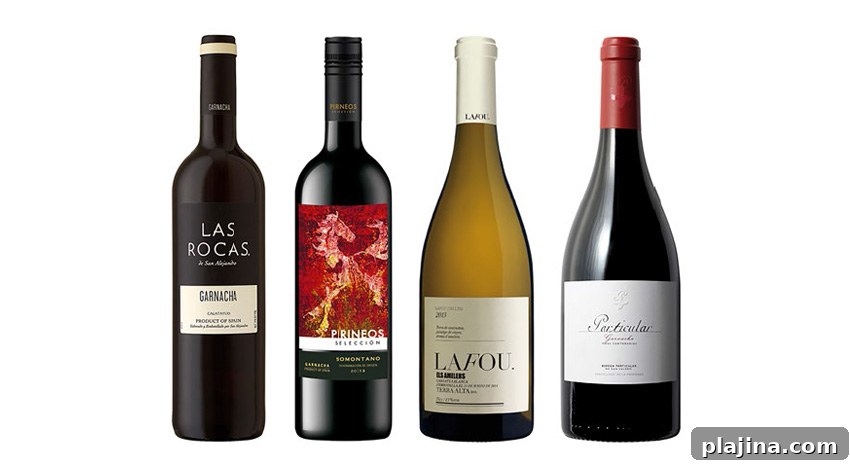
Among white examples, one standout is Lafou Els Amelers Garnacha Blanca 2015 (about $40). It offers rich, deep flavors with a spicy edge, a mineral undertone and a lingering finish that makes it memorable.
For exceptional value, consider Las Rocas de San Alejandro 2013 (about $14). This 100 percent Garnacha comes from vines aged 40 to 60 years and shows vibrant color, upfront fruitiness with cherry and berry notes, and restrained, subtle tannins.
Particular Garnacha Viñas Centenarias 2012 (about $26) is a limited-production red sourced from the estate’s oldest vines. It is smooth and full-bodied, with soft tannins and an appealing spicy aroma that conveys elegance and balance.
Pirineos Garnacha 2013 (about $30) demonstrates the variety’s power: rich, concentrated fruit—especially cherries and blackberries—accented by a faint minty note, pronounced minerality and strong overall balance. At three years of age it still has time to develop further complexity.
Garnacha is an ancient grape with a long history, yet for many wine lovers it can feel like a newer discovery. Its versatility across styles and regions, combined with often excellent value, makes it worth seeking out by name rather than only in blends.