
As I stroll along Amsterdam’s canals on a clear spring morning, sunlight shimmers on the water while cyclists weave through the narrow streets. The city’s slender, leaning houses rise above the sidewalks, and one stretch—where the De Wallen red light district meets the Singel canal—bursts with color.
That stretch is Bloemenmarkt, the historic floating flower market that lines the Singel with a continuous display of blooms and bulbs. Spend an hour browsing the stalls, take a seat at a nearby café with a morning coffee, and watch the city move around you. The market not only offers a lively atmosphere but also an interesting history.
© ARKANTOSTOCK – DREAMSTIME.COM
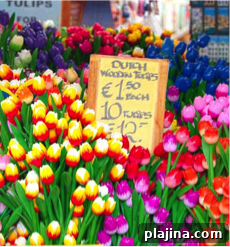
Established in 1862, Bloemenmarkt sits on the Singel between Koningsplein and Muntplein. In its earliest days vendors sold directly from houseboats, making it the only truly floating flower market in the world. Today the stalls rest on fixed platforms over the water, and the selection has expanded beyond flowers to include clogs, cheese and other classic souvenirs, yet the market retains its timeless charm.
The market showcases bouquets, potted plants and bulbs, with a strong focus on the Dutch tulip—a flower that arrived from the Ottoman Empire some 400 years ago and has become emblematic of the country. You’ll also find snowdrops, carnations, peonies and orchids, along with herbs and houseplants. If you plan to take bulbs home, choose firm, healthy bulbs and ask the seller if they are approved for export; some varieties are restricted and may be seized at customs.
Whether buying or simply sightseeing, Bloemenmarkt is a must-see in Amsterdam. It occupies the northern edge of the UNESCO-listed Canal Ring, an area of historic canals and houses dating from the late 16th and 17th centuries. The surrounding neighborhood is pleasant for a stroll, with shopping along Kalverstraat and many good cafés and restaurants. For a local snack, try the traditional raw herring sandwich—broodje haring—at fishmonger Frens Haringhandel on Koningsplein, or sample kibbeling, crispy fried fish pieces usually served with herb mayonnaise.
At the market’s eastern end, Muntplein is known for its historic bell tower, cinemas and fast-food outlets. You’ll also find quality options like Ter Marsch & Co for burgers, or head slightly farther east to Pho King for Vietnamese pho—note the small indoor seating area and limited outdoor tables, so avoid peak mealtimes if you can.
Nearby cultural stops include KattenKabinet, a quirky museum dedicated to artworks featuring cats, and FOAM Photography Museum, which stages contemporary photography exhibitions alongside talks and events. If you want more floral displays, plan a trip to the Keukenhof gardens in spring or visit the tulip fields of Noordoostpolder from March through May, when the blooms create vast carpets of color. Bloemenmarkt itself remains open year-round—typically from around 9 a.m. to 5:30 p.m., with shorter hours on Sundays—so it’s accessible even outside peak flower season.
The easiest way to get around Amsterdam is by bicycle, but if you prefer public transport you can take a tram to Koningsplein or Muntplein. The market is a six-minute walk from Rokin metro station, which is one stop from Amsterdam Centraal railway station. Its central location makes Bloemenmarkt an easy stop even on a short visit, offering both convenient souvenirs and a vivid slice of Amsterdam history and canal-side life.
INFO TO GO
Amsterdam Airport Schiphol is the most convenient international gateway, offering frequent connections and a train service to Amsterdam Centraal in about 15 minutes. Buses to the city center take roughly 30 minutes, and taxis are readily available for door-to-door transfers.