
An intoxicating blend of scents, sights and colors greeted me the moment I arrived in Tahiti. Surrounded by lush tropical foliage and fragrant flowers, I wanted to pause time and simply bask in the island’s beauty. Tahiti — the largest island of French Polynesia and the hub among 118 sister islands — attracts travelers from around the world with its stunning scenery, vibrant culture, warm climate and sensory riches: crystalline light, soft white sand, dreamy lagoons, coconut palms, fresh tropical fruit and welcoming, easygoing people.
My fascination with Tahiti began long before I visited. Gauguin’s paintings of Polynesian women had already stirred my imagination, and the island’s romantic lore only added to the appeal. Marlon Brando famously fell in love with Tahitian actress Tarita while filming Mutiny on the Bounty here. He later purchased the private atoll of Tetiaroa, made up of a dozen motus (islets), and envisioned the place as a preserved refuge that would reflect Tahitian heritage and natural beauty.
Tetiaroa, the private atoll home of The Brando © tim-mckenna.com
The Brando, the luxury eco-resort inspired by Brando’s vision, opened on Tetiaroa and offers a rare combination of seclusion, conservation and comfort. About 30 miles north of Tahiti, this private atoll once served as a retreat for Tahitian royalty. Its talcum-soft beaches, pristine nature and turquoise waters are home to a vibrant marine ecosystem. Guests often recall childhood stories about the island told by locals who grew up fishing and exploring the motus, and many activities celebrate that intimate relationship with the sea and land.
Whether you’re swimming in a jewel-like lagoon, snorkeling among colorful reef fish, sunbathing on a private stretch of sand beside a secluded villa, or strolling through coconut groves, Tetiaroa feels like paradise. The underwater world is alive with rainbow parrotfish, spotted eagle rays and sea turtles. Some motus serve as bird sanctuaries while others preserve fragments of primitive rainforest, connecting visitors to the atoll’s original ecosystems.
For a dose of local culture, try a Polynesian dance lesson and slip into a grass skirt to learn traditional moves. Percussion workshops teach the toere drum, and culinary offerings highlight island flavors — think grilled tuna with coconut vierge. Spa treatments incorporate native ingredients such as papaya, coconut oil and Tahitian vanilla, while the resort’s clever seawater air-conditioning mirrors Brando’s eco-forward ideas.
Tahitian dancers © NICOLAS PEREZ
The mix of Polynesian tradition and French influence gives Tahiti a distinctive cultural rhythm. The island is often described as the cultural heart of French Polynesia, where life moves at an unhurried pace and hospitality is expressed through simple, meaningful gestures. Visitors are commonly greeted with leis of tiare flowers, Tahiti’s celebrated gardenia, and you’ll notice locals proudly wearing blossoms in hair or as wreaths. In local custom, placing a flower behind the left ear signals that one is taken, while behind the right ear indicates availability.
Flowers and food feature prominently in island life. Orchids often accompany tropical fruit breakfasts, and classic dishes like poisson cru — fresh fish marinated in lime juice and coconut milk — are daily delights. A visit to the spa might include a frangipani soak followed by a Tahitian vanilla massage, and many hotels add small touches such as rose petals on the bed to create memorable evenings.
Papeete, the island’s compact and colorful capital, reveals its lively character best on foot. Le Marché, the bustling market, is where locals sell monoi oil, vanilla beans and vibrant pareos. As evening falls, the waterfront promenade comes alive: mobile food stalls known as Les Roulottes serve casual dinners, and musicians gather at Vai’ete Square to play ukuleles and sing Polynesian songs.
A scenic drive around Tahiti showcases its varied landscape: cascading waterfalls, verdant valleys, rugged mountains, black-sand beaches and archaeological sites marked by ancient petroglyphs. Outdoor pursuits are plentiful — take surfing lessons, join whale and dolphin watching tours, explore sea grottos, dive among coral gardens, or paddle a canoe or kayak across calm waters.
Tattooing is deeply rooted in Polynesian heritage, and the English word “tattoo” traces its origins to this region. Traditionally, tattoos were ceremonial and symbolic, marking passages into adulthood and expressing cultural identity; today, many islanders continue to embrace tattoo art. For those seeking enduring keepsakes, Tahiti is also renowned for its black pearls. The Robert Wan Pearl Museum offers history and displays, including exceptionally large specimens, and helps visitors understand the cultural value of these gems before making a purchase.
Harvesting a black pearl © Gregoire Le Bacon
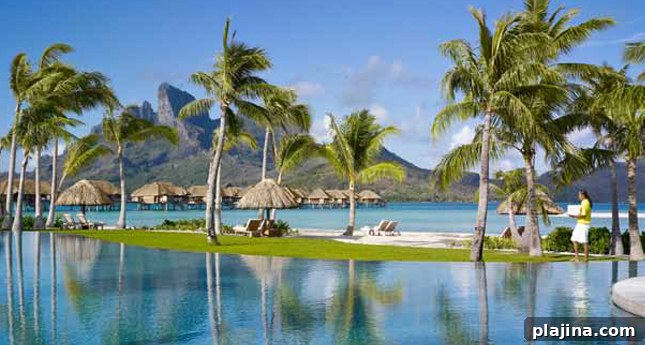
Bora Bora, a short flight from Tahiti, is often named among the most spectacular islands of the region. With white sand beaches that encircle an opalescent lagoon, coral gardens teeming with fish, and palm-fringed motus, it’s easy to see why writers and artists have long been enchanted. Mount Otemanu and Mount Pahia form dramatic backdrops to the island’s lush interior, and many visitors come to admire the scenery, enjoy privacy and soak up the tranquility.
Staying in an overwater bungalow — an accommodation type pioneered here — is a quintessential South Seas experience. Overwater villas combine luxury amenities with direct access to the lagoon, expansive decks, and uninterrupted ocean views. Resorts on outer motus often frame Mount Otemanu from unique vantage points, offering unforgettable sunrises and sunsets. Dining on a private terrace, sipping cocktails and falling asleep to the sound of the lagoon are typical highlights.
Spa rituals in Bora Bora frequently use native ingredients such as black pearl powder and vanilla, and treatments like volcanic hot stone massages and holistic facials aim to restore both body and spirit. Beyond spa time, explore Vaitape, hike near Mount Otemanu, or simply relax in your thatched hideaway with a cool drink and a view of endless blue water.
Tahiti Info to Go
Major airlines fly direct from Los Angeles (LAX) to Fa’a’ā International Airport (PPT) in Papeete. Air Tahiti provides regular inter-island service across French Polynesia from hubs in Tahiti, Bora Bora and Rangiroa. Air Tetiaroa operates short flights between Tahiti and Tetiaroa. Ferries also connect certain islands, and local transfers to hotels are commonly arranged by taxi or resort pickup.
Where to Stay in Tahiti
THE BRANDO An eco-luxury resort on private Tetiaroa offering immersive island experiences, panoramic lagoon views and thoughtful conservation efforts. Tetiaroa, French Polynesia $$$$
FOUR SEASONS RESORT BORA BORA Elegant overwater bungalow villas with private plunge pools, generous decks and sweeping views of Mount Otemanu and the lagoon. Motu Tehotu, Bora Bora $$$$
INTERCONTINENTAL TAHITI RESORT & SPA The island’s largest luxury hotel, featuring balconies with Moorea views and a well-equipped water-sports center. Tata’a, Fa’a’ā, Tahiti $$$
Restaurants in Tahiti
LE COCO’S A romantic waterfront restaurant serving refined French cuisine made with fresh, local ingredients and offering lovely views of Moorea. PK 13,200, Puna’auia, Tahiti $$$
LAGOON RESTAURANT BY JEAN-GEORGES Jean-Georges Vongerichten’s overwater restaurant presents elegant dishes and sweeping views — a memorable spot to arrive before sunset for cocktails on the terrace. The St. Regis Bora Bora Resort, Motu Ome’e, Bora Bora $$$
TIARE The InterContinental’s Polynesian dinner show combines a buffet of island specialties with traditional dance performances, making for one of the most entertaining evenings on the island. InterContinental Tahiti Resort & Spa, Tata’a, Fa’a’ā, Tahiti $$