
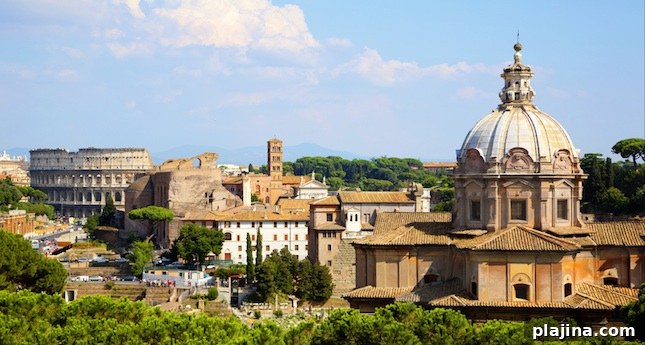
Buried for a thousand years beneath earthquake debris, the sixth-century Church of Santa Maria Antiqua in Rome’s Roman Forum has reopened to the public.
Home to some of the earliest examples of Christian art, the church has just completed a major restoration that spanned three decades and cost €2 million. The project was financed by the Italian government with significant support from the World Monuments Fund.
Often described as “the Sistine Chapel of the Early Middle Ages,” Santa Maria Antiqua was entombed by an earthquake in AD 847 and remained hidden until its rediscovery in 1900. Inside, visitors can see multicolored frescoes depicting saints, martyrs, angels and emperors, along with one of the oldest known Madonna and Child icons.
Because the church was buried for centuries, it escaped many of the later alterations that affected other medieval and Renaissance churches, preserving a rare window into early medieval Christian art and devotional practice. Situated in the expansive Roman Forum at the foot of the Palatine Hill—once the location of the opulent palaces of Roman emperors—the site adds an extra layer of historical context to the artworks and architecture.
After the lengthy conservation effort, the church is once again accessible to visitors, offering a unique opportunity to view frescoes and architectural features that illuminate the religious and artistic culture of sixth-century Rome.