
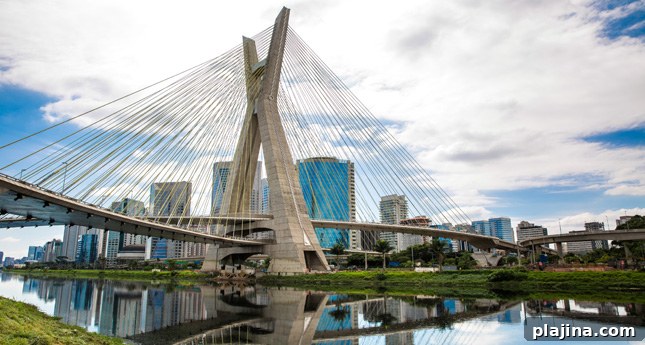
As a country, Brazil holds an enduring sense of wonder, in part because of its vast territory and the wide variety of cultures and landscapes it contains. From the depths of the Amazon rainforest to sprawling megacities, this South American nation offers dramatic contrasts. The descendants of Portuguese colonizers and enslaved Africans were joined by German farmers, Japanese laborers and many other immigrant groups in the 19th and 20th centuries, leaving Brazil with a rich, layered cultural heritage. Traces of these diverse influences remain visible across the country, shaping the vibrant and varied destination Brazil is today. Modern Brazil has also faced political unrest, with major corruption scandals and large demonstrations that can cause disruption. Visitors should stay aware of current events and follow local guidance for safety. While political power is concentrated in the planned capital of Brasília, the economic and commercial heartbeat of the country is São Paulo. Business travelers often find themselves in this vast metropolis: its scale can be intimidating, but those who explore it will discover world-class food, art and culture infused with unmistakable Brazilian character. São Paulo is home to an estimated 20 million people and boasts the largest Japanese population outside Japan and the largest Italian community outside Italy, alongside sizeable Arab and German-descended communities. These influences are reflected in the city’s neighborhoods, restaurants and festivals, and São Paulo is widely recognized for its openness and acceptance of the LGBT community.

The popular caipirinha cocktail © HANS GEEL | DREAMSTIME.COM
São Paulo operates around the clock—coffee shops, bars and restaurants stay lively at all hours. For a memorable dining experience, consider D.O.M., where Chef Alex Atala has earned international acclaim and two Michelin stars for imaginative use of Brazilian ingredients, some of which he sources from the Amazon. D.O.M. exemplifies the fusion of regional tradition and cosmopolitan innovation that defines São Paulo’s culinary scene. The city is also Brazil’s cultural capital, with hundreds of contemporary galleries and theaters. The Museu de Arte de São Paulo (MASP) is a standout institution, featuring an impressive collection that includes works by Manet, Rembrandt and Botticelli; many critics regard MASP as home to the finest collection of Western art in Latin America. The museum’s building—designed by Lina Bo Bardi—is itself a celebrated example of modernist architecture.
After the sensory intensity of São Paulo, head for the tranquil island of Ilha Grande, roughly 280 miles away. Unlike the noise and traffic of the city, Ilha Grande has no cars and retains a sense of seclusion. Once a pirate hideout and later used as a leper colony and political prison, the island remained largely untouched by mass tourism for decades. There are no ATMs on the island, so bring enough cash for your stay. Boats are the only means of getting around; from the village of Abraão you can reach pristine beaches and secluded coves. Stay at a boutique option such as Vila Pedra Mar for water views and easy access to boat excursions. Lopes Mendes is regularly listed among the world’s best beaches, while Dois Rios often feels completely private—perfect for unwinding. Hikes connect several beaches for those who want to explore on foot, or you can take a circumnavigation cruise that stops at scenic spots around the island. Evenings are peaceful: watch the sun set over the sea and listen for howler monkeys in the trees. Sample a caipirinha—the classic cocktail made with cachaça, lime, sugar and ice—before wandering into Abraão for fresh seafood at beachfront spots like Lua e Mar, where tables are sometimes set directly in the sand.
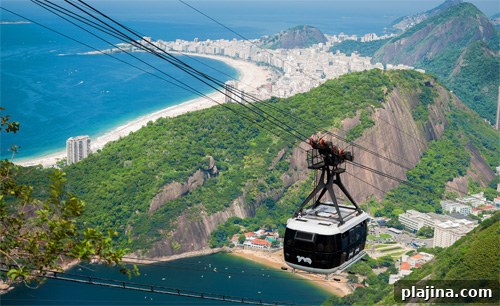
View from Sugarloaf Mountain in Rio with cable car and Copacabana beach © TUDOR-MIHAI NASTASA | DREAMSTIME.COM
No visit to Brazil is complete without Rio de Janeiro, located about 93 miles from Ilha Grande. Upscale Leblon offers some of the city’s best accommodations and is a short walk from iconic stretches of sand. Copacabana, immortalized in song and photography, is a must-see: stroll the famous promenade, watch locals play beach volleyball and soccer, and take in the city’s lively beach culture. Two of Rio’s most famous landmarks—Christ the Redeemer and Sugarloaf Mountain—offer spectacular viewpoints. Christ the Redeemer, completed in 1931, stands roughly 98 feet tall (not including its pedestal) with an arm span of about 92 feet; the platform at its base provides sweeping panoramas over Rio. Football (soccer) is a passion here: even casual visitors often find a stadium visit unforgettable. The Maracanã Stadium, built for the 1950 World Cup and seating around 78,000, hosts electrifying matches—Flamengo versus Fluminense fixtures are especially vibrant and noisy. If you travel in February, take part in Rio’s Carnival. The city fills with music, dance and celebration; the Sambódromo parade and numerous street festivities offer a singular cultural experience.
From Michelin-starred dining and contemporary art to secluded jungle beaches and exuberant street celebrations, Brazil offers a wide spectrum of experiences that can transform a business trip into a memorable adventure.
Brazil Info to Go
Guarulhos International Airport (GRU) is the main international gateway for São Paulo and lies about 15 miles from the city center; taxis and transfer services are widely available. To reach Ilha Grande from São Paulo typically requires a shuttle or transfer to Angra dos Reis followed by a roughly 40-minute boat ride. Returning to the mainland, travelers commonly take a shuttle from Angra to Rio de Janeiro. For international departures from Rio, Galeão International Airport (GIG) is about 12 miles from the city center.