Whether you arrive by air at Porto’s Francisco Sá Carneiro Airport or by train at Campanhã Station on the three-hour Alfa Pendular service from Lisbon, Metro Line E is the most efficient way into the city. The violet line, opened in 2006, runs modern, comfortable trains that provide a pleasant introduction to Porto, where medieval architecture sits alongside ultramodern cultural venues, striking public art and an energetic scene of contemporary shops and boutiques.
Begin a day in Porto at the Serralves Museum of Contemporary Art on Rua Dom João de Castro 210. Housed in a sleek modernist building by acclaimed Porto architect Álvaro Siza Vieira, the museum opened in 1999 within a broad parkland estate. Its constantly changing exhibitions present contemporary paintings, photography and graphic design by Portuguese and European artists, making it a compelling first stop for visitors interested in modern culture and design.
From Serralves, catch a taxi toward the city center, but ask the driver for a short detour to the Matosinhos neighborhood to view Janet Echelman’s outdoor sculpture She Changes. This large, billowy mesh installation, supported by steel masts reaching as high as 150 feet, shifts form and color as Atlantic breezes pass through it. Installed in 2005, She Changes has become an iconic symbol of Porto’s contemporary public art scene.
Once downtown, visit A Vida Portuguesa, a stylish shop located on the second floor of a restored 1866 fabric store at Rua Galeria de Paris 20. The store stocks Portuguese textiles, traditional toiletries and woven puchandos bags handmade in northern Portugal—items that make thoughtful souvenirs and windows into local craftsmanship. From there, descend the steep streets toward the Douro River and stop at Retrosaria das Flores on Rua das Flores 104. This longtime needlework shop offers high-quality Portuguese wool and colorful shopping bags made from chita alcobaca, a distinctive printed fabric decorated with birds, flowers and fruit.
Continue toward the historic Ribeira district, a UNESCO World Heritage site since 1996, where you’ll find two shops belonging to Portosigns: Tradição (Tradition) and Inovação (Innovation). These complementary stores sell locally made products such as cork accessories, fired clay figurines, designer T-shirts and selections of Portuguese tea and wine—great places to discover authentic, handmade goods reflecting Porto’s artistic traditions and contemporary creativity.
For lunch, head to Forno Velho at Hotel Carris Porto Ribeira on Rua do Infante Henrique 1. The hotel, composed of five carefully restored historic buildings and opened in 2012, houses this restaurant that specializes in traditional Portuguese dishes. Expect grilled meats and regional favorites like fried sardines, grilled octopus, salted cod and prawns with baby squid—simple, well-prepared fare rooted in local ingredients and culinary tradition.
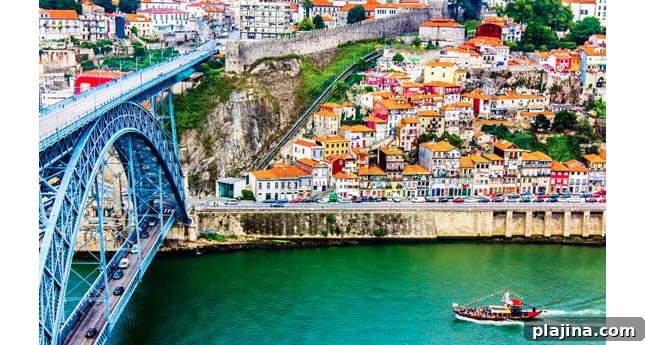
After eating, stroll along the pedestrian promenade that runs parallel to the Douro River. The waterfront is lined with old wine cellars—Port wine has been exported from this area since the 14th century—along with craft shops and small galleries that offer a lively riverside scene. Cross or admire the iconic Ponte de Dom Luís I, the high double-deck metal arch bridge completed in 1886 by a student of Gustave Eiffel, which provides dramatic views of the river and city.
Finish the day with a visit to Casa da Música, Porto’s striking concert hall designed by Dutch architect Rem Koolhaas. Opened in 2005 as part of the city’s cultural renewal, the white concrete building hosts an extensive program of classical, jazz, opera and contemporary performances. Public tours—commonly offered in the afternoon—reveal the building’s unusual geometric forms and interior spaces; the hall earned the 2007 Royal Institute of British Architects award. When time allows, dine at Kool, the architecturally inspired restaurant on the seventh floor, which serves meals in a setting that complements the building’s bold, eclectic design.