
Before European sailing ships sought refuge here after long voyages, Sydney Harbour was the heartland of the Gadigal people, one of the world’s oldest continuous cultures. Their influence remains visible in many Sydney place names—Woolloomooloo and Bennelong Point (the site of the Sydney Opera House), for example—and in road routes that still follow ancient Aboriginal tracks.
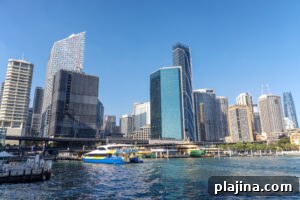
PHOTO: © RIXIE | DREAMSTIME.COM
First contact changed everything and began the harbour’s industrial transformation. For generations the foreshore pulsed with shipping activity: ferries threaded between freighters and cranes loomed above working wharves. Then containerization moved commercial shipping to the deeper berths of Botany Bay, leaving many traditional docks to fall into disuse.
Today Sydney is once again reshaping its shoreline. From Barangaroo’s sculpted headlands to the reimagined piers of Walsh Bay, the harbour is evolving into a lively mix of culture, cuisine and community spaces. What began as the traditional territory of the Gadigal people, then became a colonial port, and is now being remade as a waterfront that aims to honor its past while creating new public life.
The waterfront reinvention is only one part of a wider transformation across the city. Tunnelled rail projects and the expanding Sydney Metro are improving connections between the airport, harbour and business districts, knitting the city together with far greater efficiency. Meanwhile, upgrades to Circular Quay are intended to create a modernized gateway where commuters, visitors and locals converge on one of the world’s most iconic waterfronts.
For business travelers, these changes mean a more navigable city with spaces that blend work and lifestyle. Harbourside boardrooms sit beside waterside bars, while former warehouses now host innovation hubs, boutique hotels and conference venues that offer views once reserved for sailors. Sydney is not only reimagining its shoreline but also reshaping how people move through and experience the city.
Sydney Airport, constrained by neighboring suburbs and the waters of Botany Bay, has served the city for more than a century. Its runway layout, curfew restrictions and limited expansion options have made it a bottleneck for a city with growing air travel demand. In recent years the airport has struggled with cancellations and delays.
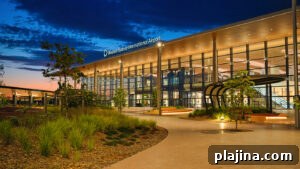
PHOTO: © WESTERN SYDNEY INTERNATIONAL
That is changing with the development of a new airport west of the city in the Nepean Valley: Western Sydney International (Nancy Bird Walton) Airport. Designed for the future, it will provide 24-hour operations, high-capacity runways and direct links to emerging commercial corridors. Scheduled to open in late 2026, the new airport aims to deliver smoother arrivals, shorter queues and improved access to the Western Parkland City, a growing hub for advanced industries, logistics, hospitality and conference facilities.
Just as containerization remade Sydney’s maritime edge, the new airport will redefine the city’s air gateway. A metropolis long defined by its harbour will soon have a second major entry point. Sydney’s evolution continues outward and upward, and travelers arriving in the coming years will see a city embracing its next major transformation.
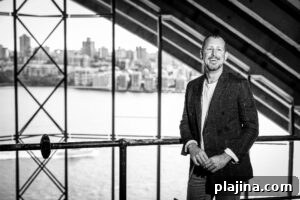
PHOTO: © SYDNEY OPERA HOUSE
CHECKING IN WITH DEAN “DEANO” JAKUBOWSKI
General Manager of Building Operations, Sydney Opera House
How did Sydney Harbour influence the design, location and cultural role of Sydney Opera House?
Architect Jørn Utzon studied nautical charts and the harbour’s forms when he conceived the design. The shell-like roofs that rise above Bennelong Point evoke cliffs and sails, tying the building to its maritime setting. The harbour continues to shape how the Opera House is experienced and maintained—wind, salt spray, sun exposure, tides and passenger movements all affect daily operations. Even the building’s seawater cooling system underscores its intimate link with the harbour.
How has the relationship between the Opera House and the city evolved since its opening in 1973?
Over time the Opera House has expanded its role to reflect Sydney’s diversity. Programming now includes contemporary music, talks and family events in addition to classical performances. Upgrades completed during the Decade of Renewal improved accessibility and visitor experience, transforming the site from a distant emblem into an active cultural meeting place for Australians and visitors alike.
What prompted the Decade of Renewal?
The program responded to the need to modernize a mid-20th-century masterpiece for the demands of the 21st century. The aim was to open the building more fully to the public and to prepare it for future generations of artists and audiences. It was the largest series of capital works at the Opera House in five decades.
How might future harbour development shape the Opera House’s role?
Harbour renewal presents opportunities to make the Opera House more inclusive and accessible. Collaboration with neighbouring cultural institutions, local communities and First Nations groups will be important as the precinct evolves. The future of the harbour and the Opera House are closely connected: both contribute to Sydney’s cultural core.
What do you recommend for American visitors?
Tour the Opera House or see a performance. Explore Sydney’s beaches and try a surf lesson at Maroubra, Bondi or Manly. Experience the city’s multicultural dining scene and strong café culture—inner-west suburbs like Marrickville are especially rewarding. Favorites mentioned include Sean’s Panorama for seasonal, produce-driven dishes and Café Paci for its blend of Nordic, Italian and modern Australian influences.
DIVERSIONS
Few skylines are as instantly recognizable as Sydney’s, where the harbour frames the Sydney Opera House and the Sydney Harbour Bridge. The BridgeClimb offers adventurous visitors panoramic views stretching to the Blue Mountains and the Pacific. Circular Quay, beneath the bridge, is a bustling ferry hub and gateway to the city; a short walk leads to The Rocks, Sydney’s oldest district with cobbled lanes, markets and historic pubs. The Museum of Contemporary Art anchors the cultural waterfront with striking exhibitions.
For a quieter pace, stroll the Royal Botanic Garden for peaceful paths and postcard views of the Opera House. Barangaroo to the west blends parkland, dining and Indigenous storytelling, illustrating the city’s shifting relationship with its shoreline.
The harbour itself is Sydney’s greatest playground. Relaxing cruises reach the city’s edges, while the Manly ferry—about 30 minutes from Circular Quay—delivers visitors to golden beaches and coastal walks. Kayaking and stand-up paddleboarding in sheltered coves such as Rose Bay or Watsons Bay let you connect directly with the water and often reveal dolphins and seabirds.

© FILEDIMAGE | DREAMSTIME.COM
Beyond the harbour, attractions extend outward: Taronga Zoo combines wildlife encounters with sweeping harbour views; the Art Gallery of New South Wales displays national treasures in a park setting; and beaches like Bondi and Coogee remain magnets for swimmers and sun-seekers year-round.
LODGING
HOTEL WOOLSTORE 1888
Housed in a restored wool warehouse near Darling Harbour, this heritage hotel blends historic character with modern comfort.
139 Murray St., Pyrmont
$$$
OVOLO SYDNEY, WOOLLOOMOOLOO
A converted wharf hotel with timber beams, pop-art elements and relaxed harbour views—distinctly Sydney in style.
4/6 Cowper Wharf Roadway, Woolloomooloo
$$$
QT SYDNEY
Playful luxury in two heritage-listed 1920s buildings that mix bold art and inventive design with high-quality service in the city centre.
49 Market St., Sydney
$$$$
DINING
CHO CHO SAN
A stylish Japanese izakaya in Potts Point offering modern share plates, charcoal-grilled dishes and lively cocktails in a design-forward space.
73 Macleay St., Potts Point
$$$
HARRY’S CAFÉ DE WHEELS
Sydney’s iconic pie cart—try a Tiger Pie with mash, mushy peas and gravy. Fast, filling and very local.
Original at Cowper Wharf Roadway, Woolloomooloo; plus locations across the city
$
QUAY
A landmark fine-dining restaurant on Circular Quay serving inventive tasting menus with spectacular harbour views.
Upper Level, Overseas Passenger Terminal, The Rocks
INFO TO GO
International passengers arrive at Sydney Kingsford Smith International Airport, about 6 miles (10 km) south of the city centre. A taxi to downtown costs around $40 and takes 20–30 minutes. The Airport Link train departs frequently, taking roughly 13 minutes to reach the CBD; fares are approximately $13–15 one way with an Opal Card, available from ticket machines.
JUST THE FACTS
Time zone: GMT+10
Phone code: Country code: 61, City code: 2
Currency: Australian dollar
Key industries: Finance and professional services, retail, IT, advanced manufacturing, medicine, biotechnology, trade and logistics
COMING AND GOING
U.S. citizens need a passport valid for the duration of their stay (ideally six months beyond planned departure) and an Electronic Travel Authority for tourism or short-term business activities. The ETA allows multiple entries over 12 months and can be obtained through the official Australian ETA app; a service fee applies.
OFFICIAL LANGUAGE
English