
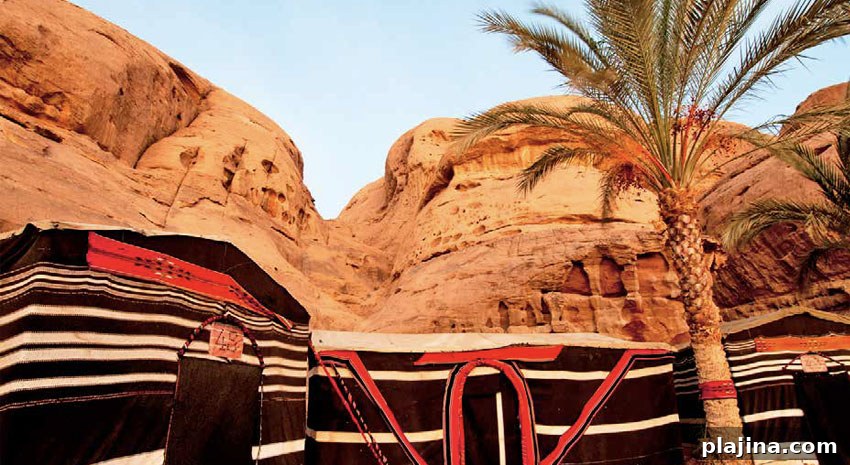
WADI RUM—the name alone evokes mystery. Miles of golden-red sand stretch in every direction, punctuated by towering sandstone cliffs, narrow gorges, natural bridges and ancient petroglyphs. Camels and Bedouins populate this dramatic southern Jordan landscape, where violent storms and spectacular sunrises add to the sense of drama. For those who love deserts, Wadi Rum offers both visual surprises and a calming, expansive simplicity.
So what is Wadi Rum? A wadi is a valley or ravine that is dry except in the rainy season, and the word rum likely comes from an Aramaic root meaning “high” or “elevated.” Nicknamed “The Valley of the Moon,” Wadi Rum covers about 183,000 acres of rugged desert terrain. The landscape includes massive landslides, caverns, and miles of shifting sand between monumental rock formations.
Human presence here dates back thousands of years. Petroglyphs and archaeological remains show continuous interaction with the environment for more than 12,000 years. More recently, Wadi Rum served as a base for Prince Faisal bin Hussein and T.E. Lawrence (Lawrence of Arabia) during the Arab Revolt against the Ottomans in World War I. Scenes from the 1962 film Lawrence of Arabia were shot here, and the area was designated a UNESCO World Heritage site in 2011.
Today the Zalabia Bedouin live in and around Wadi Rum and have developed sustainable eco-adventure tourism as a main source of income. Their efforts have turned the area into one of Jordan’s top tourist destinations, drawing trekkers, climbers, and visitors interested in camel and horse safaris.
Our group of five photographers arrived eager to capture the desert’s light and forms. We stayed at Captain’s Desert Camp, one of the Bedouin camps that welcomes visitors. About 5,000 Bedouins call Wadi Rum home, and many still live in traditional goat-hair tents known as beit al-sha’ar, literally “house of hair.” Our sleeping quarters reflected this tradition: simple, comfortable tents grouped near sandstone outcrops around a shared communal space.
The camp’s common area featured richly colored goat-hair rugs and geometric blankets spread across the floor, with grass matting for walls. While lunch slow-cooked in an underground pit, we watched as the meal was dug up and presented: roasted vegetables and chicken, a variety of salads, hummus, pita and mint tea. After eating, we jumped into four-wheel-drive vehicles for our first desert run, scrambling up sandstone formations and pausing to watch the sun sink over sweeping dunes.
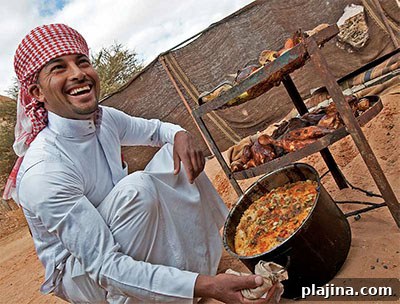
Bedouin cook at Captain’s Camp in Wadi Rum © ELLEN CLARK
Nights in Wadi Rum are especially memorable. The desert fell silent except for a gentle breeze, and tents stood out against a black sky scattered with brilliant stars. Beds were simple cot-like frames piled with blankets to fend off the cold; even a short trip to the communal toilet felt like an adventure in that chill.
We rose early to a rosy pre-dawn glow. Despite the wind and cold, watching the sun break over the desert was worth leaving a warm cocoon. After breakfast and more mint tea, we piled into a battered 4×4 and headed deeper into the dunes. The ride was bumpy and brisk; scarves wrapped around our heads, we held on as our driver negotiated sand tracks with ease.
Along the way we stopped for photos of camels and their handlers. With help from our local guide we persuaded a camel driver and his young grandson to pose as they led their animals across the sand. We also explored rock faces etched with ancient petroglyphs and wandered through the ruins of a shelter where T.E. Lawrence once stayed.
Our primary destination was Jabal Umm Fruth Rock Bridge, one of several natural arches in the area. The bridge offers dramatic drops on both sides and a short climb to the top. A local boy walked across the arch as we photographed; later our guide posed in traditional dress, lending a timeless feel to the scene. Late afternoon found us sipping mint tea in a local home before returning to camp as the light softened.
My short stay in Wadi Rum surpassed expectations. The desert feels infused with deep history—ancient petroglyphs, traces of past inhabitants, and the iconic Lawrence legacy—yet its raw beauty remains immediate and sensory. It’s a place that lingers in memory long after the trip ends.
Wadi Rum Info to Go
Wadi Rum can be visited any time of year, but March–May and September–November offer the most comfortable temperatures for full-day exploration. From Aqaba the drive to Wadi Rum takes about an hour by taxi; buses connect from other Jordanian cities as well. The most efficient way to explore the area, especially with limited time, is by 4×4 with a local guide, though walking and camel rides are also popular options.
Accommodation ranges from luxury glamping to sleeping under the stars. Bedouin-style camps like Captain’s Camp usually offer tent cabins that sleep two to six people and shared bathroom facilities with solar-heated water. Communal spaces typically include a kitchen, indoor dining and outdoor lounges around a fire. Visitors may also choose to stay overnight with a Bedouin family in a traditional beit al-sha’ar or opt for a simple bivouac beneath the stars for a truly immersive desert experience.