It’s about 1 p.m. Central European Time on a Thursday, and I’m on a boat off the coast of Gothenburg, Sweden, scouting for seals basking on the rocky islets that dot the sea. Thanks to my captain, who grew up on one of the islands in the Gothenburg archipelago, we find them quickly and enjoy watching them move, play and slip in and out of the water. By 4 p.m. I’m back at my virtual office, ready to start my business day just as most of my North American clients are coming online.
I consider myself fortunate to be able to work from anywhere, a freedom that has made me part of the fast-growing digital nomad community. Digital nomadism—people who rely on technology to work remotely while traveling—has roots that go further back than many realize. In the late 1980s freelance writer Steven K. Roberts traveled across America by bicycle while documenting his journey on a portable computer with a modem. As global connectivity improved over the following decades, more people embraced the lifestyle. The COVID-19 pandemic accelerated the trend by normalizing remote work worldwide: when lockdowns forced people to work from home, location became less relevant.
Since the start of 2020, the number of digital nomads has more than tripled. A recent report from MBO Partners, a company that connects businesses with an independent workforce, found that more than 8 million Americans now describe themselves as digital nomads—an increase of 147 percent since 2019. That equates to about 11 percent of U.S. workers, roughly one in ten. While millennials and Gen Z make up around 64 percent of nomads, one in seven are 55 or older. Globally, the number of digital nomads surpassed 40 million in 2025 and is projected to reach 92 million by 2030.
Hotels and long-term rentals are adapting to meet the needs of roaming professionals—not only by offering high-speed WiFi but by rethinking shared spaces. At the Radisson Blu Scandinavia where I’m staying, bars, cafés and breakfast areas double as co-working spots, and they provide plenty of outlets even when food service isn’t running. In the hotel spa, guests linger in swings and rocking chairs while tapping away on their laptops.
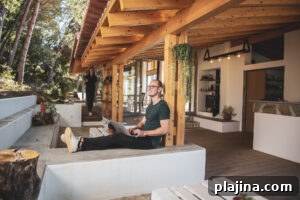
PHOTO: © QUINTA CAMARENA
Boutique properties are also making stays feel like a home away from home. Quinta Camarena, a sustainable eco-resort in Alentejo, Portugal, sits in a top wine region a short drive from long beaches and about two hours from Lisbon. Housed in a restored farmhouse, the guestrooms feature natural materials like wood and stone and each has its own small front garden. Owners Cam and Vera Camarena say they designed the rooms so guests would feel comfortable enough to stay without wanting to leave.
Smart location choices can shape lifestyle and expenses. Being several hours ahead of your clients allows you to explore a new place during daylight and remain fully engaged with work later—one of the perks I value most about nomadic life. Choosing lower-cost destinations stretches your purchasing power. You can prolong your favorite season by escaping northern winter to Southeast Asia or South America, or avoid extreme summer heat by relocating to cooler regions like Scandinavia.
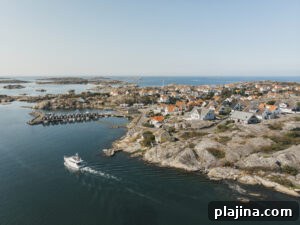
PHOTO: © HAPPY VISUALS/ GÖTEBORG & CO
That’s why I’m enjoying August in Gothenburg—cooler weather, chances to spot wildlife and a smaller, less crowded city experience. “Gothenburg is a pocket-sized metropolis where digital nomads find reliable internet and an international community,” says Petra Gamerdinger, Travel Trade & PR Manager at Göteborg & Co. “It’s walkable and welcoming, feeling both cool and warm at once, with fewer crowds than you might expect.” When September arrives I’ll head south to Türkiye for warmer weather and the chance to work with my toes in the sand along the Aegean coast in places like Fethiye, Dalaman or Marmaris.
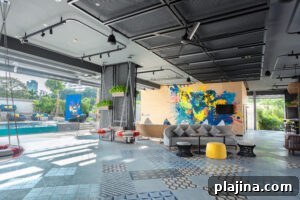
PHOTO: © COSI PATTAYA WONG AMAT BEACH
For those chasing year-round warmth, Southeast Asia remains a top pick. Bali hosts numerous properties that blend work and vacation, many available through regional rental managers. Thailand’s hospitality brands have introduced Social Hubs in their hotels that function as co-working and social spaces, while some chains offer extended breakfast hours and late-night dining options to support flexible schedules.
If your clients are mainly in North America, the time difference can be a hurdle. Diani Beach in Kenya is an attractive alternative, offering mild temperatures, surf and rich natural surroundings year-round, making it well suited for those seeking a balance between work and leisure. For snowbirds who want to align closely with North American business hours, South America and the Caribbean provide convenient options.
Visa rules also play a major role in planning longer stays. U.S. citizens can enter roughly 160 countries without a visa or can obtain one on arrival, but permitted stays typically range from two weeks to six months. For extended remote work, many travelers turn to digital nomad visas—an idea Estonia popularized in 2020 by allowing foreign remote workers to live and work there for a year. Today more than 70 countries offer some form of nomad visa, with some allowing renewals.
Requirements for nomad visas vary widely. Some countries accept online applications; others require in-person submissions at an embassy or consulate. Income thresholds differ substantially—from modest annual minimums in some countries to several thousand dollars per month in others—while a few destinations list no official minimum. Age limits apply in certain places; Türkiye, for example, sets an age range for applicants. Spain and Portugal also offer passive-income or retirement visas that can suit families where one partner is retired and the other continues to work remotely.
Because the rules can be complicated, a range of services has emerged to help nomads: companies that assist with visas, arrange temporary housing, provide co-working spaces and offer cross-border health insurance. Tim Marting, founder and COO of a global mobility platform, explains that many clients are families seeking to relocate abroad and benefit from consolidated support for paperwork and logistics.
Costs for professional visa assistance typically range from several hundred to a few thousand dollars per person, and processing times can span from around 30 days to several months depending on complexity. Popular European destinations include Spain, Portugal and France, with Greece and Croatia also in demand; some countries, like Croatia, have extended allowable stays in recent years.
Countries compete to attract digital nomads because remote workers often spend more than transient tourists and may contribute to the local economy by opening businesses or investing locally. Governments see an opportunity to bring talent and revenue, so many continue to refine and promote nomad-friendly visa programs. With the market for remote professionals growing rapidly, now is a good time to consider the benefits of becoming a digital nomad.