
We live in an age of acronyms, but Gqom is not one — it’s a word. Pronounced with a back-of-the-palate click at the start, Gqom names a distinctive musical movement and, increasingly, the sound of Durban’s cultural resurgence. Emerging from the city’s townships, gqom is a raw form of electronic house music created on modest equipment and designed for loud, late-night venues. Sparse chords and vocal hooks sit atop intricate, syncopated rhythms that recall Zulu chant and footstomp, blending traditional African patterns with contemporary, global influences into something fresh and unmistakably local.
That hybrid quality mirrors Durban itself. Founded by British settlers in 1835 and named for Sir Benjamin d’Urban, the city on South Africa’s Indian Ocean coast has long been a crossroads of cultures. The Zulu people, who originally called the sheltered bay eThekwini, remain central to the region’s identity. Since the end of apartheid, that indigenous name has been adopted for the metropolitan municipality; its literal meaning, referring to the bay’s shape, is often rendered colloquially as “bull’s testicles.”
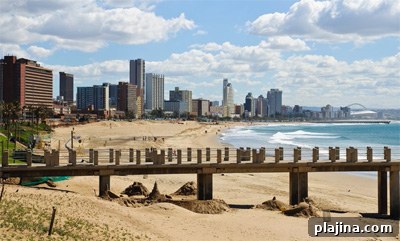
eThekwini Metropolitan Municipality © CHECCO | DREAMSTIME.COM
Durban became more diverse after the British brought thousands of laborers from India during the 19th century. Today the city hosts the largest Indian community outside of India, contributing vibrant culinary, religious and commercial traditions. European, Indian and African influences have woven together, but Durban’s history has also been shaped by conflict. In the 1890s, Indian residents challenged discriminatory policies with the help of a young attorney named Mohandas Gandhi, who later led India’s independence movement. In more recent years, waves of immigration from other African nations have sometimes sparked xenophobic tensions, including violent outbreaks in 2015. Despite these challenges, the city’s cultural mix endures—and many of the artists fueling gqom’s rise are first-generation immigrants.
The shift from apartheid to a democratic South Africa in the 1990s brought both opportunity and disruption. Durban’s Central Business District suffered rising crime and business migration to Umhlanga, a more affluent coastal suburb about 10 miles north, but coordinated redevelopment efforts, including the construction of the International Conference Centre and a modern aquarium, have helped revive the city center. The Golden Mile, Durban’s famous oceanfront promenade, is once again drawing visitors to its beaches, promenades and hotels.
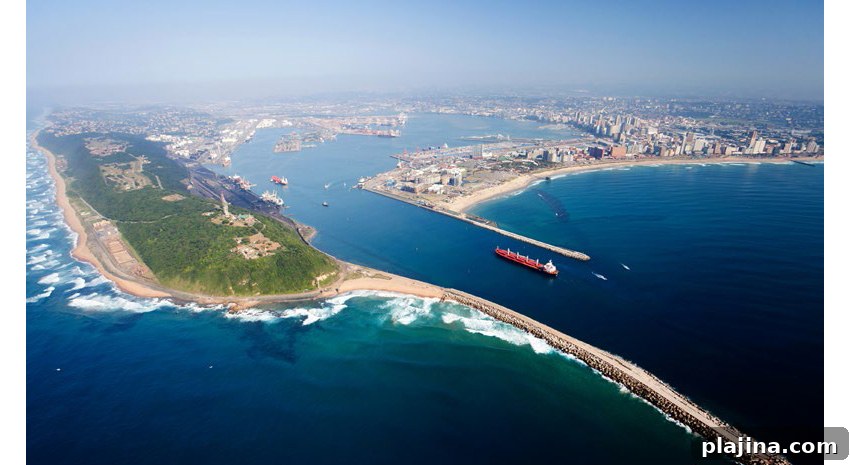
Through all change, Durban’s harbor has remained a constant. The Port of Durban handles roughly 31.4 million tons of cargo annually, making it the busiest port in Africa. The shipping lanes have witnessed the transformation of the Point, a formerly industrial precinct near the harbor entrance that is gradually being reshaped into a greener, mixed-use neighborhood with canals, parks and new buildings.
Large-scale projects are reshaping Durban’s future. Bridge City is a public-private effort to convert a neglected industrial area into a new urban center that supports adjacent townships like KwaMashu. The Integrated Rapid Transport Network aims to modernize public transit with improved roads, rail upgrades and state-of-the-art transport hubs. Perhaps most ambitious is the Dube TradePort and King Shaka International Airport complex, part of a long-term “aerotropolis” vision designed to strengthen Durban’s role as a national and regional trade gateway.
Gqom, then, can be heard as an auditory reflection of Durban’s ongoing reinvention: a driving, multicultural pulse that channels the city’s energy, creativity and restlessness.
Things to Do in Durban
The Golden Mile, the waterfront stretch lined with hotels and beaches, remains Durban’s primary leisure draw. In past decades rickshaw rides were a common feature, and while fewer rickshaws operate today, taking one is still a classic Durban experience. At the southern end of the Golden Mile is uShaka Marine World, a large aquarium and water park offering exhibits, shows and family attractions. To the north stands Moses Mabhida Stadium, notable for its 347-foot arch and adventure attractions: visitors can ride the SkyCar to a panoramic viewing platform or test their nerve on the Big Rush Big Swing, billed as the world’s highest swing.
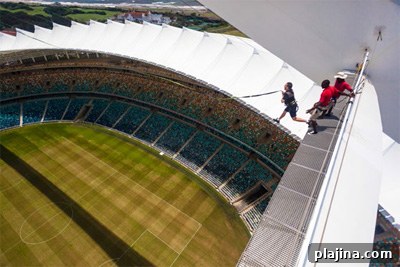
The Big Rush Big Swing at Moses Mabhida Stadium © CHRIS VAN LENNEP | DREAMSTIME.COM
Victoria Street Market, housed in a distinctive pink-and-white building with around 160 stalls, remains a hub of Durban’s Indian community and a great place to buy spices, fabrics and souvenirs—just be mindful of pickpockets in crowded areas. The warm waters of the Indian Ocean are a major attraction: historically, shark incidents led to the formation of the Sharks Board and the use of offshore shark nets. Visitors can join the Sharks Board’s early-morning inspection trips from Durban harbor to learn about the work and see maintenance in action.
Each June or July, Durban witnesses one of nature’s most spectacular marine events: the sardine run. Billions of sardines travel up the coast in a concentrated shoal, attracting predators including sharks, sailfish, cetaceans and seabirds, and drawing fishermen and wildlife enthusiasts to witness a chaotic, beguiling natural display sometimes called “the Greatest Shoal on Earth.”
Durban also serves as a gateway to inland and coastal wildlife and mountain experiences. The Drakensberg mountain range, known as the “Roof of Africa,” is about a 2.5-hour drive inland and offers hiking and dramatic scenery; winter visitors should pack warm clothing as snow can occur. Along the coast, Hluhluwe‑iMfolozi Game Reserve—Africa’s oldest game reserve—lies within reach for safari experiences where elephants, rhinos, lions and other iconic species roam.
CHECKING IN WITH LINDIWE RAKHAREBE
CEO, Durban International Conference Centre
What opportunities does Durban offer American investors?
Durban combines advanced infrastructure with a large and growing market, creating an entrepreneurial environment that supports investment across sectors. Key opportunities include automotive components and assembly, business process outsourcing, information and communication technology, infrastructure development, tourism, industrial chemicals, and food and beverages. The city contributes more than 65 percent of KwaZulu‑Natal province’s GDP and serves as the region’s primary economic hub.
What advantages does Durban have over other South African cities?
Durban offers the amenities of an international convention city—an efficient airport, robust transport links and a wide choice of hotels and restaurants. Its coastal location on the Indian Ocean supports trade, logistics and marine industries, and the presence of Dube TradePort and King Shaka International Airport strengthens the city’s competitiveness for freight and passenger movement.
Which Durban attractions do you recommend?
Beaches along the Golden Mile are essential for visitors, offering warm water and dining options. uShaka Marine World provides family-focused attractions and marine exhibits. For thrill-seekers, Moses Mabhida Stadium offers the Big Rush Big Swing and the SkyCar for panoramic city views.
Durban Info to Go
King Shaka International Airport, located about 22 miles north of downtown Durban, handles international flights from several African and Middle Eastern destinations. Many international travelers arrive via domestic connections through Johannesburg or Cape Town. Shuttle buses run regularly between the airport, Umhlanga Rocks and central Durban.
Durban: Just the Facts
Time zone: GMT +2
Phone code: Country code: 27, City code: 31
Entry/exit requirements: U.S. citizens need a passport with at least one blank page; visas are not required for stays up to 90 days. Travelers from WHO-designated yellow fever countries must present a vaccination card.
Currency: South African rand
Official languages: South Africa recognizes 11 official languages; English and Zulu are commonly used in Durban.
Key industries: Tourism, import/export, manufacturing, automotive, retail and a substantial informal economy.
Where to Stay in Durban
AFRICAN PENINSULA GUEST HOUSE A cliff-top retreat set in tropical gardens about 20 minutes south of downtown. Dolphins are often visible close to shore. 599 Marine Drive, Bluff $$
HILTON DURBAN A convenient base for the Durban ICC with refurbished executive floors and sea or city views. 12-14 Walnut Road $$$
SOUTHERN SUN ELANGENI & MAHARANI Two adjoining hotels forming a large beachfront complex on the Golden Mile, offering ocean views and extensive amenities. 63 Snell Parade $$$
Restaurants in Durban
AFRO’S CHICKEN SHOP Fried chicken with local flair, available at multiple Durban locations; the flagship outlet sits on the Golden Mile. 2 O.R. Tambo Parade, South Beach $
GREEN MANGO Known for fresh seafood alongside Thai and Japanese dishes, this popular restaurant emphasizes quality sushi and sashimi. Shop 12A, Avonmore Centre, Ninth Avenue, Morningside $$$
ROMA REVOLVING RESTAURANT A Durban landmark since 1973, Roma offers Italian cuisine from a rotating dining room high atop John Ross House, providing panoramic views of the city and harbor. 32nd Floor, John Ross House, Margaret Mncadi Avenue $$$