
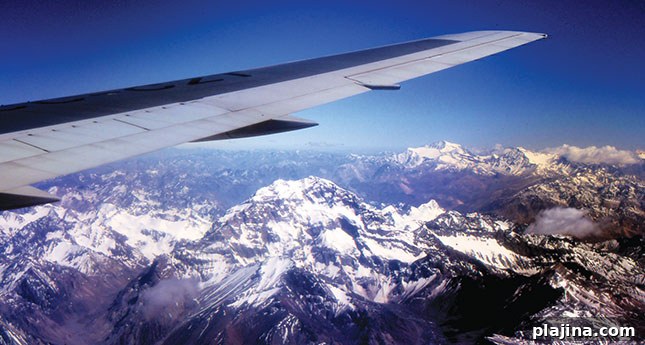
Ahead of us rose the Andes, the spine of South America. I watched the formidable mountain range from the cockpit of a Boeing 767 as we began our descent into Santiago, Chile’s capital.
That jagged, snowcapped barrier once seemed an almost insurmountable challenge to early aviators, but they did not turn back. In fragile wood-and-canvas machines they steered through narrow valleys and threaded mountain passes, pushing the limits of skill and courage.
The National Museum of Aviation and Space, at the disused Los Cerrillos Airport southwest of downtown, pays tribute to those pioneers. In the main hall, historic aircraft of varying shapes and sizes crowd the floor and hang from the rafters. Even in this controlled environment, the oldest machines appear perilously delicate. Outside, walking among retired airliners, the Andes loom heavily in the background, and it is easy to admire the daring of the first pilots.
Santiago itself is shaped by Chile’s remarkable geography. The country stretches some 2,610 miles from north to south yet averages only about 115 miles across, flanked by the Andes on one side and the Pacific on the other. Near the city’s center, the hilltop of Cerro San Cristóbal, set within landscaped gardens, offers a sweeping panorama that, on a clear day, reveals how the metropolis sits within a demanding natural environment.
Residents accept the practical difficulties of living in such a long, narrow nation, but the slim profile has its advantages. A two-hour drive west from the capital brings you to the colorful bayside port of Valparaíso and the neighboring seaside resort of Viña del Mar. Time on the beach provides an immediate respite from Santiago’s traffic and urban noise.
Head inland instead, and within 45 minutes you arrive in the rolling vineyards of the Maipo Valley, where vines have been grown since Catholic missionaries first planted them in the 1540s. The elegant grounds of estates such as Concha y Toro open their cellars for tours and tastings, offering a refined introduction to Chilean wine.
Travel farther along the valley and the landscape tightens: gently sloping, vine-covered hills give way to steeper, more severe mountainsides. Eventually you reach Cascada de las Ánimas, the Waterfall of the Spirits, a family-run ranch that serves as a gateway for horseback treks into the high Andes.
We climb narrow switchback trails carved into the rock and at last emerge onto a grassy plateau cradled by snowcapped peaks. The setting feels utterly remote, yet the intense blue of the sky carries a different reminder. There, luminous lines of vapor trace the routes that link Chile to the wider world—the very pathways first charted by those brave pilots a century ago.