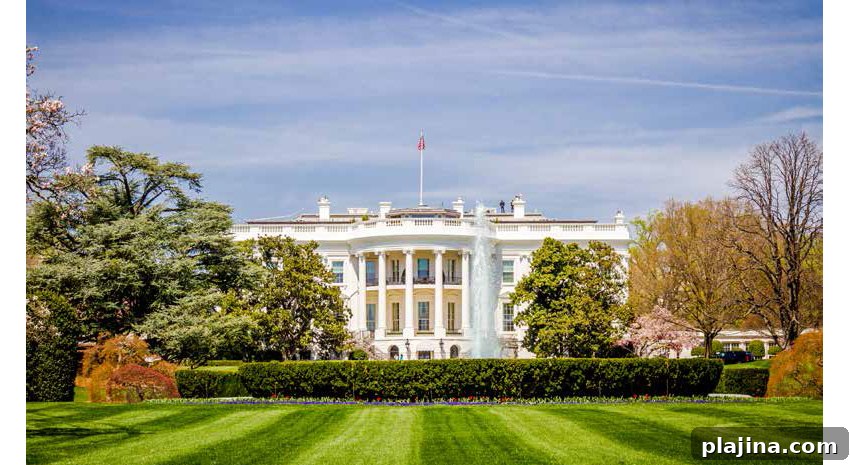
More than anywhere else, the outcome of a U.S. election resonates in Washington, D.C., where a new president will soon take office. Residents of the District of Columbia are used to change, but many say the bigger story is the city’s strong economy: roughly $9.6 billion in ongoing physical development projects are revitalizing neighborhoods and enhancing quality of life.
Running the nation is the District’s primary function. The federal government accounts for nearly 30 percent of local employment, and Washington serves as the base for leaders who assess and respond to domestic and international events. History is made here — at the U.S. Capitol, The White House, the Supreme Court and among 175 foreign embassies and residences. With so much history and civic activity, tourism is the city’s second-largest industry. More than 20 million visitors arrive each year, drawn to memorials, museums, parks, cultural events and the charged political atmosphere.
As 2016 drew to a close, Washington marked the centennial of the National Park Service, which has its headquarters in the city. The D.C. area includes about 150 national parks, among them the grounds of The White House, home to presidents and first families since 1800. The National Mall — a 146-acre greensward stretching from the U.S. Capitol to the Lincoln Memorial — falls under National Park Service care and showcases iconic memorials to Franklin Delano Roosevelt, Thomas Jefferson, the Korean War, Martin Luther King Jr., Vietnam veterans, World War II, the Washington Monument and the Smithsonian museums. Exploring the two-mile Mall is easier than ever thanks to guided options such as bike tours, Segway tours and free guided walking tours.
Recent and ongoing changes on the Mall include the renovated U.S. Capitol dome and the opening of the Smithsonian’s National Museum of African American History & Culture. The National Gallery of Art’s East Building reopened after a two-year, $30 million renovation that added more than 12,000 square feet of exhibition space and a rooftop sculpture garden.
Development is visible beyond the Mall. The $3 billion Capitol Riverfront project transformed a World War II–era wharf and naval facility on the Anacostia River into a vibrant neighborhood with parks, playgrounds, a boathouse, restaurants and Nationals Park, a 41,000-seat baseball stadium. Along the Potomac, The Wharf is a $1.5 billion, 3.2-million-square-foot redevelopment in southwest D.C. that will include residences, offices, hotels, restaurants, shops and cultural venues, plus a rebuilt yacht club and a 450-foot public boardwalk.
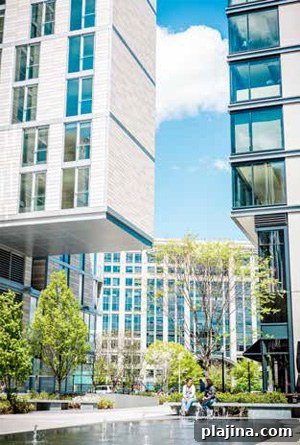
CityCenterDC © DESTINATION DC
CityCenterDC, the redevelopment of the former convention center, is emerging as a 10-acre, $700 million mixed-use district. Plans on the horizon include Capital Crossing, three new city blocks built over Interstate 395 between Union Station and the Verizon Center, and proposals to transform the 80-acre RFK Stadium and DC Armory site into mixed-use development.
Cultural institutions are expanding as well. The John F. Kennedy Center for the Performing Arts is undergoing a $50 million expansion; the center hosts the National Symphony Orchestra, Washington National Opera and Washington Ballet. Nearby, the Watergate complex reopened as an upscale riverside hotel with refined guest rooms, restaurants, ballrooms and a spa. The historic Old Post Office on Pennsylvania Avenue also experienced a rebirth, reopening as a luxury hotel in recent years.
Hotel construction remains robust, with more than 20 new properties adding over 5,000 rooms to complement the region’s existing inventory of roughly 110,000 rooms across the Greater Washington area, which includes Maryland and Virginia suburbs. These hotels support about 4 million square feet of event, exhibit and meeting space. The Walter E. Washington Convention Center continues to be the premier venue, offering 703,000 square feet of exhibit space and 198,000 square feet of meeting space.
Dining in the District reflects the city’s diversity and culinary sophistication: more than 2,100 restaurants offer menus inspired by global flavors and local traditions. Craft cocktails, small-batch distilleries and artisanal breweries are widely popular, and many bars combine dining with games like billiards, bocce, mini-golf and table tennis. Small plates remain fashionable, while regional favorites such as Maryland crab cakes and Virginia wines continue to draw loyal fans.
Getting around the city is convenient on the clean, modern Metro system, which is completing upgrades to its original network of roughly 117 miles of track. The Silver Line has opened new stations and will eventually extend to Washington Dulles International Airport. The DC Circulator links key destinations such as Union Station, Georgetown, the Convention Center, Nationals Park, the National Zoo and the National Mall for a flat fare, and streetcars returned in 2016 to fill transit gaps between neighborhoods. Capital Bikeshare, with thousands of bikes and hundreds of stations, is widely used as the city expands bike lanes.
With lively neighborhoods, major cultural institutions, growing waterfronts and continual investment, Washington remains one of the nation’s most dynamic and welcoming cities.
SCENIC DRIVES
Great Falls is a top choice for Washingtonians seeking dramatic natural scenery within a short drive. The Potomac River roars over jagged rocks and through Mather Gorge in an 800-acre park about 15 miles from the city via the George Washington Parkway. The parkway itself is managed by the National Park Service and offers a scenic, relaxed drive with historic and scenic stopping points; commercial vehicles are restricted, which helps preserve the leisurely atmosphere.
Route 50 west into Virginia offers another rewarding drive when traffic cooperates. Beyond the commuter congestion, the road winds through Virginia’s famed hunt country—an area once favored by Jackie Kennedy and Paul Mellon—past horse farms, vineyards and small villages on the way to Middleburg, roughly 43 miles from the city. Visitors can browse shops on Washington Street, enjoy lunch at Market Salamander, and explore the National Sporting Library, which focuses on the literature, art and culture of equestrian and field sports.