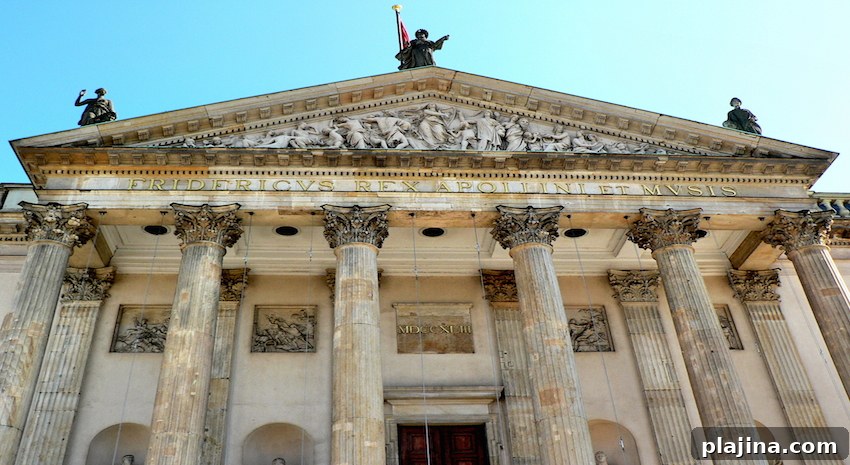
The curtain has risen again at the historic Staatsoper in Berlin after an extensive seven-year restoration. Situated on the broad Unter den Linden avenue, west of the River Spree, this grand opera house first opened as the Royal Opera House in 1742 by decree of King Frederick the Great of Prussia. It suffered a devastating fire in 1843 and sustained severe damage during World War II air raids. The building reopened in 1955 and embarked on the latest major renovation in 2009, returning the venue to its central role in the city’s cultural life.
The renovation improved the hall’s acoustics notably by raising the interior ceiling, resulting in a new reverberation time of 1.6 seconds and a more balanced sound across the auditorium. Visitors can once again admire the golden, star-studded night sky originally conceived for Mozart’s Magic Flute, alongside the refreshed elements of architect Richard Paulick’s post-war design. The season opens on Nov. 30 with a performance by the Berliner Philharmoniker, followed by a special birthday concert on Dec. 7 to celebrate the building’s 275th anniversary.
For travelers planning a visit to Berlin, another notable destination is the Futurium, which opened to the public in spring 2019. Located on Alexanderufer, this striking science and exhibition center focuses on future-oriented technologies and sustainable solutions. Exhibits and demonstrations explore advances such as 3D printing and alternative food production, while dedicated test kitchens research innovative food sources. The Futurium also includes collaborative laboratories and flexible spaces designed for exhibitions, meetings, lectures and workshops, encouraging hands-on engagement and dialogue.
Designed by Richter Musikowski Architekten, the Futurium’s architecture reflects its mission: the building emphasizes eco-friendly construction and near-zero energy performance. Its visible structure and open exhibition areas make the facility itself part of the visitor experience, demonstrating how design and technology can work together to address future challenges. Both the Staatsoper and the Futurium illustrate Berlin’s blend of historic cultural heritage and forward-looking innovation, offering compelling stops for anyone exploring the city’s rich and evolving cultural landscape.