
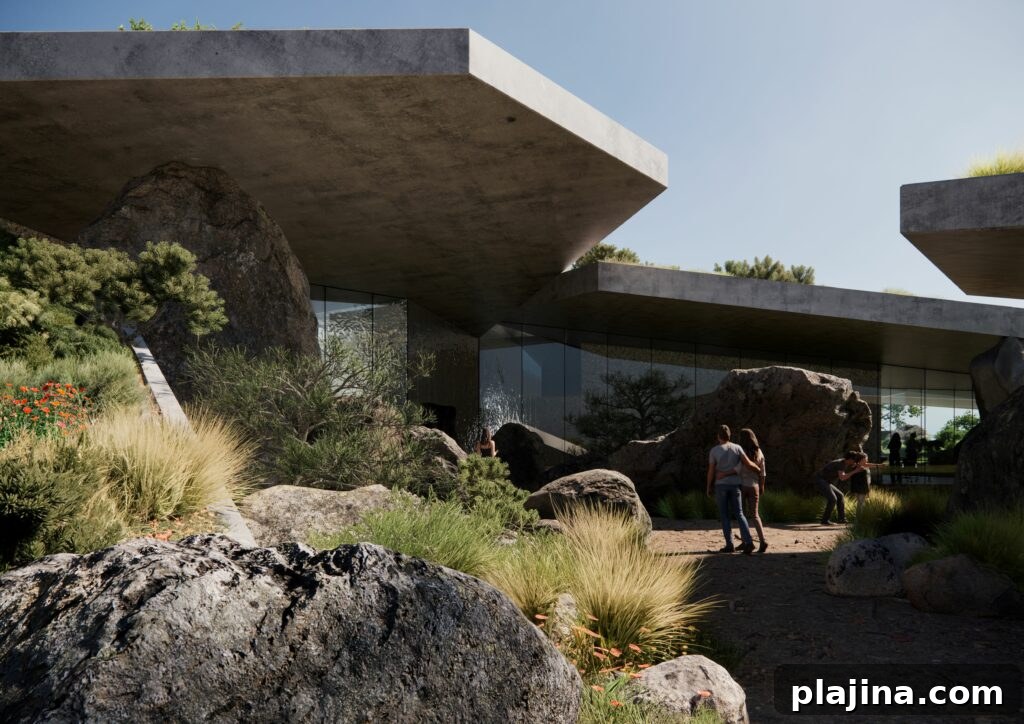
After establishing a 50,000-acre national park that protects the wild Vjosa River, the Albanian government has commissioned Copenhagen-based studio CEBRA to design a multifunctional visitor center in Tepelenë and information stations in Përmet and Vlorë. The new Vjosa Wild River National Park, protecting roughly 250 miles of waterway, is Europe’s first protected wild river. CEBRA’s concepts respond directly to the riverine landscape: forms and materials are distilled to two primary elements—cast concrete slabs that read like tectonic plates shaping the river’s course, and natural rock that references the submerged stones and pebbles deposited along the Vjosa’s banks.
© CEBRA
The park initiative emphasises conservation and biodiversity protection. Its habitats support roughly 10,000 animals and host numerous threatened species of flora and fauna. The park’s creation was supported by conservation partners, including the outdoor brand Patagonia and the Institute for Nature Conservation in Albania.
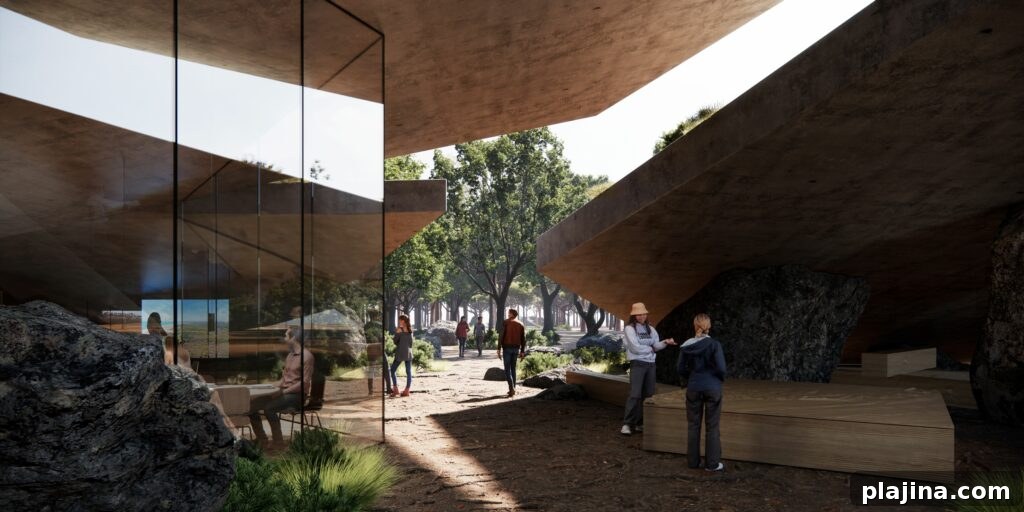
Anchored on the riverbank, the Tepelenë Visitor Center is conceived as a comprehensive hub for education, research and community engagement. The program includes exhibition and research spaces, a community centre, shops and cafés, meeting rooms, offices and workspaces, plus accommodation for visiting researchers. Outdoor facilities are extensive: a botanical garden, open-air stage, playground, elevated viewing platform, picnic areas and an extended promenade. Landscape design prioritises minimal intervention; pathways, seating and play elements are integrated with natural materials and found objects—a line of stones marks circulation routes, a fallen log becomes a play feature, and simple boulders form informal seating.
© CEBRA
The Përmet information station reuses and enhances existing heritage features. Designers will activate the historic City Stone (Guri i Qytetit), an existing tunnel and a vacant chamber to create a sensory auditorium. This subterranean space is planned for art installations, concerts and film screenings that celebrate Përmet’s cultural history and its role within the national park.
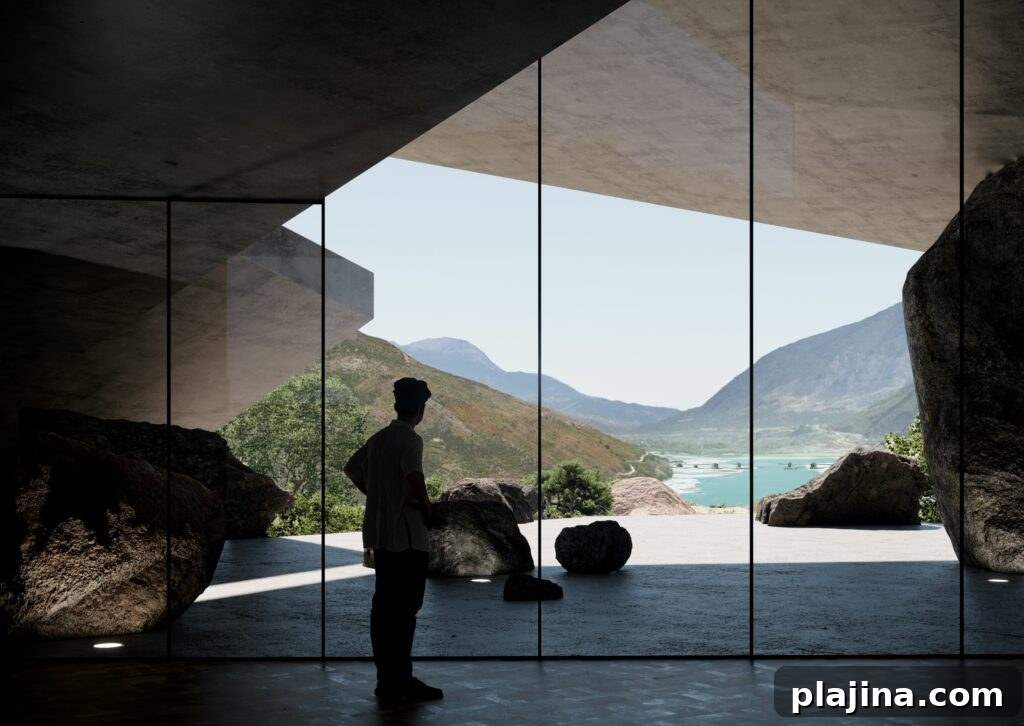
The Vlorë Information Station is intentionally sited away from the immediate river corridor, near Narta Lagoon, to interpret the broader ecological reach of the Vjosa. Its exhibition and learning spaces highlight how the river shapes adjacent landscapes and coastal wetlands. From the station’s panoramic vantage the lagoon and delta lowlands can be observed, habitats that support species such as flamingos and Dalmatian pelicans. The location underscores the Vjosa’s function as a life-giving force extending beyond its banks.
© CEBRA
The project’s second phase aims to broaden protection to additional tributaries, extend the protected area upstream into Greece to include the river’s headwaters, and increase coverage across the river basin. A final completion date for phase two has not been announced.